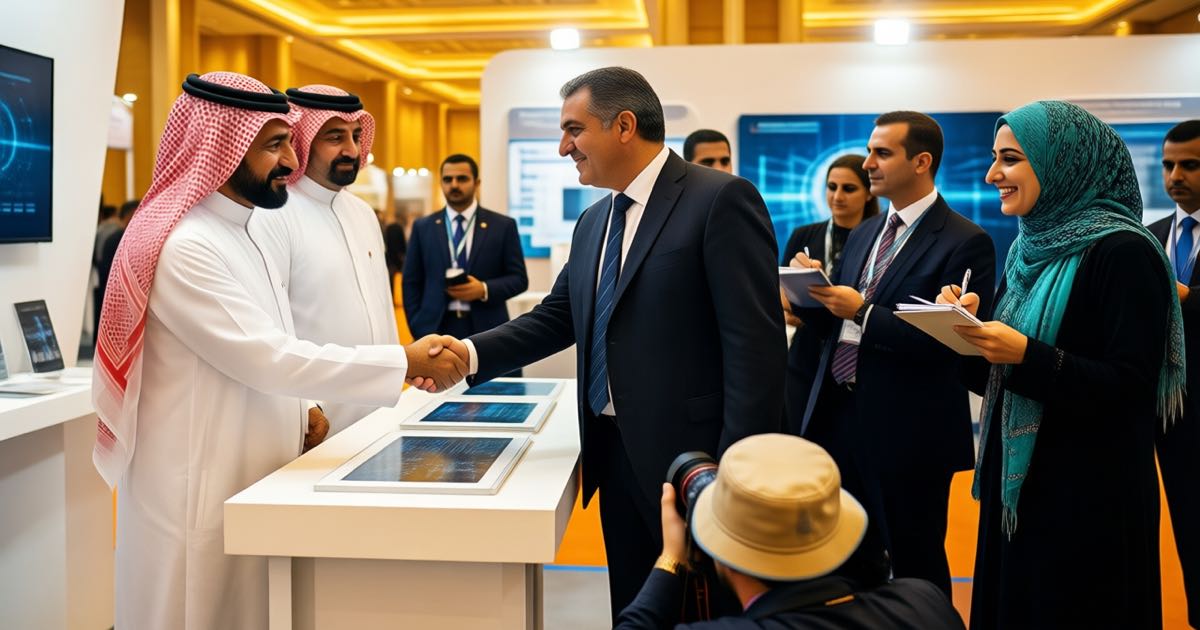
A common thread runs through most AI workforce announcements: a company promises to train its own people, or a university promises to teach its own students. Abu Dhabi’s latest programme is broader, and more interesting as a labour-market experiment. On 7 October, the emirate launched AiNative, an AI training programme intended to reach every government employee — and eventually, for free, the entire public.
What AiNative actually involves
The programme was developed by Abu Dhabi’s Department of Government Enablement (DGE) with OpenAI, Microsoft and Mohamed bin Zayed University of Artificial Intelligence (MBZUAI). Its first target: upskill 20,000 government employees by the end of 2026, as part of a stated goal of becoming what organisers call the world’s first AI-native government by 2027.
The structure, per the Emirates News Agency and Gulf News:
- Foundation learning journeys for government employees and the public, using tools including ChatGPT, Codex and Microsoft 365 Copilot.
- A dedicated executive programme for department leaders.
- Function-specific certifications — including coding and data — to be added in later phases.
- A free public track to follow the government rollout, with a government pilot already under way.
The launch builds on the Frontier Employee Programme announced in July, which rolled Microsoft 365 Copilot out to 35,000 Abu Dhabi government employees. DGE owns the curriculum, which organisers describe as deliberately technology-agnostic so additional partners can join.
Why a government-wide retraining scheme is a different kind of AI story
Most reskilling stories on this site involve private companies retraining selected staff, or individuals going back to school on their own initiative. A jurisdiction training its civil service as a single cohort is testing something else: whether AI fluency can be treated as a baseline job skill, like email literacy, rather than a specialism.
The model also has an unusually inclusive edge. Because the public track will be free, the same curriculum trains both the people whose jobs may change and the people who might be hired into newly created AI-adjacent roles. Whether that narrows or widens the gap between AI-fluent and AI-excluded workers is the open question the programme will answer over the next two years.
New Zealand’s version is smaller, and quieter
New Zealand is not sitting this out. In May 2025, then-Digitising Government Minister Judith Collins announced two public-sector AI training programmes: a three-part AI Masterclass series for senior leaders and a five-week foundational course piloted with around 50 participants from 10 agencies. That pilot scale is a fraction of Abu Dhabi’s 20,000-person commitment, though the NZ material is published through the Leadership Development Centre so other staff can use it.
The comparison is not a criticism of either government — Abu Dhabi’s sovereign wealth and centralised governance make a 20,000-person rollout feasible in a way a 30,000-person core NZ public service isn’t matched for. What it does show is the direction of travel: governments that retrain their whole workforce treat AI adoption as a jobs policy, not just a technology procurement exercise. For New Zealand workers watching Iceland run one of the world’s first national AI teacher training pilots or Microsoft enrol a million people in free AI courses, the pattern is consistent — the regions investing most in AI fluency are doing it through public education, not private initiative alone.
There is also a more cautious reading. Training people to use AI tools does not guarantee new roles, retained pay, or redeployment, and Abu Dhabi’s stated aim of an “AI-native government by 2027” implies significant workflow redesign whose employment consequences will only become clear with time. The programme’s own framing — practical tools and responsible use, rather than job guarantees — leaves that question open.
FAQ
What is Abu Dhabi’s AiNative programme? An AI training programme launched on 7 October 2026 by Abu Dhabi’s Department of Government Enablement with OpenAI, Microsoft and MBZUAI. It aims to upskill 20,000 government employees by the end of 2026, with foundation courses, an executive track, and later function-specific certifications in coding and data.
Is AiNative free? The public track will be entirely free, per the programme’s announcement. The government rollout for its own employees is under way first, with the public programme to follow.
How does New Zealand’s public sector AI training compare? NZ launched two public-sector AI programmes in May 2025 — an AI Masterclass for senior leaders and a five-week foundational course piloted with around 50 participants across 10 agencies. Abu Dhabi’s programme is dramatically larger in scale, but both treat AI fluency as a workforce-wide capability rather than a specialist skill.
Will government AI training protect jobs? That remains unproven. Abu Dhabi’s programme frames training around responsible use and productivity rather than job guarantees, and the employment effects of its “AI-native government” goal will only become visible over the next few years.
— CJ Murden, editor of Singularity.Kiwi. Former digital technologies teacher, author of AI-focused books. Writing with a New Zealand focus.