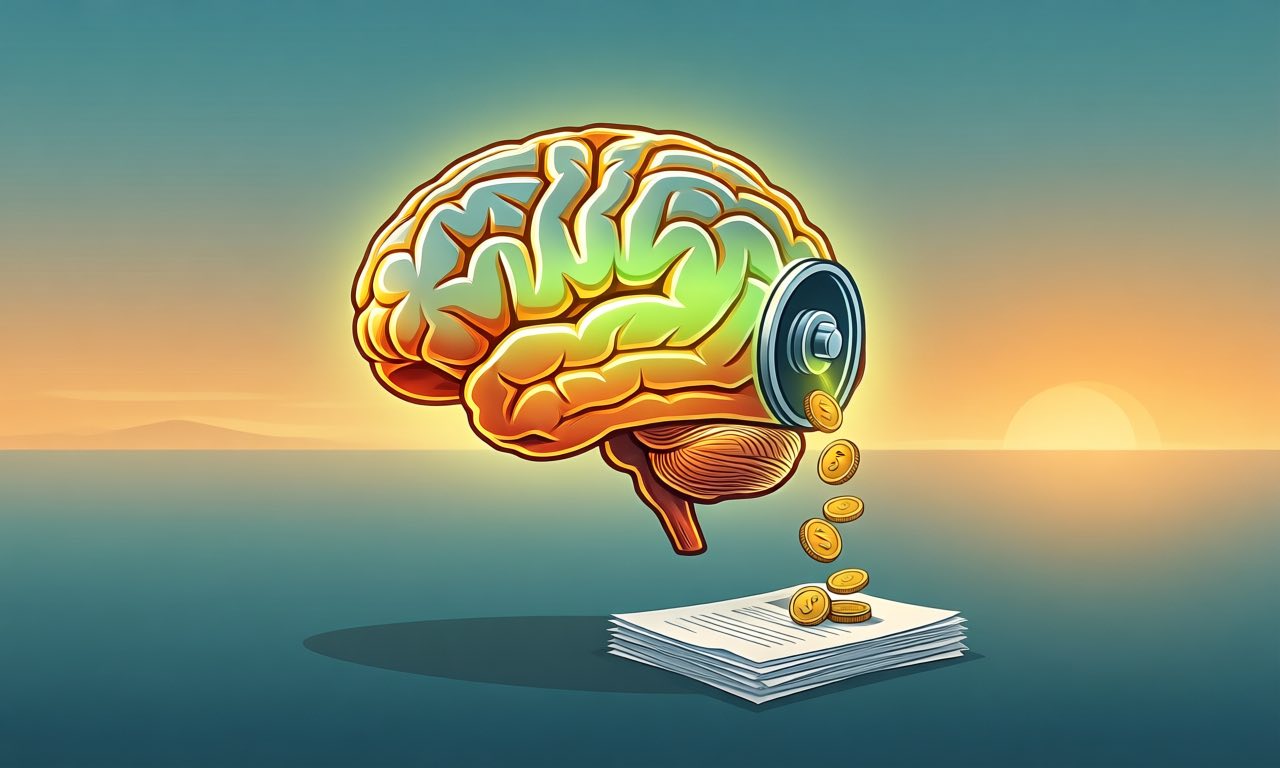
As AI reshapes work, the country that worries most about retraining its workforce may be measuring the wrong bottleneck. In a Guardian essay published on Friday, UK time, Professor Dame Henrietta Moore, founder and director of University College London’s Institute for Global Prosperity, argues that AI is raising a hidden “cognitive tax” — the mental bandwidth consumed by insecure pay, unpredictable scheduling, debt and welfare paperwork — and that this tax falls hardest on the lowest-paid workers, exactly the people AI’s retraining plans most need to learn new skills.
Moore’s argument starts from a gap in the new field of “brain capital,” which ranks countries on roughly 60 indicators — child poverty to Parkinson’s prevalence — but asks nobody what actually drains their mental capacity. Her answer is economic insecurity: rent increases, last-minute shift cuts, debt payments and penalties for late benefits forms, running in the background “like an app draining a phone battery.” It is, she writes, “a tax no government voted for.”
The evidence: scarcity measurably bends cognition
The factual claims underpinning the argument are drawn from published research, not just advocacy. A 2024 analysis of 112,000 people in the Journal of Economic Psychology found financial scarcity impairs thinking — and that the effect lifts when the pressure does. The study’s most-cited experiments, summarised in Moore’s essay: low-paid workers in rural India paid wages a few days early were 7 percent more productive and made fewer mistakes; when South Africa lowered the pension age for men from 65 to 60, earlier recipients showed slower memory decline and were about five percentage points less likely to develop dementia.
Meanwhile, UCL research from July 2026, conducted through The Bartlett school, found that people facing insecurity across several areas of life carry an earnings penalty about as large as the gender pay gap — one that roughly doubles after seven years. Worry, on this evidence, erodes how well people work, long before anything automates them.
What AI adds to the load
The AI-specific layer is new. Automation makes work less predictable before it eliminates jobs — schedule-shifting and short-notice changes arrive long before a robot does. Business Insider has documented Walmart staff absorbing a second job they didn’t apply for: correcting errors made by AI-set schedules. Overseeing AI tools adds its own mental fatigue, according to Boston Consulting Group research carried in Harvard Business Review.
The retraining arithmetic sits awkwardly on top. The World Economic Forum’s Future of Jobs report reports that analytical thinking is the skill employers now value most, and estimates 59 of every 100 workers will need training to adapt by 2030. In the UK — where 2.7 million people are out of work through long-term sickness — the government’s own AI minister, Kanishka Narayan, said in late September that policy must “take seriously the possibility of an unprecedented impact on the jobs market,” with the IPPR estimating 11 percent of UK jobs are highly exposed to chatbot replacement today, potentially rising to around 60 percent of tasks with agentic AI. Women are 40 percent more exposed than men. The BBC’s report of the minister’s remarks is worth reading in full, because it shows how little the readiness question has moved since.
The cash-versus-capacity debate
The policy responses on the table largely assume money solves it. When Elon Musk told reporters in September that AI would bring “universal high income,” he offered Silicon Valley’s standard answer to job losses: cash. Moore points to a complication — the guaranteed-income study funded by Sam Altman’s organisation, giving low-income Americans $1,000 a month, found mental-health gains faded after the first year. Extra money helps; it cannot buy a place in childcare or a bus that gets you to work. Her alternative is universal basic services — childcare, housing, transport and digital access delivered directly, so the drains on attention are removed rather than offset.
What we think
The honest caveat first: “cognitive tax” is Moore’s own framing, not a measured statistic, and the pieces of evidence that support it come from adjacent literatures — scarcity, scheduling, income guarantees — rather than a study that measures AI’s cognitive load directly. As of publication, the argument has not been taken up by other outlets; it is one researcher’s thesis, well-evidenced at the edges but unmeasured at the centre. That is precisely why it deserves attention now: the retraining budgets are being written in 2027-28, and a theory about capacity is cheap to test while they are drafts.
The deeper point connects to threads the site has been following for months. If the Harvard finding stands — that AI hasn’t yet triggered mass layoffs — then the near-term harm is quieter than unemployment: it shows up as the recruiter-fatigue and application-drenching effects where AI adds layers of work to every job, and as the 10-point-faster decline in AI-exposed posting growth in China where the pressure registers in hiring rates first. Those are cognitive and opportunity costs, not pink slips. A workforce policy that counts only jobs created and destroyed will miss both.
New Zealand, where hourly and shift work dominate and retraining has been pitched as the AI-era answer, has the same arithmetic to worry about: training a depleted workforce is like teaching a class that hasn’t eaten. Sixty years ago, Moore notes, economies learned to count the damage they do to air and water — and infrastructure got better. Her wager is that the next unpriced externality is damage to minds. If she is even partly right, welfare design — pay predictability, housing security, forms that don’t punish lateness twice — is AI policy, even though it never mentions AI.