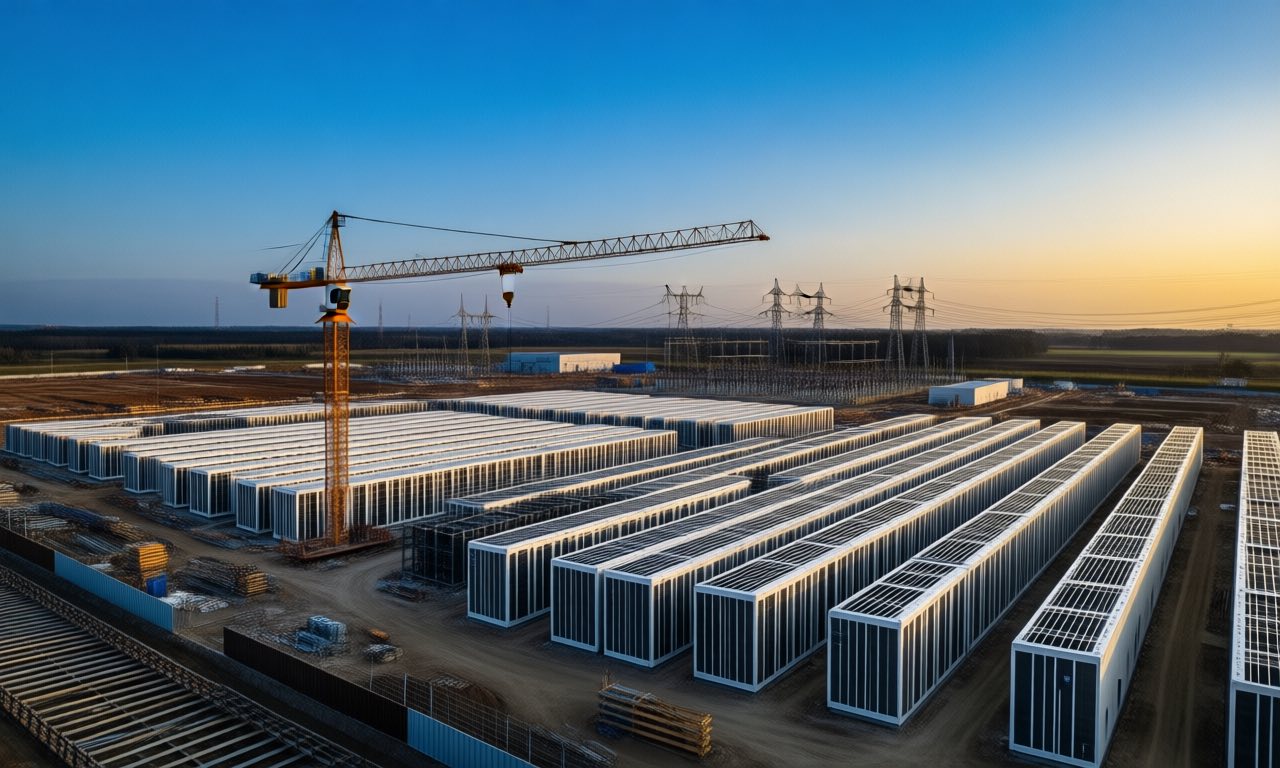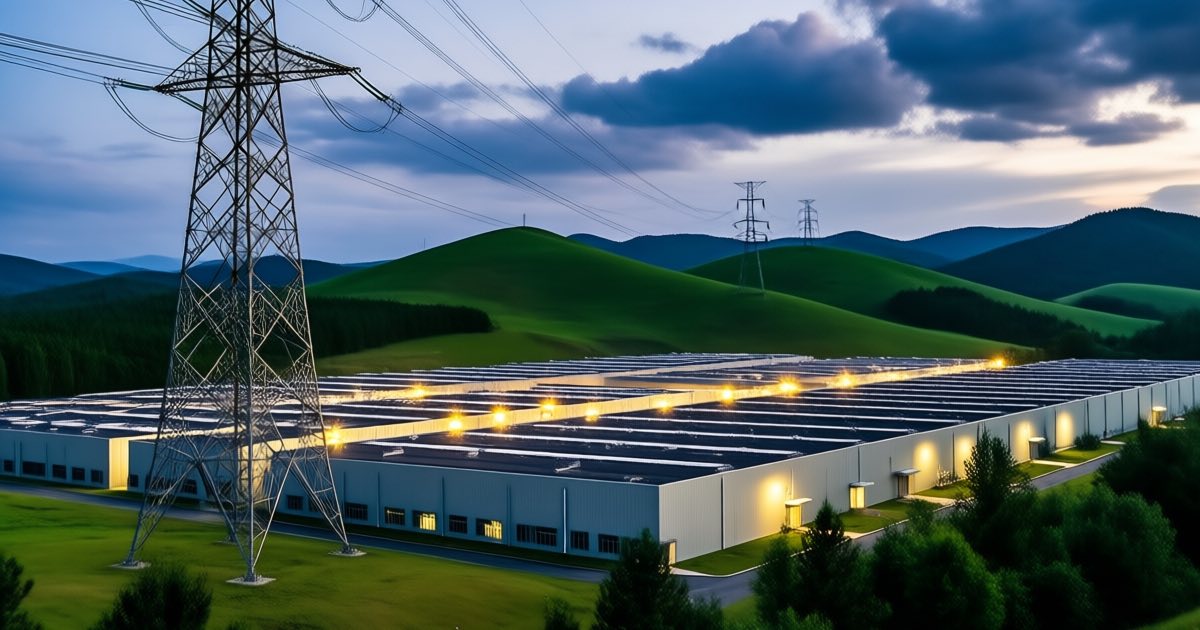
AMD is investing up to $5 billion in Anthropic — and committing to deploy 2 gigawatts of its next-generation MI450 Series GPUs in AMD Helios rack-scale systems, with the first gigawatt coming online in the first half of 2027. It is the largest AI chip partnership outside Nvidia’s orbit, and it signals that the AI infrastructure race is no longer a one-hardware-vendor game.
🔍 THE BOTTOM LINE
Nvidia has owned the AI training market for three years. AMD’s deal with Anthropic — combining a multi-billion-dollar equity stake with a gigawatt-scale deployment commitment — is the first credible evidence that a second GPU supplier can win frontier-AI workloads at scale. For Anthropic, it means cheaper compute, supply-chain leverage in Nvidia negotiations, and a stronger IPO narrative. For AMD, it means Lisa Su’s company is now squarely at the centre of the global AI buildout, not on its边缘.
What the Deal Actually Includes
The partnership, announced July 22, has three components:
-
Hardware deployment: Anthropic will deploy AMD Helios rack-scale solutions featuring MI455X GPUs (part of the MI450 Series), paired with AMD EPYC “Venice” CPUs, Pensando networking, and ROCm software. This builds on Anthropic’s existing use of AMD Instinct MI355X GPUs — meaning Anthropic has already been testing AMD silicon in production, not just in benchmarks.
-
Engineering collaboration: AMD will use Claude to optimise workloads for AMD Instinct GPUs and accelerate ROCm software development. AMD will also adopt Claude across its own engineering and product teams. This is the “software moat” play — AMD’s biggest weakness versus Nvidia has been ROCm’s maturity, and Anthropic is now effectively co-developing it.
-
Equity investment: AMD has committed to make a strategic equity investment of up to $5 billion in Anthropic. The Financial Times reported that Anthropic committed to buying “tens of billions of dollars” of AMD’s latest AI server chips as part of the arrangement.
Dr. Lisa Su, AMD’s chair and CEO, called it a collaboration that “brings together Anthropic’s leadership in frontier AI with the full strength of AMD high-performance computing.” Tom Brown, Anthropic’s co-founder and chief compute officer, framed it as workload diversification: “Running across a diversified range of hardware lets us map the right workloads to the right hardware.”
Why 2 Gigawatts Matters
Two gigawatts is not a incremental upgrade. For context, a single large AI data centre typically draws 100-500 megawatts. Two gigawatts is roughly the power consumption of a medium-sized city, dedicated entirely to AI training and inference. It represents infrastructure at a scale that only a handful of companies — Microsoft, Google, Meta, Amazon — have previously committed to.
The first gigawatt begins deployment in H1 2027, meaning AMD is already tooling up production lines. The MI455X is AMD’s answer to Nvidia’s Blackwell architecture — and Anthropic is apparently confident enough in its performance to commit at a scale that would have been unthinkable for AMD even 12 months ago.
This also connects to the broader compute buildout we’ve tracked: Anthropic’s partnership with SpaceX on compute capacity, and the ongoing S&P 500 rule changes for AI IPOs that suggest the market expects massive capital expenditure from frontier AI labs.
The Nvidia Leverage Play
The strategic logic is straightforward: Anthropic needs Nvidia less when it has AMD as a viable alternative. Every percentage point of AMD compute in Anthropic’s infrastructure is a percentage point of negotiating leverage with Nvidia on pricing, allocation, and delivery timelines.
AMD’s MI355X GPUs are already in use at Anthropic for inference workloads, and the cost-per-token economics have been competitive. The MI450 Series is a step-change in performance — and if ROCm software improves to parity with CUDA (which is what the engineering collaboration is designed to accelerate), AMD becomes a genuine dual-source option, not a fallback.
For Nvidia, this is the first time a frontier AI lab has committed to a non-Nvidia platform at gigawatt scale. It won’t break Nvidia’s dominance — Nvidia still powers the vast majority of frontier training — but it ends the narrative that Nvidia is the only path to frontier AI.
The IPO Angle
The timing is not coincidental. Anthropic has already begun registering for its IPO, and The Guardian reported that the company hopes to follow SpaceX’s trajectory — SpaceX raised $86 billion and hit a $2.1 trillion valuation after listing. Anthropic’s implied valuation on IG’s trading platform dropped $232 billion to $1.56 trillion after Kimi K3’s launch, so the company needs strong narrative momentum heading into its public debut.
A $5 billion equity commitment from AMD — one of the world’s largest semiconductor companies — is a credibility signal for institutional investors. It says: a major chipmaker believes in Anthropic enough to put capital at risk. That’s the kind of anchor investment that strengthens an IPO prospectus.
NZ Angle
New Zealand’s AI sector is overwhelmingly Nvidia-dependent. Crown Research Institutes, universities, and private AI startups all run on Nvidia GPUs — typically older A100s or H100s procured through cloud providers. AMD’s entry into the frontier-AI chip market at gigawatt scale could eventually lower GPU costs for NZ organisations accessing compute through AWS, Azure, or direct AMD-based cloud instances.
The wider question is whether NZ’s sovereign AI strategy — if one materialises — should consider AMD-based infrastructure as a hedge against Nvidia supply constraints and US export controls. A dual-vendor strategy is standard in enterprise IT for exactly this reason.
❓ FAQ
Is AMD’s ROCm software actually competitive with Nvidia’s CUDA? Not yet — that’s the core reason for the engineering collaboration. CUDA has a 15-year head start and a massive developer ecosystem. AMD’s ROCm has improved significantly but still lags in mature tooling. Anthropic using Claude to accelerate ROCm development is a novel approach — using AI to close the software gap.
Does this mean Nvidia is losing its AI chip dominance? Not immediately. Nvidia still commands the majority of frontier-AI GPU shipments and its Blackwell architecture is shipping now. But AMD landing a gigawatt-scale commitment from a frontier lab is the first proof that the market is becoming multi-vendor. Nvidia’s pricing power weakens when customers have a real alternative.
How much is $5 billion in context? AMD’s market capitalisation is around $280 billion. A $5 billion equity investment in Anthropic is significant but not transformative for AMD’s balance sheet. For Anthropic, which was valued at around $60 billion in its last private round, AMD’s commitment at this scale is a major vote of confidence — and potentially a pricing anchor for the IPO.
Will this affect NZ organisations using AWS/Azure? Indirectly, yes. AWS already offers AMD-based EC2 instances. If AMD GPUs prove themselves at Anthropic’s scale, cloud providers will expand AMD-based offerings, which could put downward pressure on GPU instance pricing across the board.
🔍 THE BOTTOM LINE
AMD’s $5 billion bet on Anthropic is the strongest signal yet that the AI chip monopoly is cracking. Not because Nvidia is failing — it isn’t — but because a frontier AI lab has now publicly committed to a non-Nvidia platform at a scale that would have been dismissed as fantasy a year ago. The deal gives Anthropic supply-chain resilience, IPO credibility, and leverage in Nvidia negotiations. It gives AMD the one thing it has always lacked in AI: a flagship customer willing to deploy at scale. The AI infrastructure race just became a two-horse contest.