Apple is building a way to prove that iPhone photos are real. The feature, called Apple Reference Image, embeds provenance metadata into photographs at the moment of capture — sensor signatures, timestamps, hardware identifiers — so anyone can verify an image came from a physical camera and not an AI generator.
It’s the right idea at the right time. It’s also being built on a different standard from everyone else, and that’s a problem.
The Verge first reported the feature, found in iOS 27 beta 5 code by 9to5Mac. It’s not live yet — it’s off by default, and when it ships, users will need to enable it in Settings and shoot in a special “Reference” mode to produce verified images.
How It Works
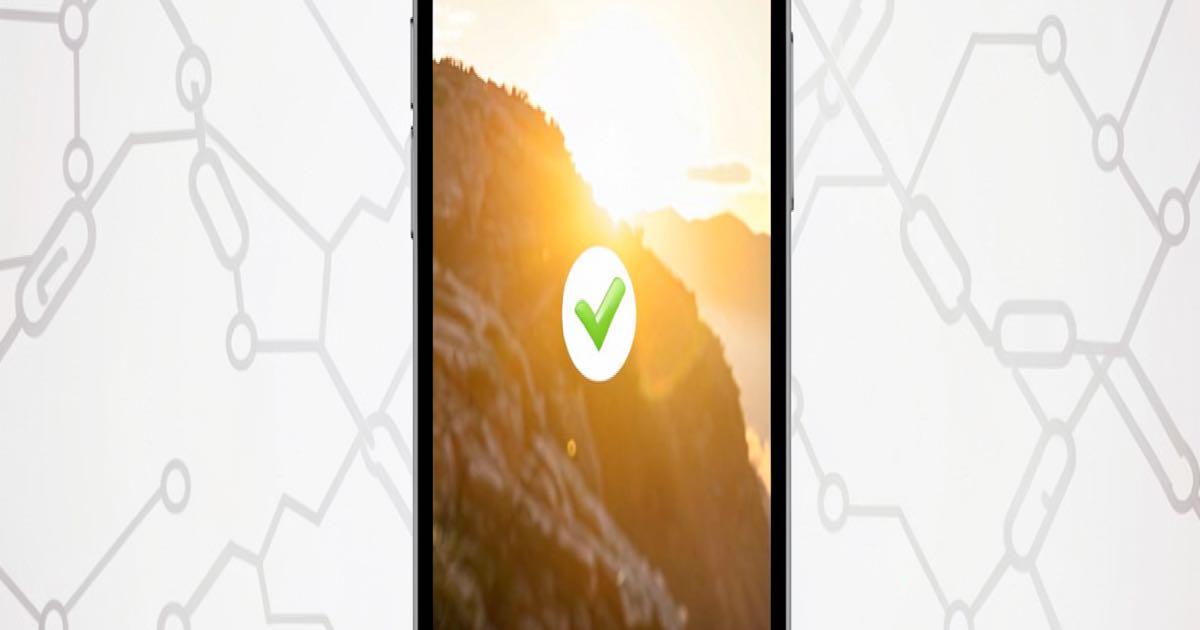
When a user takes a photo in Reference mode, the iPhone embeds provenance data into the image file. To verify the photo later, a user taps a Reference badge on the image, which sends the raw image and its metadata to Apple’s Private Cloud Compute servers. Apple checks the sensor signatures, capture timestamps, and hardware identifiers, then returns an authenticated version with a unique ID.
Apple doesn’t access the raw photo itself during verification, according to the privacy disclosure. But it does receive sensor data — enough to prevent images from compromised sensors from being authenticated, and enough to retroactively revoke authentication on images associated with a specific sensor.
The system is opt-in, user-triggered, and server-dependent. That’s three gates between a photograph and proof of authenticity.
The Standards Split
Here’s where it gets complicated. There’s already an open standard for content provenance — C2PA, the Coalition for Content Provenance and Authenticity. OpenAI adopted it for AI-generated images. Google uses it. Adobe built it into Photoshop. The EU AI Act’s transparency obligations, which took effect August 2, treat C2PA-style provenance as the baseline for AI content labelling.
Apple isn’t using C2PA. It’s building its own system, routed through its own cloud infrastructure, with its own verification protocol.
What is C2PA? The Coalition for Content Provenance and Authenticity is an open standard developed by Adobe, Microsoft, the BBC, Sony, and others. It embeds cryptographic provenance metadata into media files — who created it, when, with what tool, and whether AI was involved. Any C2PA-compatible tool can read and verify the metadata. The standard is designed to be interoperable across devices and platforms.
Apple’s approach isn’t interoperable. An image verified through Apple Reference Image carries Apple’s metadata, checked by Apple’s servers, in Apple’s format. A C2PA-compliant tool won’t recognise it. An Apple tool won’t recognise C2PA metadata. Two verification systems, side by side, neither reading the other.
Why This Matters Beyond Apple
The deepfake problem is no longer theoretical. YouTube opened its deepfake detection to all adult users in May. NZ’s deepfake bill passed its first reading unanimously just three days ago. The EU’s AI Act transparency rules are now in force. The market for distinguishing real from AI-generated content is forming in real time, and the question of which standard it settles on determines whether the solution works at scale.
AI Governance Institute frames the issue precisely: enterprise content authenticity policies that reference C2PA as the governing standard may not recognise Apple’s proprietary provenance metadata. Media organisations, legal teams, insurance companies, and financial services firms building workflows around image verification now need to handle two non-interoperable systems — one for iPhone photos, one for everything else.
The iPhone is the most popular camera in the world. When the most popular camera uses a proprietary provenance standard, the open standard becomes the secondary standard by default.
The Dependency Risk
Apple’s system routes verification through Private Cloud Compute — Apple’s own server infrastructure. If those servers are down, degraded, or changed, the verification layer breaks. An authenticated image record is only as reliable as the infrastructure behind it.
For a journalist verifying a photo from a source, that’s an acceptable trade-off. For a court requiring evidentiary-grade provenance, or an insurance company building a claims workflow around authenticated images, a single-vendor dependency introduces continuity risk that C2PA’s distributed model doesn’t have.
Apple can also revoke authentication retroactively — if a sensor is flagged as compromised, all images tied to that sensor lose their verified status. That’s a security feature. It’s also a power that no C2PA-based system centralises in a single company.
🔍 THE BOTTOM LINE
Apple Reference Image will likely work well for the use case it’s designed for: letting iPhone users prove their photos are real. But by building outside the C2PA standard, Apple is fragmenting the provenance landscape at the exact moment regulators, media organisations, and platforms are trying to converge on one. The question isn’t whether Apple’s system works. It’s whether the world needs two incompatible ways to verify that a photograph is real.
❓ FAQ
When will Apple Reference Image be available? The feature was found in iOS 27 beta 5 code. It’s not currently live and is off by default. No official release date has been announced — the feature may or may not ship with iOS 27.
How is this different from C2PA? C2PA is an open, interoperable standard — any compatible tool can read and verify provenance metadata. Apple Reference Image is a proprietary system that routes verification through Apple’s own cloud servers using Apple’s own metadata format. The two systems don’t read each other’s data.
Could NZ courts use Apple-verified photos as evidence? That’s an open question. Any evidentiary workflow built on Apple Reference Image would depend on Apple’s Private Cloud Compute infrastructure being available and unchanged. Legal teams would need to assess whether a single-vendor verification system meets evidentiary standards in NZ jurisdictions.
Does this stop deepfakes? No. Apple Reference Image proves that a specific photo was taken on a specific iPhone. It doesn’t detect deepfakes created on other platforms. It’s a provenance tool — proving origin — not a detection tool. Both approaches are needed, and they’re complementary, not substitutes.