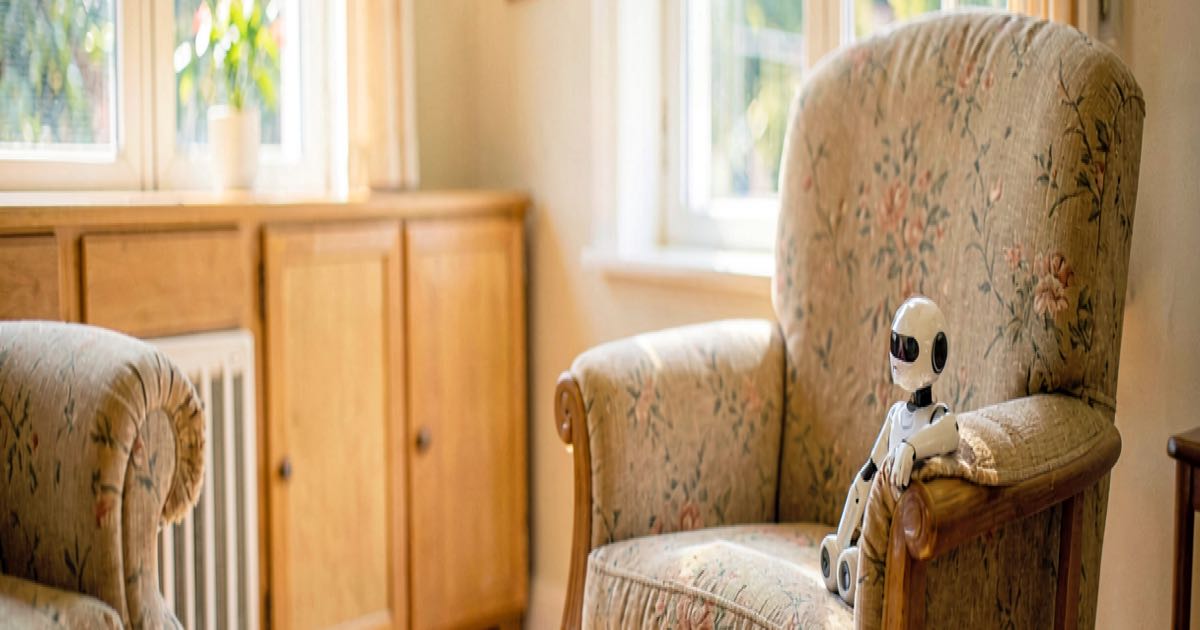
Brightwater Care Group is deploying Abi humanoid companion robots across four aged care homes in Western Australia, including a planned young-onset dementia facility in Waikiki, south of Perth. The AUD $982,000 programme, funded by Lotterywest, will test whether conversational robots can improve social connection and resident engagement for people living with dementia.
The trial matters because it asks the question the robotics industry keeps dodging: what happens after the novelty wears off?
The Setup
The Abi robots — small humanoid companions designed for conversation and social interaction — will be placed in Brightwater’s existing aged care homes and at the organisation’s planned young-onset dementia residence at Waikiki. CEO Dr Catherine Stoddart said the robots were intended to complement human care, not replace it.
That distinction is doing a lot of work. A robot that arrives in an aged care lounge generates attention on day one. Residents want to touch it, talk to it, show it to visiting families. By week three, the question is whether anyone still bothers.
Brightwater had already explored Abi in aged care settings. The new funding widens the trial to more residents and care environments, which should produce a more useful sample than a single-home pilot.
What the Research Actually Shows
Studies into socially assistive and humanoid robots in dementia care have shown some encouraging results — improvements in engagement, and in some studies, reductions in agitation and anxiety. But the evidence base is still developing. Longer-term use patterns, and how well the technology works across different types of residents and cognitive profiles, remain underexplored.
The gap in the literature is exactly what Brightwater’s trial could fill. If the AgedPlus reporting is right, operators will be looking for data on resident response over weeks and months, not days — frequency of use, whether the technology becomes embedded in daily care programmes, and whether it adds something that staff time alone cannot.
Why This Trial Is Worth Watching
Most companion robot stories focus on the launch — the handshakes, the photo ops, the CEO quote about “enhancing care.” Few follow up. The trials that produce useful evidence are the ones that measure engagement after the robot has been sitting in the corner for a month.
Brightwater’s structure gives it a better shot at producing that evidence. The Lotterywest grant covers a programme, not a one-off purchase. Four sites provide comparison points. The young-onset dementia home — WA’s first purpose-built residential facility for people diagnosed before 65 — adds a distinct resident profile. People with young-onset dementia may still be working, raising families, and living active lives when their support needs increase. Their interaction patterns with a companion robot could look very different from those of residents in their 80s and 90s.
The same grant will fund the Waikiki facility itself, designed with input from people living with young-onset dementia and their families. Brightwater already operates two young-onset supported living homes at Kingsley. The new build allows a purpose-designed environment rather than a retrofit.
The Broader Context
Companion robots in aged care are moving from demonstration to commercial deployment. The global market for socially assistive robots is growing as workforce shortages intensify across the aged care sector in Australia, New Zealand, and most developed economies. The question is no longer whether robots can be placed in care homes — they can. It is whether they earn their place.
A robot that reduces agitation for one resident but sits untouched by five others may or may not be worth the cost. A robot that becomes part of daily activity programmes across a facility is a different proposition. Brightwater’s trial should help distinguish between the two.
For New Zealand, where aged care workforce shortages are acute and the government’s AI policy remains deliberately hands-off, the Australian trial is close enough to matter. If companion robots demonstrate sustained engagement in dementia care across the Tasman, the case for similar deployments in NZ facilities strengthens. If they do not, the sector saves itself an expensive dead end.
❓ FAQ
What is the Abi robot? Abi is a small humanoid companion robot designed for social interaction and conversation. It is being deployed in aged care settings to support engagement with residents, particularly those living with dementia.
How is the Brightwater trial funded? The programme is funded by a AUD $982,000 grant from Lotterywest, Western Australia’s community grants organisation. The same grant also supports the development of WA’s first purpose-built young-onset dementia residential home.
What is young-onset dementia? Dementia diagnosed before the age of 65. People may still be working, raising families, and living relatively active lives when their support needs begin to increase, making conventional residential aged care a poor fit.
Are companion robots being used in New Zealand aged care? There is no widely reported large-scale deployment of humanoid companion robots in NZ aged care facilities. NZ companies and researchers have explored socially assistive robots, but the sector has been slower to adopt than Australia.