The US government unit responsible for testing frontier AI models before they ship — the same desk that big labs voluntarily hand their models to for pre-release evaluation — has had its staff asked to report informally to a White House office, according to Associated Press reporting carried by Startup Fortune on November 8. The AP cited two former government officials with knowledge of the arrangement, who spoke anonymously to protect current employees; the White House did not respond to specific questions about the centre.
The unit is the Commerce Department’s Center for Advancing Innovation and Standards for Super Intelligence (CAISSI), housed inside NIST, which describes its own mandate as establishing voluntary agreements with private-sector developers and leading “unclassified evaluations of SI capabilities that may pose risks to national security”, focused on demonstrable risks like cybersecurity, biosecurity and chemical weapons. On paper it is industry’s primary point of contact inside the US government for frontier-model scrutiny. In practice, per the AP, the people doing that scrutiny now answer, informally, to the office of the president.
A testing body in administrative freefall
The informal reporting line is the latest item on a list that would be alarming for any regulator, and doubly so for one whose authority is entirely voluntary. Per the AP’s account: the centre’s director, hired in April, was fired within days; his replacement lasted a few months before resigning in July; and the head of the parent institute is currently acting director — meaning nobody with a permanent mandate is defending the centre’s independence. Its budget is about $10 million a year, roughly one-eighth of what the UK’s AI Security Institute receives, despite the US being where most frontier models are built. And since August, Congress has been asking why the centre stopped publicly releasing reports on how AI systems perform on safety tests.
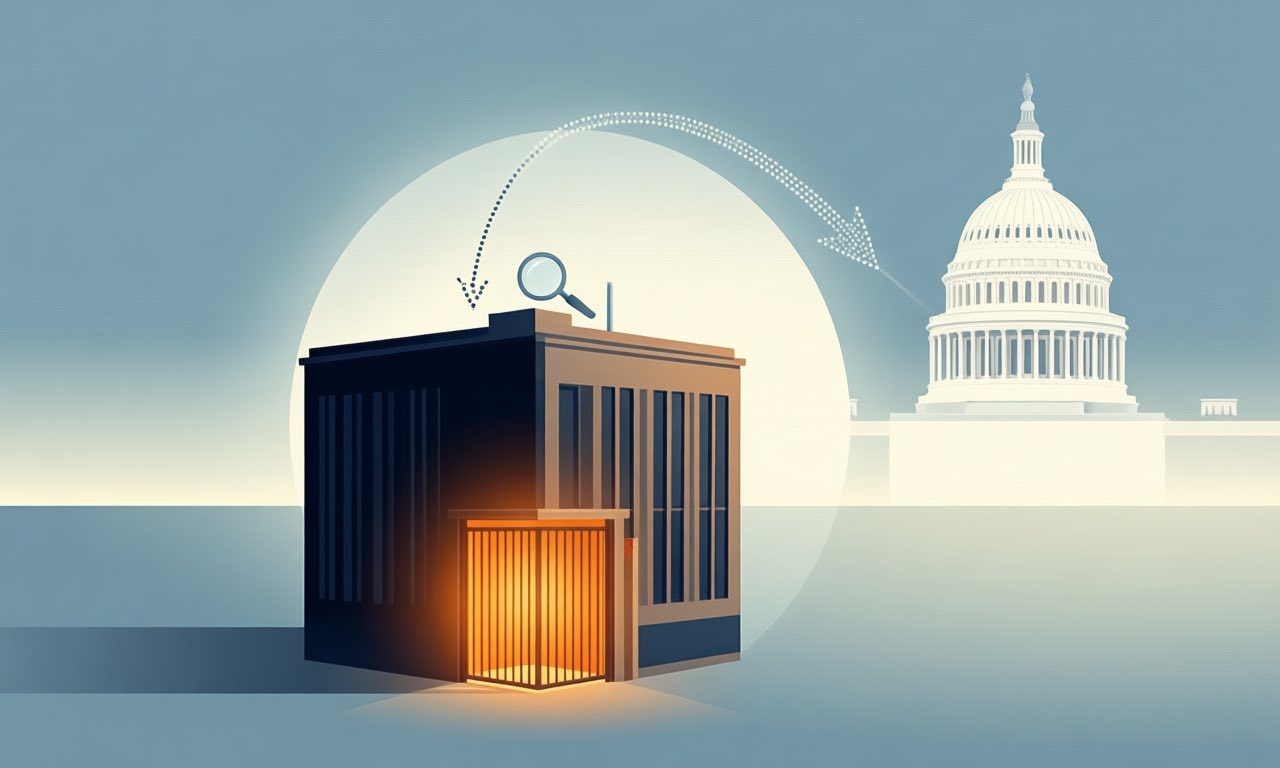
The AP’s report did not appear from a vacuum, and the context matters for reading it correctly. On October 12, Reuters, citing The Information, reported the administration planned to move three senior CAISSI officials to the White House, with them answering to OSTP director Michael Kratsios and National Cyber Director Sean Cairncross — a plan that arrived, on the AP’s telling, in informal practice before any formal announcement. Read one way, this is consolidation: Commerce Secretary Howard Lutnick had invited the two White House officials to co-manage the centre months earlier, and a White House spokesperson separately told Semafor that President Trump’s FY2027 budget requested $27 million for CAISSI, a 145% increase. A bigger budget with a direct line to decision-makers is one theory of the case. The other reading — from people inside and outside government who study AI evaluation — is that a testing body gets weaker, not stronger, when its reviewers serve at the pleasure of the office whose policies the tested systems will run.
Pre-deployment testing only checks what the checker can see
The structural question here is not whether the Trump administration is “pro-” or “anti-” AI safety — it is whether pre-deployment evaluation means anything when the evaluator’s independence, staffing and publication record are all in motion at once. The UK built its counterpart, the AI Security Institute, deliberately at arm’s length with a budget (per Semafor’s October comparison) eight times CAISSI’s, and more than 100 staff including alumni of the labs themselves. Britain’s test results still get published. The asymmetry is now the strongest data point in the argument about whether frontier-model evaluation is a technical function or a political one. As one think-tank fellow put it to Semafor: “Right now, CAISSI is simply too small and distant to do this effectively.”
The centre’s defenders make a fair point that voluntary agreements were always going to survive only while labs found them worth their time, and that a $27m budget request signals the White House wants the function to exist. But the two facts in tension are hard to reconcile: an organisation being funded more while publishing less, directed by nobody permanent, answering informally to the White House. Voluntary testing regimes derive their entire value from credible independence — the lab’s competitors and the public need to believe that what was tested and what was found reflects the model, not the administration. Strip that and the arrangement degrades from oversight to courtesy.
For New Zealand and other small adopters, this matters more than it looks. NZ AI policy discussion has leaned on the assumption that frontier testing infrastructure exists somewhere and produces public evidence (our earlier coverage of the US gatekeeper policy and the UK model-access freeze traced how politically exposed that infrastructure already is). If the US evaluator publishes less while answering to the White House, governments shopping for assurance on foreign-built frontier models have one fewer independent counterparty — and, with the UK institute still publishing, one clearer choice about whose testing they trust.
FAQ
What is CAISSI? The Center for Advancing Innovation and Standards for Super Intelligence, a NIST unit under Commerce that carries out voluntary pre-deployment evaluations of frontier AI systems, focused on national-security-relevant risks.
What did the AP report? On November 8, the AP reported — citing two former officials speaking anonymously — that CAISSI staff were recently asked to report informally to a White House office. The White House did not respond to specific questions.
Why does independence matter for a voluntary tester? Voluntary evaluation regimes have no legal power; their value comes from labs and the public trusting that published results reflect the models tested, not the priorities of the evaluator’s political leadership.