Answer-First Lead
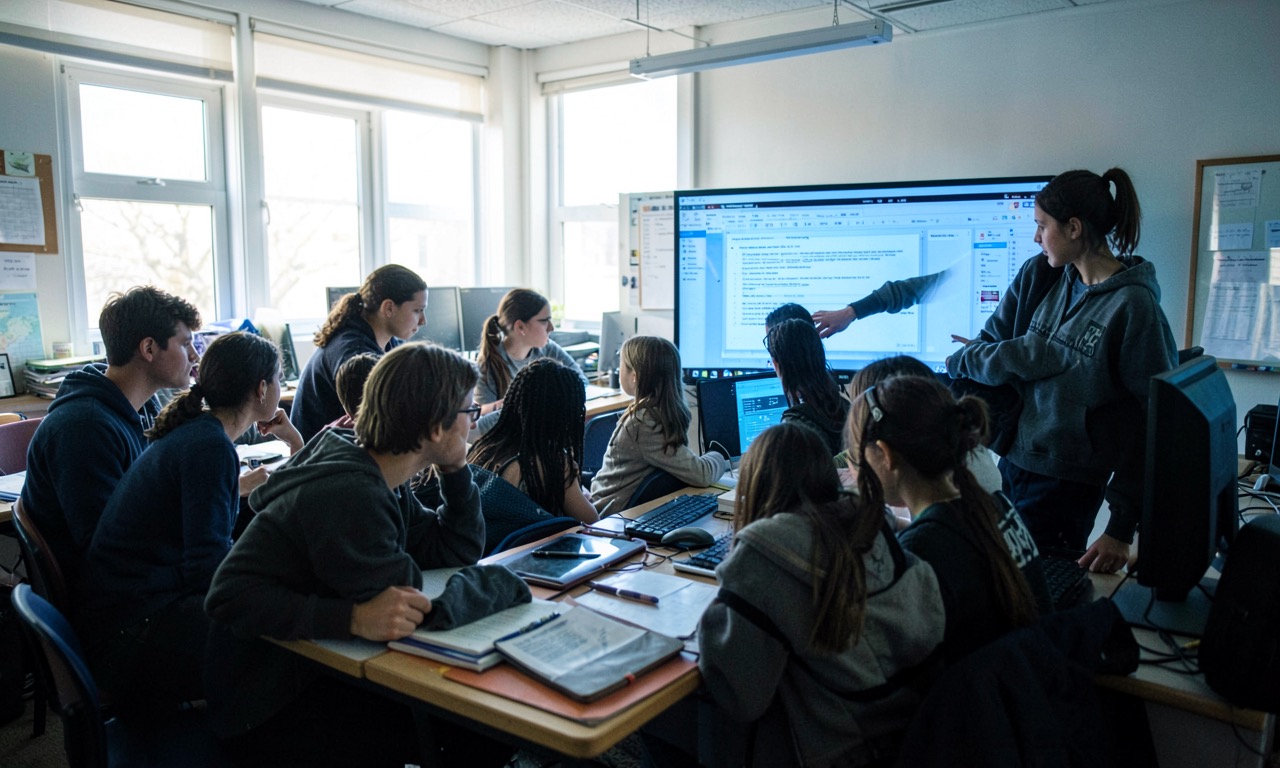
Estonia is rolling out a national “AI Leap” programme putting AI at the centre of every classroom — while most countries are still trying to block ChatGPT. Colorado found 50%+ of teachers already use AI tools, with some building their own custom chatbot tutors. Michigan issued statewide AI guidance for schools. And 134 AI-in-education bills have been introduced across US state legislatures in 2026. The question has shifted from “should AI be in schools?” to “how do we do this well?”
🔍 THE BOTTOM LINE
Three approaches to AI in education are emerging: integrate deeply (Estonia), manage pragmatically (US states with guidance and bills), and ban and restrict (most schools today). Estonia’s model is the one to watch — it’s the country that taught coding in primary school a decade ago. They’ve done this before.
📰 Stories
1. Estonia’s “AI Leap”: The Most Ambitious National AI-in-Education Programme Yet
Estonian Education Minister Kristina Kallas is rolling out the AI Leap initiative: every student and teacher gets AI tools and training, integrated into curriculum — not as an add-on but as a core competency. “Our true leap is to learn to think with artificial intelligence, not instead of it,” Kallas said at the Tallinn Digital Summit.
Estonia’s approach is the opposite of the “ban AI in schools” model. Instead of trying to detect and punish AI use, they’re embedding AI literacy into every subject — teaching students when to use AI, when to question it, and how to evaluate its outputs.
Why it matters for educators: Estonia has consistently been ahead on education technology (it introduced mandatory coding classes in 2012). The AI Leap programme is the most systematic national approach to AI education we’ve seen. Key elements worth watching: teacher training (how do you retrain a veteran teacher?), assessment redesign (what counts as original work?), and equity (does every school get the same AI access?).
Why it matters for students: Estonia’s students will graduate with AI literacy as a core competency, not a specialisation. For NZ students competing in the same global talent pool, that’s a competitive challenge Estonia is making more acute.
Sources: POLITICO, Estonia Ministry of Education, Teacher Magazine
2. Colorado Teachers Are Building Their Own AI Tools — District Can’t Keep Up
A KUNC survey found the majority of Colorado teachers now use AI tools, and some are building custom solutions because district-approved tools don’t meet their needs. Teacher Stephen Kelly built chatbot tutors using MagicSchool that guide students through the scientific method — “kind of like talking to me,” he says, since the bots withhold answers and ask follow-up questions instead.
Another teacher caught PhD-level AI-generated homework on brain-eating amoebas from a 10th grader. The tell: the student couldn’t explain what they’d written. “The projects that I got were really, really good. A little too good,” Kelly said.
Why it matters: The teacher-as-AI-developer trend is real. When district tools move too slowly, creative teachers build their own. This is both exciting (custom pedagogy tools) and concerning (no vetting, no privacy review, no guarantee of age-appropriate content). Schools need to figure out how to support teacher innovation without opening security or privacy risks.
Sources: KUNC
3. Michigan Issues Statewide AI Guidance for K-12 Schools
The Michigan Department of Education released official guidance on AI use in K-12 schools — covering academic integrity, data privacy, equitable access, and AI literacy. The guidance is designed to help local school districts develop their own policies rather than imposing a one-size-fits-all approach.
Why it matters: Michigan joins a growing list of US states issuing AI guidance rather than outright bans. The “local control” model lets school districts adapt AI policies to their community’s needs — but it also means significant variation in student AI literacy depending on where you live. A Detroit student may get very different AI education than one in Ann Arbor.
Sources: Michigan Department of Education
4. 134 AI-in-Education Bills Introduced Across US States in 2026
According to Multistate’s tracker, at least 134 pieces of legislation related to AI in education have been introduced across US state legislatures in the 2026 session. Topics range from AI literacy requirements and teacher training mandates to data privacy protections and restrictions on AI grading.
Why it matters: The legislative volume is unprecedented — and mostly bipartisan. AI in education is one of the few technology policy areas where Democratic and Republican state lawmakers are both active. The split tends to be: Democrats focus on equity and privacy; Republicans focus on competition and skills. The volume itself is the story — every US state legislature is grappling with AI in schools simultaneously.
Sources: Multistate, Education Commission of the States
5. US Department of Education Finalises AI Priority Definition
The US Department of Education published a Final Priority and Definitions on “Advancing Artificial Intelligence in Education” in the Federal Register (April 13, 2026). The document sets a federal definition for AI literacy and establishes grant priorities for AI integration in schools.
Why it matters: Federal definitions matter because they shape where money goes. The Department of Education’s official definition of “AI literacy” will be used to evaluate grant applications, design professional development, and assess curriculum. This is the administrative state quietly creating the framework for AI education across thousands of school districts.
Sources: Federal Register, US Department of Education
6. Colorado Teachers Show the Cheat-Detection Arms Race Is Already Here
The Colorado survey revealed a dynamic that every educator recognises: students using AI to do work they can’t explain. One 10th grader submitted PhD-level research on brain-eating amoebas. Another teacher described using AI detection tools, only to have students find ways around them.
The interesting part isn’t the cheating — it’s what teachers are doing about it. Rather than investing more in detection, some are redesigning assessments. One teacher now requires students to present and defend their work orally. Another uses AI chatbots for formative assessment, which makes AI-assisted cheating in that context impossible (the bot already knows).
Why it matters for educators: The cheat-detection arms race is unwinnable. Every detection tool will be countered by better AI. The sustainable solution is assessment redesign — what does “original student work” look like in an AI world? Teachers in Colorado are starting to answer that question. School districts should be paying attention.
Sources: KUNC
7. The Meta Keystroke Surveillance Program: An Ethics Case Study for the Classroom
Meta’s workplace surveillance program — capturing employee keystrokes to train AI replacements — is the kind of real-world ethical dilemma that belongs in every AI ethics curriculum. It touches on privacy, consent, power dynamics, automation of labour, and the alignment of corporate incentives with worker wellbeing.
How to teach it: Ask students to debate whether Meta’s program is ethical if employees are told about it in advance. Does disclosure = consent when your employer controls your paycheck? Is keystroke surveillance different from, say, Amazon’s warehouse tracking? What would fair regulation look like?
Why it matters: Abstract AI ethics discussions lose students. Real cases — with real people affected — create engagement. The Meta keystroke story has it all: a clear villain (capturing keystrokes to train replacements), a systemic question (is this just the next step in workplace surveillance?), and no easy answers (what’s the alternative for companies trying to build AI tools?).
Sources: The Next Web, Business Insider, New York Magazine
8. White Circle / MDASH: Teaching AI Safety from Production Reality, Not Theory
White Circle’s AI circuit breaker and Microsoft’s MDASH multi-model security system represent the shift from AI safety as a research topic to AI safety as a production engineering discipline. Both are now operating in real enterprise environments, monitoring and intervening in AI behavior.
Why it matters for educators: AI safety courses still focus on alignment theory, reward hacking, and paperclip maximisers. The shift to production — real monitoring systems, real circuit breakers, real multi-model orchestrators — means AI safety education needs an engineering track alongside the theory track. Students who want to work in AI safety need to understand both.
Sources: Fortune, The Next Web, Neowin, SecurityWeek
🔍 THE BOTTOM LINE
AI in education is no longer a future question. Estonia is embedding it in curriculum. US teachers are building their own tools. 134 bills are being debated. The split in education mirrors the split in the broader AI conversation — integration vs restriction, guidance vs regulation, teacher-led innovation vs district-controlled processes. Every educator needs a plan, because the students already have one.
❓ Frequently Asked Questions
Q: Should NZ schools follow Estonia’s model? Estonia has advantages NZ doesn’t — smaller population, centralised education system, existing digital infrastructure (every Estonian has a digital ID). But the philosophy (“learn to think with AI, not instead of it”) is directly applicable. NZ’s Ministry of Education should be studying Estonia’s implementation closely.
Q: Are teachers being replaced by AI tutors? No, but their role is changing. The Colorado teachers building chatbot tutors aren’t outsourcing their jobs — they’re augmenting their capacity to give individualised feedback. The teacher remains the pedagogical designer; the AI executes the tutoring. Classroom teachers who understand this distinction will be more valuable, not less.
Q: How should schools handle AI-assisted cheating? Switching to in-class assessments and oral defences is one approach. Redesigning assignments to require AI collaboration rather than banning AI is another. Detection tools are losing effectiveness. The sustainable strategy: teach AI literacy and redesign assessment for an AI-augmented world.
📰 Sources
- POLITICO
- KUNC (Colorado Public Radio)
- Michigan Department of Education
- Education Commission of the States
- Multistate
- Federal Register / US Department of Education
- The Next Web
- Computerworld
- Neowin
- Fortune
- SecurityWeek
- Estonia Ministry of Education
- Business Insider
- New York Magazine / Intelligencer