Answer-First Lead
Estonia — the country that gave the world digital IDs and e-residency — just became the first nation to embed AI into every single secondary school classroom via a custom OpenAI platform. Humanity AI committed $18M to public interest AI education. Data & Society launched “AI Civics” as a curriculum for democratic participation in an AI-shaped world. Google is spending $10M to train 4.7 million students and workers across Asia-Pacific. And IIT Madras wants to train one million teachers on AI by 2027. Let’s get into it.
📰 Stories
1. 🇪🇪 Estonia Deploys Custom OpenAI Platform to Every Secondary School
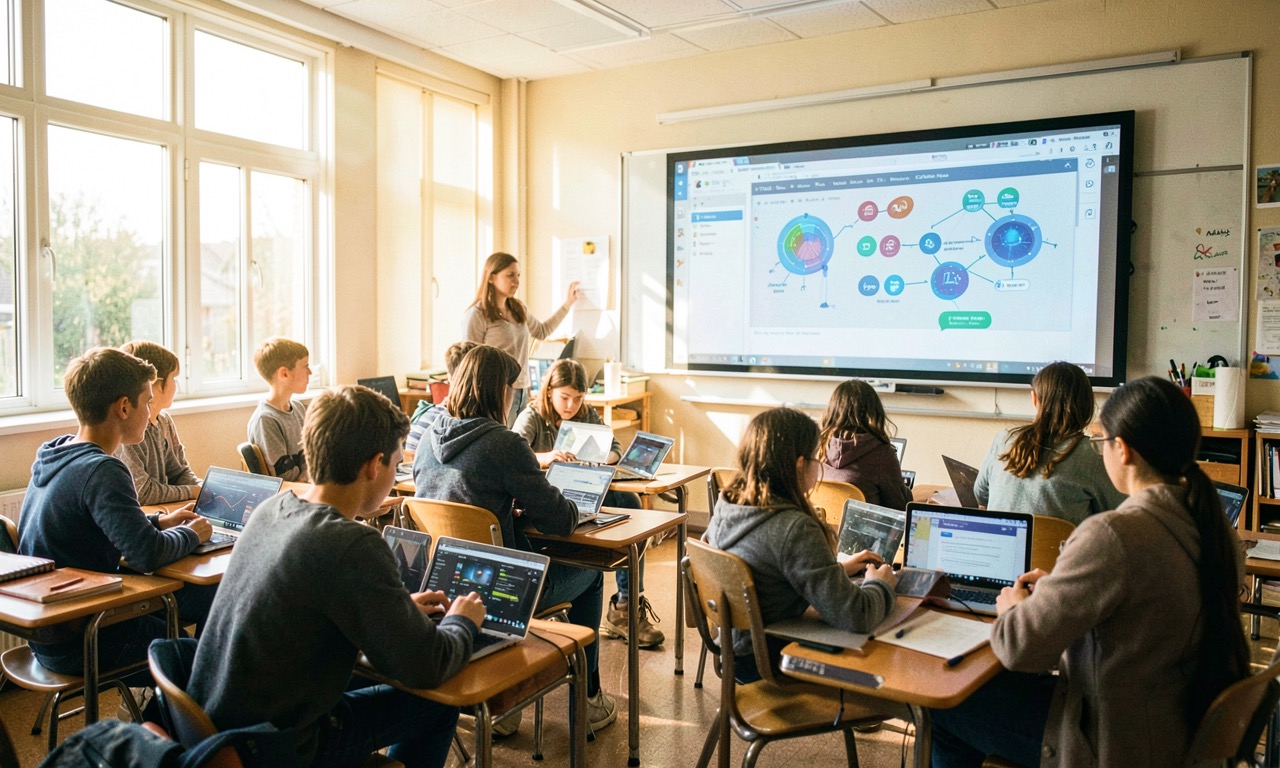
The story: Estonia has launched its nationwide AI Leap (TI-Hüpe) programme, deploying a custom OpenAI-powered education platform to all 20,000 upper secondary students. The platform isn’t a generic ChatGPT wrapper — it’s a tailored environment where students interact with AI within curriculum-aligned guardrails, designed to promote critical thinking rather than answer-finding.
Estonian Education and Research Minister Kristina Kallas described the approach as “learning to think in the AI age” — the opposite of the panic-banning approach many other countries have adopted. Instead of blocking AI, Estonia is embedding it into how students learn, with teachers trained to guide AI-augmented inquiry.
The Ministry is sharing curriculum details with OpenAI to fine-tune the platform for the Estonian context — a level of integration that raises obvious data sovereignty questions but also produces a genuinely localised AI education tool.
Why it matters: Estonia is running the most ambitious national AI-in-education experiment on the planet. Every other country is either banning, restricting, or vaguely encouraging AI use in schools. Estonia is building it into the system. The results — good or bad — will be a case study for the rest of the world. If Estonian students show improved critical thinking and AI literacy without losing foundational skills, the “ban everything” approach dies. If it backfires, every cautious policymaker gets vindicated. Either way, Estonia is providing data the rest of us need.
2. 💰 Humanity AI Commits $18M to Public Interest AI Education
The story: Humanity AI — a pooled philanthropic fund supported by the Ford Foundation, Mellon Foundation, MacArthur Foundation, Lumina Foundation, and Omidyar Network — announced over $18 million in new grants on May 12 to shape AI for the public good. The initiative awarded $8 million to 12 inaugural grantees, with an additional $10 million committed to an upcoming open call.
Grantees include Student Defense, the Partnership on AI, and Data & Society (see next story). The focus areas span AI transparency, accountability, public education, and worker rights in AI-augmented industries.
Why it matters: Humanity AI is part of a $500 million philanthropic commitment to ensure AI serves the public interest — not just commercial interests. This is the philanthropic sector acknowledging that the current AI trajectory is shaped almost entirely by corporate incentives. Whether $500M moves the needle against the billions flowing into commercial AI development is an open question. But it’s the most significant counterweight we have, and the focus on education and civil society is the right place to start.
3. 🏛️ Data & Society Launches AI Civics Programme
The story: Data & Society — a research institute focused on the social implications of data and AI — launched “AI Civics” on May 12, a public education programme designed to build democratic power over technology. The programme will work with partner organisations and public institutions across the United States to create curricula, workshops, and community resources that help people understand how AI affects civic life.
AI Civics is not AI literacy in the technical sense. It’s about understanding AI’s implications for democracy, civil rights, public discourse, and governance. Think “how to be an informed citizen in a world where AI shapes elections, policing, credit, and housing” — not “how to prompt a chatbot.”
Why it matters: AI literacy programmes overwhelmingly focus on individual skills — how to use AI tools, how to prompt, how to stay employable. AI Civics is asking a different question: how do communities govern AI? It’s a much harder problem, and one that almost nobody is tackling. In an era where AI is embedded in decisions about housing, credit, criminal justice, and democratic participation, citizens need to understand not just how AI works but how to demand accountability from the institutions deploying it. This is the programme that should exist in every school.
4. 🌏 Google Expands $10M AI Opportunity Fund Across Asia-Pacific
The story: Google is expanding its AI Opportunity Fund throughout the Asia-Pacific region with a $10 million commitment to equip 4.7 million students, teachers, and workers with AI skills. The fund, announced on May 5, partners with local organisations in India, Southeast Asia, and the Pacific to deliver AI training in local languages.
The programme puts “educators at the centre of AI learning” — training teachers first, then letting them integrate AI into their existing curricula rather than imposing a top-down curriculum. Partner organisations include the Indian Institute of Technology (IIT), the Asian Institute of Management, and Teach For All.
Why it matters: Google’s AI Opportunity Fund is strategic philanthropy — it builds both market and talent pipeline for Google’s AI ecosystem while addressing real skill gaps. But the scale (4.7 million people) and the teacher-first approach are genuinely ambitious. The educator-at-centre model is the right pedagogical approach — you can’t train students faster than you train their teachers. Whether the programme is sustainable beyond Google’s funding cycle is the open question, but the commitment to local-language delivery addresses one of the biggest barriers to global AI skills equity.
5. 🏞️ Wright State Gets $2.5M to Teach AI to Rural Ohioans
The story: The US Department of Education awarded Wright State University $2.5 million to develop and deliver AI training programmes for rural Ohio communities. The funding will support curriculum development, equipment, instructor training, and community outreach across several rural counties where internet access and technology training are limited.
The programme targets workers in industries most vulnerable to AI disruption — including manufacturing, agriculture, logistics, and retail — and aims to provide both foundational AI literacy and specific skills for AI-augmented roles in those sectors.
Why it matters: Most AI upskilling programmes are concentrated in urban areas where tech infrastructure, broadband, and training providers already exist. Rural communities are being left behind twice — once by the digital divide, and again by the AI divide. This $2.5M investment is small relative to the need, but it’s a concrete attempt to address the rural-urban AI skills gap. The model — partner with a regional university, focus on local industry needs, and deliver in person — is more thoughtful than a national online portal and more likely to work.
6. 🎓 USF Launches Graduate Certificate in AI for Educators
The story: The University of South Florida College of Education launched a new graduate certificate in AI for Educators on May 15. The programme is designed for current K-12 and higher education teachers who want to integrate AI into their teaching practice — not just as a tool for lesson planning, but as a subject of study and critical analysis in the classroom.
The certificate covers AI fundamentals, AI ethics in education, prompt engineering for classroom use, assessment design in an AI-augmented environment, and AI policy development for schools. It’s fully online and designed to be completed in one academic year.
Why it matters: There are dozens of “AI for educators” courses — most of them are two-hour webinars that teach teachers how to use ChatGPT to write lesson plans. USF’s programme takes education seriously as a professional field, requiring sustained engagement with AI’s pedagogical, ethical, and policy implications. This is the kind of programme that should be standard in every education school. The fact that it’s newsworthy that one university offers it tells you how far behind teacher training is on AI.
7. 🇮🇳 IIT Madras to Train One Million Teachers in AI by 2027
The story: The Indian Institute of Technology Madras announced a programme to train one million teachers across India on AI by 2027, according to the Economic Times. The initiative will focus on integrating AI into daily teaching tasks like lesson planning, student assessment, and personalised learning support.
The programme leverages IIT Madras’s existing online education infrastructure and will deliver training in multiple Indian languages. Teachers who complete the programme receive certification from IIT Madras, adding a credential pathway.
Why it matters: India is simultaneously rolling out AI curriculum for students (as covered in the May 16 digest) and massive teacher training. One million teachers is an extraordinary target — larger than many countries’ total teaching workforce. The ambition is notable, but the execution challenge is enormous. India has 1.5 million+ schools with wildly varying levels of digital infrastructure, internet access, and teacher AI readiness. Training one million teachers in one year is the kind of goal that either demonstrates a national commitment or exposes the gap between policy and reality. Either way, the scale is unmatched globally.
🔍 THE BOTTOM LINE
This week in AI education: Estonia is running the world’s most ambitious national AI-in-schools experiment with OpenAI as its infrastructure partner. Philanthropy is stepping up with $18M for public interest AI. Data & Society is teaching people how to be AI-literate citizens, not just AI-literate workers. Google is spending $10M on teacher-first AI training across Asia-Pacific. The US Department of Education is funding rural AI upskilling. USF is offering actual AI teacher training, not a webinar. And India is aiming to train one million teachers. The common thread: every major initiative is teacher-first. You can’t AI-proof your country’s education system without investing in the people who run the classrooms.