1. Singapore: AI Skills Mandatory for ALL University Students by 2027
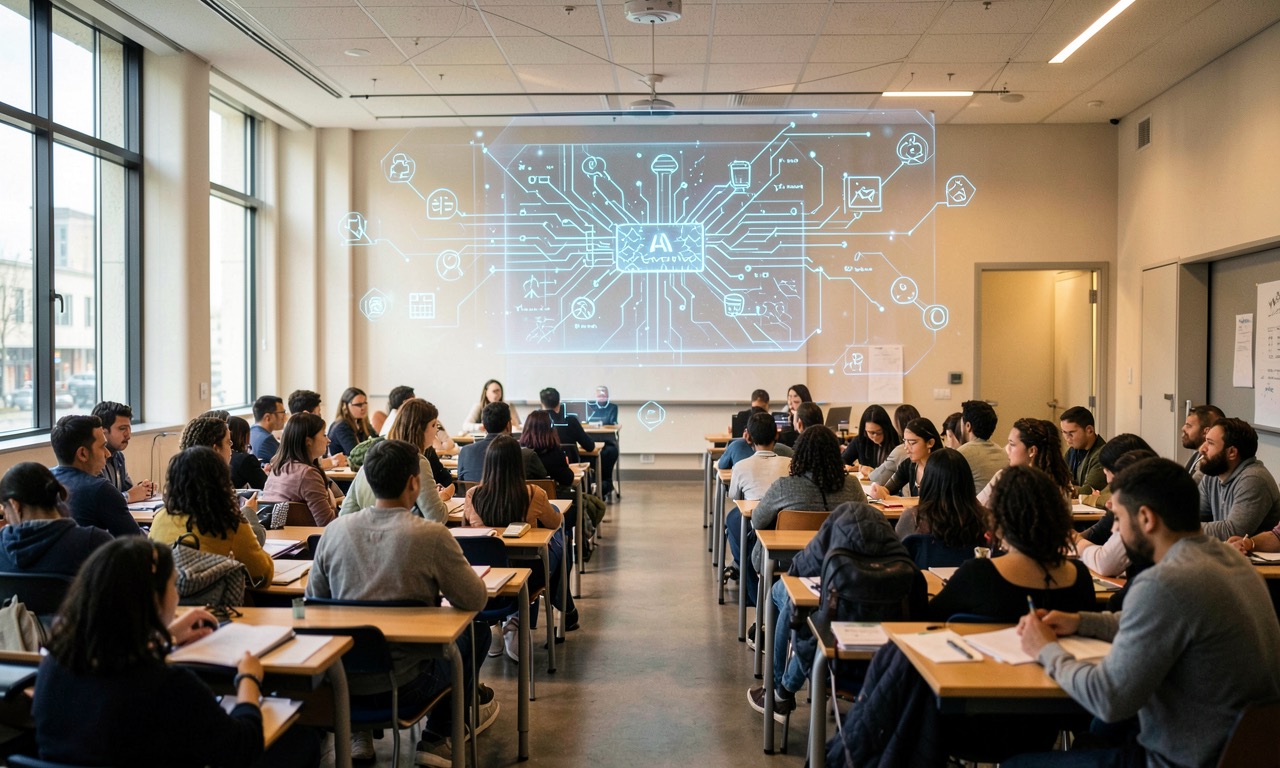
What happened: Singapore’s government announced that every university, polytechnic, and ITE student — regardless of degree — must develop baseline AI skills by 2027. The mandate covers all fields from engineering to arts to nursing. This isn’t a suggestion; it’s a curriculum requirement.
Why it matters: Singapore is treating AI literacy the way previous generations treated numeracy or written communication — as a universal competency, not a specialist skill. This is the boldest national education AI policy we’ve seen, and it sets a standard that other countries (including NZ) will be measured against. The message is clear: in Singapore, you can’t graduate in 2027 without knowing how AI works.
2. OpenAI Commits S$300 Million to Singapore’s AI Education Ecosystem
What happened: OpenAI launched “OpenAI for Singapore” in partnership with the Ministry of Digital Development and Information — a S$300 million (~US$234M) multiyear commitment covering AI skills training, business problem-solving, and educational curriculum integration.
Why it matters: This is OpenAI’s largest single-country education investment outside its core markets. Pairing the government mandate (AI for all students) with private-sector training infrastructure (OpenAI’s tools, curriculum, and expertise) creates a dense ecosystem approach. Singapore isn’t just making AI education compulsory — it’s buying the tools to deliver it.
3. MIT Launches “Universal AI” — Free AI Literacy for Everyone
What happened: MIT Open Learning launched “Universal AI,” a free, open-access pathway to AI fluency designed for anyone, anywhere. The programme covers how AI works, what it can and can’t do, and how to use it productively — no technical background required.
Why it matters: MIT is doing what universities do best when industry is moving too fast: providing foundational understanding at scale. Universal AI is free, self-paced, and globally accessible. For educators in NZ or anywhere else who feel overwhelmed by AI’s pace of change, this is the starting point. Point your colleagues at this.
4. Google Launches AI Training Programme for Teachers and Students Across India
What happened: Google announced a nationwide AI training programme for teachers and students in India, covering AI fundamentals, prompt engineering, and responsible AI use. The programme builds on Google’s existing digital skills training infrastructure.
Why it matters: India’s education system serves 250+ million students. Even a modest AI literacy programme at that scale touches more learners than most countries’ entire education systems. Google’s play here is strategic — train India’s future workforce on Google’s AI tools, and you lock in ecosystem dependency for a generation.
5. OpenAI Expands “Education for Countries” Programme, Welcomes Singapore
What happened: At the Education World Forum in London, OpenAI shared early learnings from its “Education for Countries” initiative and welcomed Singapore as its newest partner. The programme provides AI tools, curriculum frameworks, and training for national education systems.
Why it matters: OpenAI is deliberately positioning itself as an education infrastructure provider — not just a tool vendor. When a government adopts OpenAI’s “Education for Countries” framework, it’s making a choice about whose AI ecosystem students will be fluent in. The geopolitical dimension of AI education is becoming explicit: whose tools are your students learning on?
6. Harvard Law’s “Talkie” — An LLM Trained Only on Public Domain Content
What happened: Harvard Law School Library’s Institutional Data Initiative has released “Talkie,” a large language model trained exclusively on pre-1931 public domain content — books, articles, and documents from Harvard’s libraries. The model is designed for research and education without copyright concerns.
Why it matters: Copyright is one of the biggest unresolved issues in AI training. Harvard’s Talkie demonstrates that useful educational AI models can be built on public domain data, sidestepping the litigation risk that hangs over commercial models. This could be a blueprint for universities and libraries that want to build their own AI tools without licensing nightmares.
🔍 THE BOTTOM LINE
Education is where AI’s impact will be most visible — and most contested. Singapore is embedding AI into every degree. MIT is making it free for everyone. OpenAI is selling curriculum infrastructure to national governments. And Harvard is quietly proving that you can build useful AI without scraping the internet.
The theme is access — but also dependency. Whose AI skills are students learning? Whose tools? The countries that control AI education today will shape the workforce of 2035. Singapore gets this. The question is whether NZ does.