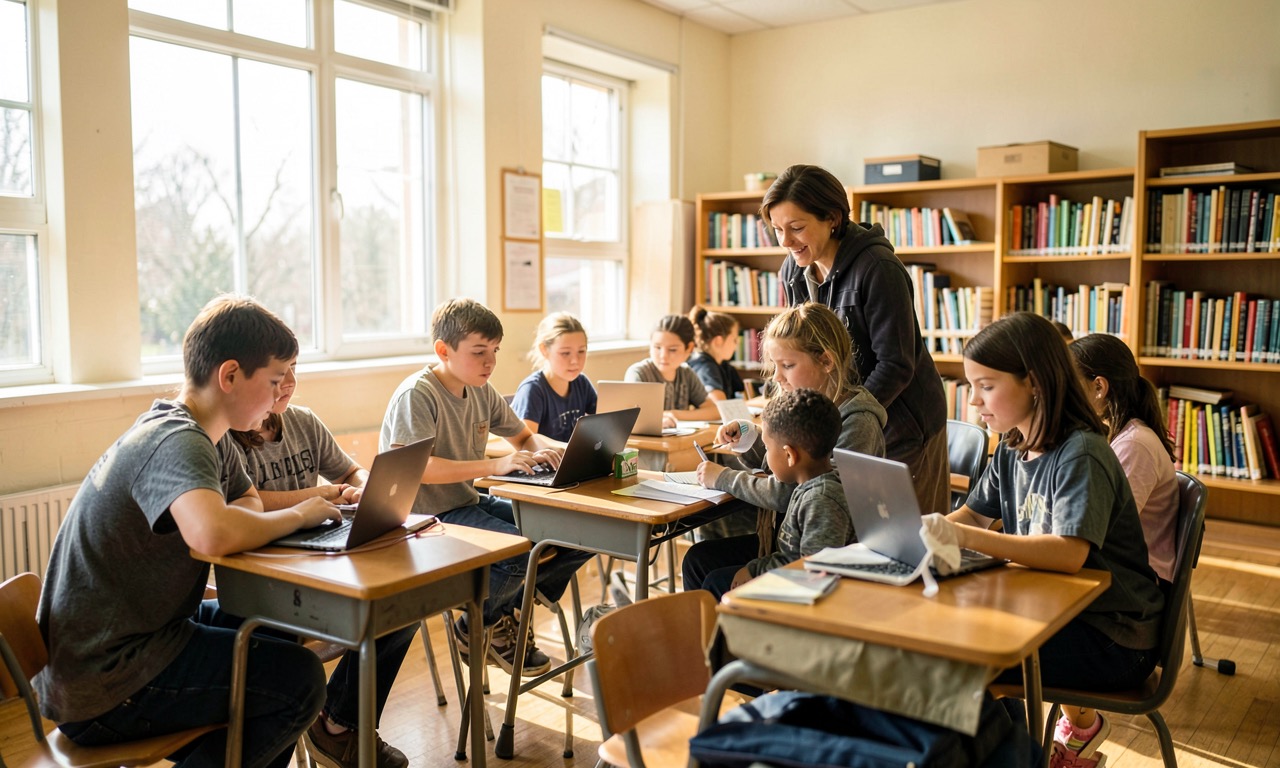
The 85% Reality: Kids Turn to AI Before Adults
Common Sense Media’s new report is the most comprehensive look yet at how young people actually use AI — and the numbers will rattle anyone involved in education.
- 85% of 9–17 year olds have used AI for schoolwork
- 20% use it daily
- Nearly 1 in 4 would turn to a chatbot before asking a parent, teacher, or counsellor
- 42% of frequent users say it would be hard to give up AI for a month
🔍 THE BOTTOM LINE: Kids adopted AI faster than they adopted social media. The question isn’t whether schools should allow it — it’s whether they’re equipped to guide its use.
Michael Robb, head of research at Common Sense Media, said it plainly: “AI is already a part of childhood in a way I think people haven’t really grappled with yet.”
Google Puts Gemini in Every Utah K-12 School
Google and the Utah State Board of Education announced that Gemini for Education will be available to all 708,000 K-12 students and teachers in the state, starting the 2026–2027 school year — at no cost.
Teachers get tools for lesson planning, rubric generation, and classroom discussion summarisation. Students get Guided Learning for step-by-step concept exploration and personalised explanations.
In parallel, NBC News went inside Google’s AI training for teachers, profiling the hands-on professional development program in California where educators learn to use AI tools in classrooms — not just theoretically, but by building actual lesson plans and assessments.
Why it matters: The “should we allow AI in schools?” debate is being rendered obsolete by deployment. Utah’s statewide rollout is the biggest single K-12 AI deployment in the US. The question now is teacher readiness, not permission.
Estonia: The Opposite of Banning
While many countries are still arguing about whether to restrict AI in classrooms, Estonia gave thousands of students free ChatGPT accounts. The logic: AI literacy is a fundamental skill, and the best way to teach responsible use is through guided practice, not prohibition.
Why it matters for NZ: Estonia’s education system is one of the most innovative in the world (they taught coding in primary school years before most countries). If they’re going all-in on AI, it’s worth watching what happens.
Connecticut Makes Computer Science Mandatory
Connecticut’s new AI law goes further than most — it makes computer science part of the standard public school curriculum, not as an elective but as a core competency. The law, signed this week, explicitly ties AI literacy to digital citizenship requirements.
Rural Ohio Kids Built Their Own AI Reading App
In one of the more heartening stories this week, rural Ohio students used AI to build their own reading app. The project, part of an AI literacy initiative, gave students hands-on experience with AI tools — not as passive consumers, but as creators.
This is the template that actually works: learn AI by building with it, not by reading about it.
❓ FAQ
Q: How should parents respond to the Common Sense Media findings?
A: Engage, don’t restrict. Kids will use AI regardless. The parent who learns about AI alongside their child is more effective than the one who bans it.
Q: Is Google giving away Gemini for free in Utah?
A: Yes — it’s a partnership with the state. No cost to schools or families. Includes training, tools, and Google Career Certificates.
Q: Should NZ schools follow Estonia’s approach?
A: The data suggests yes. Estonia’s digital education outcomes are world-leading, and their AI policy is consistent with their philosophy: teach kids to use technology well, not to fear it.
🔍 THE BOTTOM LINE: June 2026 is the month the “should we allow AI in schools?” debate died. The answer is yes — now how do we do it well?