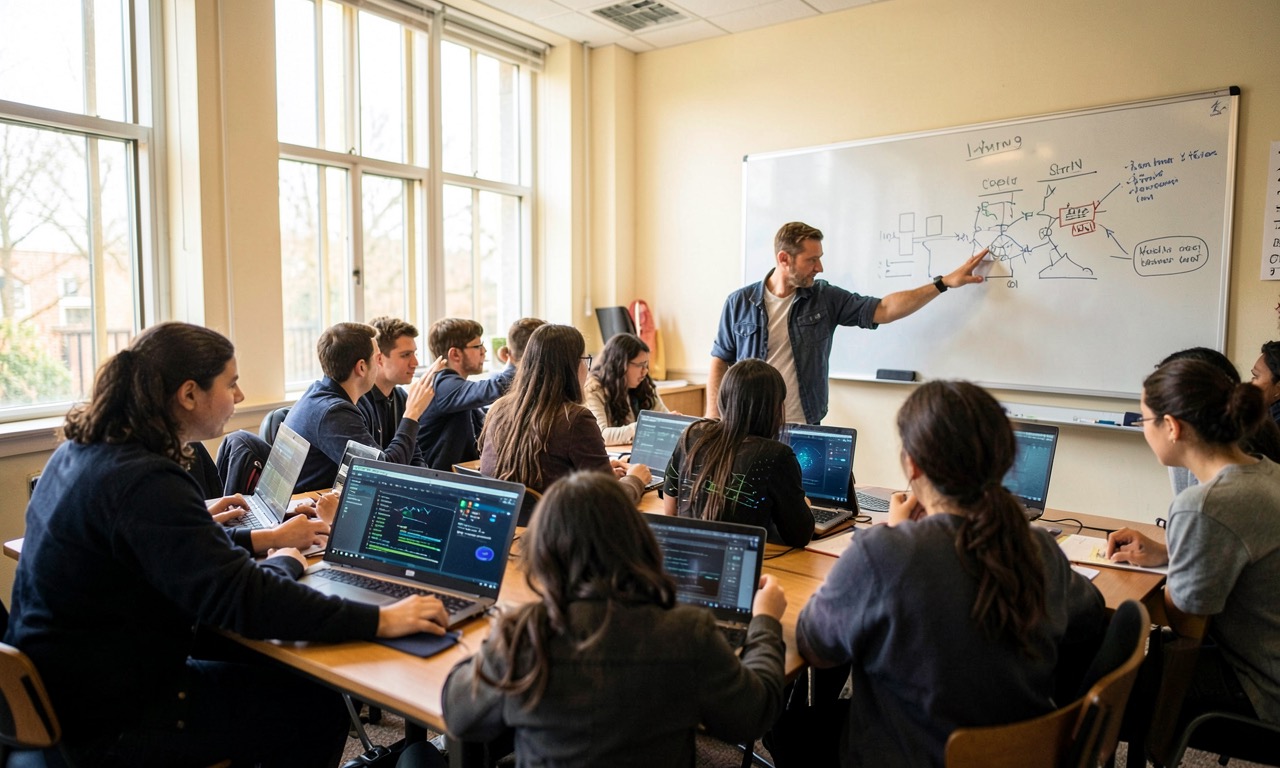
Armenia Becomes First Country to Put OpenAI in Every Classroom
Armenia has signed a national partnership with OpenAI that will make ChatGPT and Codex available to every school and university in the country starting in September 2026. It’s the first nationwide education deal of its kind — a small country betting big that AI access is the fastest path to economic leapfrogging.
The programme covers teacher training, curriculum integration, and infrastructure support. Students will use Codex for programming education and ChatGPT across subjects, with the government arguing that AI literacy is as fundamental in 2026 as computer literacy was in the 1990s.
Why it matters: This is either visionary or reckless, and we won’t know which for a decade. Armenia is gambling that putting frontier AI in every child’s hands will produce a generation of AI-native creators, not a generation dependent on AI to think for them. The outcome will be a case study every other education ministry watches closely.
What it means for NZ: NZ’s Ministry of Education is still in consultation on AI in schools. Armenia just did it. The question isn’t whether to follow — it’s whether NZ can afford to go slow while smaller nations race ahead.
NUS Singapore Launches ScholAIstic — Personalised AI Tutoring at Scale
The National University of Singapore has launched ScholAIstic, a custom GenAI platform built by the NUS AI Centre for Educational Technologies (AICET). The platform provides personalised tutoring across courses, adapting to individual student learning styles, knowledge gaps, and pace.
Unlike generic ChatGPT usage, ScholAIstic is trained on NUS curriculum materials and calibrated for academic integrity — it doesn’t just give answers, it walks students through reasoning processes and identifies where they’re struggling.
Why it matters: NUS is consistently ranked Asia’s top university, and it’s investing heavily in AI-native education. ScholAIstic represents the “institutional AI tutor” model — not a free-for-all with consumer chatbots, but a curated, curriculum-aligned AI system. This is the model universities should be aiming for, and the gap between this and “just let students use ChatGPT” is widening.
Washington University Launches a Computational AI Minor
Washington University in St. Louis has announced a new undergraduate minor in Computational Artificial Intelligence, reflecting the growing demand for structured AI education that goes beyond “intro to machine learning.” The programme covers AI fundamentals, ethics, systems design, and applications across domains.
The minor is open to students across all majors, not just computer science — signalling that WashU sees AI literacy as a cross-disciplinary requirement, not a CS elective.
Why it matters: The “AI minor” is becoming the new “CS minor.” It’s how universities signal that AI competency is expected of every graduate, regardless of their major. If every university follows this pattern, “AI-literate graduate” becomes the baseline, not the differentiator — and students who don’t get it will be at a measurable disadvantage.
Why AI Literacy Now Includes Understanding Bot Traffic
The milestone this week — bots generating 53% of all internet traffic — has implications for how we teach digital literacy. Traditional digital literacy covers source evaluation, privacy, and online safety. But none of those frameworks prepare students for an internet where more than half the “users” aren’t human.
Key concepts students need:
- Bot detection basics: Not all traffic is people. Metrics like “page views” and “engagement” can be mostly automated.
- AI agent behaviour: Understanding that AI agents can act autonomously — booking, buying, posting — without human authorisation.
- Network effects of automation: One bot isn’t a problem. A million bots coordinated by an AI that adapts in real-time is an entirely different class of threat.
Why it matters: We’re teaching students to navigate a human internet that no longer exists. If digital literacy curricula don’t account for machine-dominated traffic, we’re training students to recognise threats from the last decade.
🔍 THE BOTTOM LINE
Three distinct education models are emerging: national integration (Armenia), institutional platforms (NUS), and curriculum modernisation (WashU). None is wrong — but the countries and universities that choose none are the ones that will fall behind. The AI-Edu story isn’t about whether AI belongs in classrooms anymore. It’s about which model your system is betting on, and whether you’re betting anything at all.