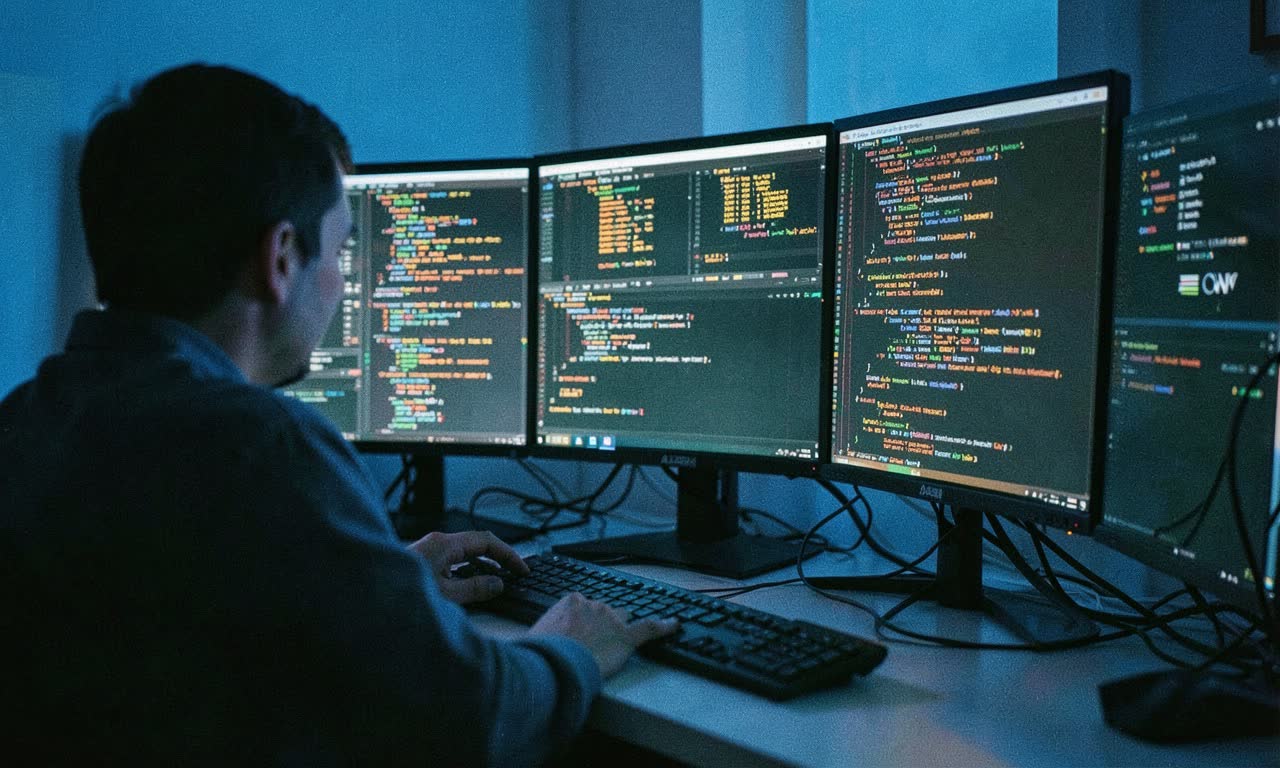
AI Wrote a Zero-Day Exploit — And Google Caught It
Google’s Threat Intelligence Group confirmed the first zero-day exploit developed with AI assistance. The attackers used AI to write code targeting an open-source system administration tool, aiming to bypass two-factor authentication in a mass exploitation event. Google spotted hallmarks of AI involvement: a “hallucinated CVSS score” and formatting too neat for human-written exploit code. The company disrupted the attack before deployment but warns this is just the beginning.
🔍 THE BOTTOM LINE: We’ve gone from “AI finds bugs” to “AI writes weapons” in weeks. The Mythos story was about defence. This is about offence. And the tell — a hallucinated severity score — means the AI isn’t even good at faking human code yet. Give it six months.
Baidu’s Ernie 5.1 Claims Competitive Performance at 6% of Training Cost
Baidu released Ernie 5.1, claiming it achieves competitive performance at only 6% of the pre-training cost of industry peers. The claim follows DeepSeek’s proof that efficient training works and takes it further — if accurate, the economics of frontier model development just got dramatically cheaper. Baidu is also reportedly floating its chip business, suggesting it’s focusing resources on software over silicon.
🔍 THE BOTTOM LINE: 6% cost. Read that again. If Baidu’s claims hold up under independent testing, the “only Big Tech can afford frontier training” narrative collapses. Every mid-sized company with GPU clusters just became a potential AI lab. The democratisation story isn’t open-source weights — it’s cheaper training.
Alphabet Poised to Become World’s Biggest Company on AI Wins
Alphabet (Google’s parent) is approaching the world’s largest market capitalisation, driven by Gemini’s momentum and AI infrastructure gains. Google’s search dominance plus cloud growth plus the DeepMind pipeline creates a compounding advantage that investors are finally pricing in at scale. Nvidia’s AI chip dominance and Alphabet’s AI application dominance are now the two poles of the AI economy.
🔍 THE BOTTOM LINE: The company that was “just a search engine” is about to be the world’s most valuable corporation on the back of AI. The irony: Google spent years being told it was falling behind in AI. Turns out having all the world’s data, the best researchers, and a monopoly business model is a strong position.
Alibaba Integrates Qwen AI With Taobao for End-to-End Agentic Shopping
Alibaba’s Qwen AI app now has access to 4 billion+ items across Taobao and Tmall, with Alipay-native checkout. It’s the largest agentic commerce launch from a Chinese platform — an AI agent that can search, compare, and buy products on your behalf with a single conversational prompt. The integration bypasses the traditional search-and-click shopping experience entirely.
🔍 THE BOTTOM LINE: Agentic commerce just went mainstream — in China. When your AI can browse 4 billion products and check out with one prompt, the entire e-commerce UX paradigm changes. Western platforms are still arguing about chatbot quality; Alibaba just shipped the future.
Samsung Exits China’s TV and Appliance Market
Samsung is ceasing sales of all home appliances, including televisions and monitors, in mainland China. The company will honour warranties and continue after-sales service. Samsung follows Sony, which exited China’s TV market earlier in 2026. The exodus reflects the dominance of Chinese consumer electronics companies, which combine competitive products with patriotic marketing.
🔍 THE BOTTOM LINE: When Samsung can’t sell TVs in China, the competitive landscape has fundamentally shifted. This isn’t about AI directly, but it’s a sign of how Chinese tech companies are dominating their home market — the same companies building the AI infrastructure that Baidu, Alibaba, and DeepSeek rely on.
OpenAI and Chipmakers Roll Out MRC to Prevent Training Slowdowns
OpenAI has partnered with AMD, Broadcom, Intel, and Microsoft to roll out MRC (Memory Reliability and Correction) standards aimed at preventing AI training slowdowns caused by memory errors. As training runs get longer and use more chips, memory reliability becomes a bottleneck — a single error can crash a multi-million-dollar training run.
🔍 THE BOTTOM LINE: AI’s biggest problems aren’t always sexy. Memory errors crashing training runs sounds mundane, but when each run costs millions, reliability infrastructure is as important as model architecture.
❓ Frequently Asked Questions
Q: Should NZ companies be worried about AI-generated exploits? Yes, but worried in the right direction. The exploit Google caught targeted an open-source admin tool — the kind of software running in NZ businesses everywhere. Patch your systems, audit your 2FA, and assume attackers now have AI assistance.
Q: Is Baidu’s 6% cost claim credible? Partially. DeepSeek already demonstrated that efficient training is viable. But “competitive performance” is doing heavy lifting in Baidu’s claim. We need independent benchmarks. If it’s even 20% of the cost, that’s still transformative.
Q: What does agentic shopping mean for NZ retailers? Alibaba’s model will reach NZ eventually. Local retailers should be thinking about how AI agents will browse and buy — not just how chatbots will answer customer queries.
🔍 THE BOTTOM LINE
The theme today is capability democratisation. AI writes exploits, not just finds them. Baidu trains at 6% cost. Alibaba ships agentic shopping. Alphabet becomes the world’s biggest company. The gap between “only the biggest companies can do this” and “anyone with a GPU cluster can do this” is closing fast — for defence, for offence, and for commerce. The question for NZ isn’t whether these changes arrive here. It’s whether we’re ready when they do.