Foundry Robotics, an Emeryville company barely old enough to vote, has raised an oversubscribed US$100 million Series A to scale what it calls America’s first autonomous factory for complex assembly. The round was announced Wednesday, led by Marlinspike Partners with early backers Khosla Ventures and Red Glass Ventures returning.
🔍 THE BOTTOM LINE
The story is not the cheque — it is what the cheque is buying. Foundry is not building a robot and selling it; it is building factories that sell robot assembly as a service, so a customer can hand over a design and get production capacity “in weeks” without ever owning a production line. If that works at scale, the expensive, slow part of hardware stops being your factory problem and becomes somebody else’s rent.
What the Money Actually Buys
According to the company’s release, the capital goes three ways: building out the Emeryville facility, accelerating deployment of AI models trained on real production runs, and growing the robotics research, engineering and factory-operations teams.
The facility is the headline. Foundry says it has expanded its manufacturing footprint roughly twentyfold to a 130,000-square-foot site — per the release; a PYMNTS summary of the round notes the company picked up hangar-scale floor space in one go. New investors include SE Ventures, Wing VC and Axiom Ventures, alongside existing backers Hanabi and Zero Shot Fund.
A Factory That Sells Its Own Capacity
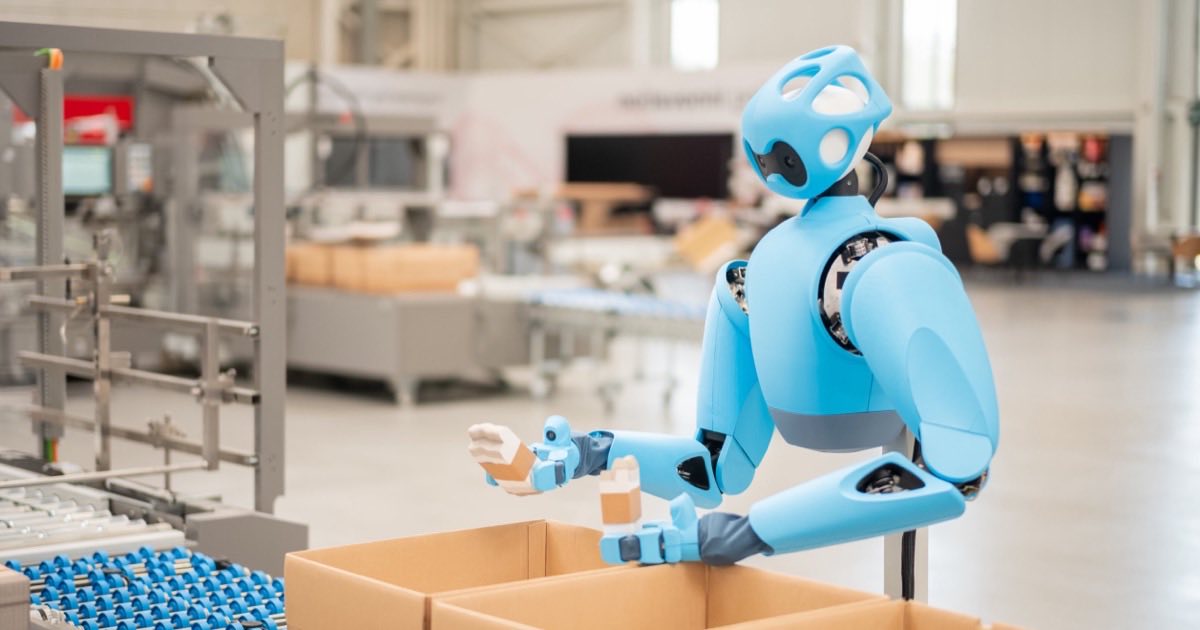
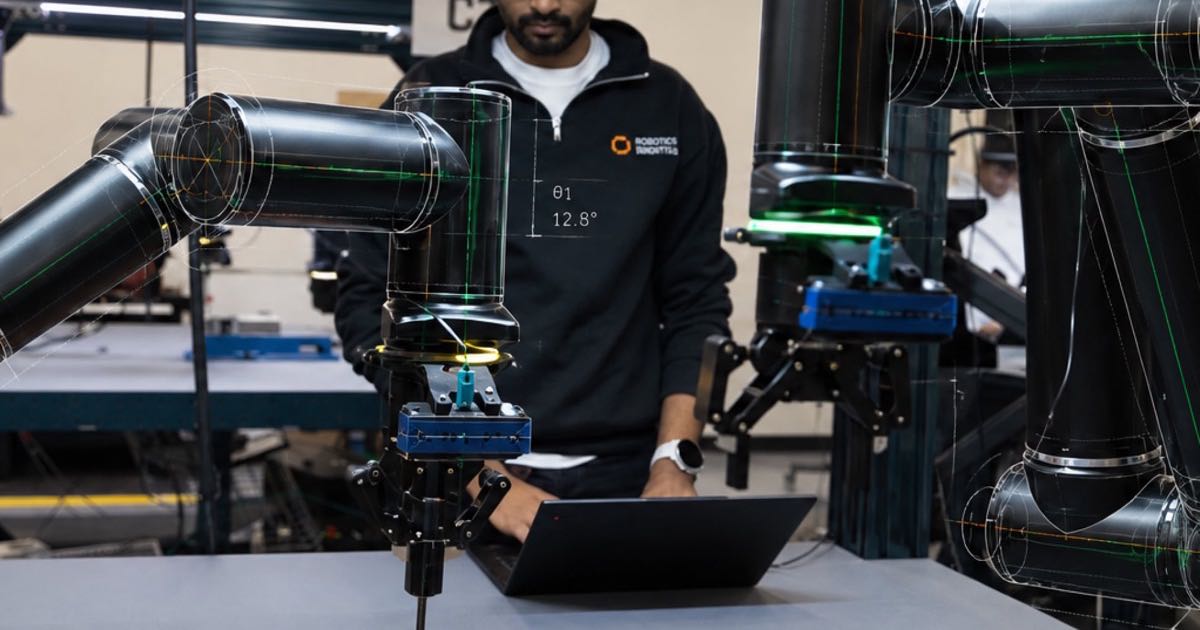
Foundry’s pitch reads less like a robotics company and more like a utility. It owns and operates the assembly facilities, fills them with modular robotic “cells”, and ties everything together with FoundryOS, a system linking the robots, the factory floor and cloud-hosted model training. Every production run feeds the models — the claim is that the same cell assembling a drone today can learn to build a satellite component tomorrow, because the skill lives in a model, not in a retooled line.
That is why the product list is so eclectic. Per Korthos’s research note on the round, Foundry targets drones, underwater vehicles, ground robots, wire harnesses, rugged computers, data-center infrastructure and satellite components — high-value electro-mechanical hardware with low volumes and long design churn. Exactly the stuff traditional factories hate making and prototype shops can’t scale.
The customer list already includes defence names. Duane Fotheringham, president of HII Unmanned Systems, said in the release that “production capacity is a national constraint on getting unmanned systems to the fleet,” and called Foundry’s approach “exactly the kind of capability the defense industrial base needs.” That is the quiet part said out loud: this is a defence-supply-chain bet wearing an operations company’s clothes.
Who Is Betting, and That They Are Early
The founders’ backgrounds explain the thesis. Co-founder and CEO Adarsh Kulkarni previously worked at Ghost Robotics and led robotics at Scale AI; co-founder Emmanuel Lamacchia managed Tesla’s Model Y programme, according to Korthos and Startup Researcher — one side steeped in legged robots and data-for-models economics, the other in shipping complex vehicles at volume. The company was founded only this year, which makes a hundred-million-dollar oversubscribed Series A an unusually early conviction call.
Kulkarni’s argument, per the release: “the factories that revive America’s manufacturing sector will need to be rethought from the ground up rather than retrofitting one aspect in an existing factory.” Lead investor Mislav Tolusic of Marlinspike framed it in national terms too — that industrial strength now belongs to whoever turns designs into finished hardware fastest.
Healthy skepticism belongs here. “In weeks” is a marketing number until audited, twentyfold footprint expansion is the company’s own figure, and a factory founded this year has no track record anyone outside it can verify. What the round proves is not that autonomous assembly works — it is that investors are now willing to fund the question at nine figures.
What It Means for New Zealand
The interesting part for us is the model, not the milestone. New Zealand advanced manufacturing — avionics, agritech hardware, composites, the small-batch work from Hamilton to Hutt Valley — lives exactly in the high-mix, low-volume zone where retooling costs kill good products. Renting capacity instead of building it is the missing interface between clever NZ designs and volume production; we noted the same infrastructure-first turn in Physical Intelligence’s giant robotics valuation, where capital chases the capabilities around robots, not just the robots.
There is also a pattern across the year worth naming. Unitree’s Q3 earnings showed a robot maker spending thin margins to build intelligence; GXO’s warehouse fleet expansion showed operators buying robot capacity as a service; Foundry now shows investors funding the factory itself as the product. Robotics capital has quietly migrated downstream — from better arms, to better brains, to better means of turning designs into things. For a country with no hope of competing on fabs or shipyards, owning the design while renting the capacity is a strategy, not a consolation prize.
❓ FAQ
What does Foundry Robotics do? It builds and operates autonomous factories for complex assembly, combining AI-powered robotic cells with manufacturing staff, coordinated by its FoundryOS software. Customers move from design to production without owning production lines, per the company’s release.
How big is the round and who led it? US$100 million, oversubscribed, led by Marlinspike Partners. Khosla Ventures and Red Glass Ventures returned as early backers; SE Ventures, Wing VC and Axiom Ventures joined, with Hanabi and Zero Shot Fund also participating.
When was this announced? Wednesday, 28 October 2026 — which is overnight into Thursday 29 October on New Zealand time, making this its first day of NZ visibility.
Why is defence central to the story? Foundry’s products — drones, underwater vehicles, ground robots — are the same categories the US defence industrial base struggles to produce at scale, and the round includes an endorsement from HII Unmanned Systems, a major unmanned-systems customer.
Could NZ manufacturers use a model like this? In principle: NZ’s niche hardware sectors face exactly the high-mix, low-volume friction Foundry sells against. Whether such capacity can be rented across the Pacific rather than hosted locally is the question the round does not answer.
🔍 THE BOTTOM LINE
A hundred million dollars for a year-old company says investors believe the bottleneck in hardware is no longer ideas and no longer robots — it is the factory between them. If Foundry can genuinely rent out “weeks not retooling” assembly, the moat moves from owning production lines to owning production data, and every production run in Emeryville compounds. That is the part worth watching, and it will be judged on shipped hardware, not press releases.
📰 Sources
- Business Wire release via AOL (full text)
- PYMNTS — Investment Tracker
- Korthos Research note
- Startup Researcher