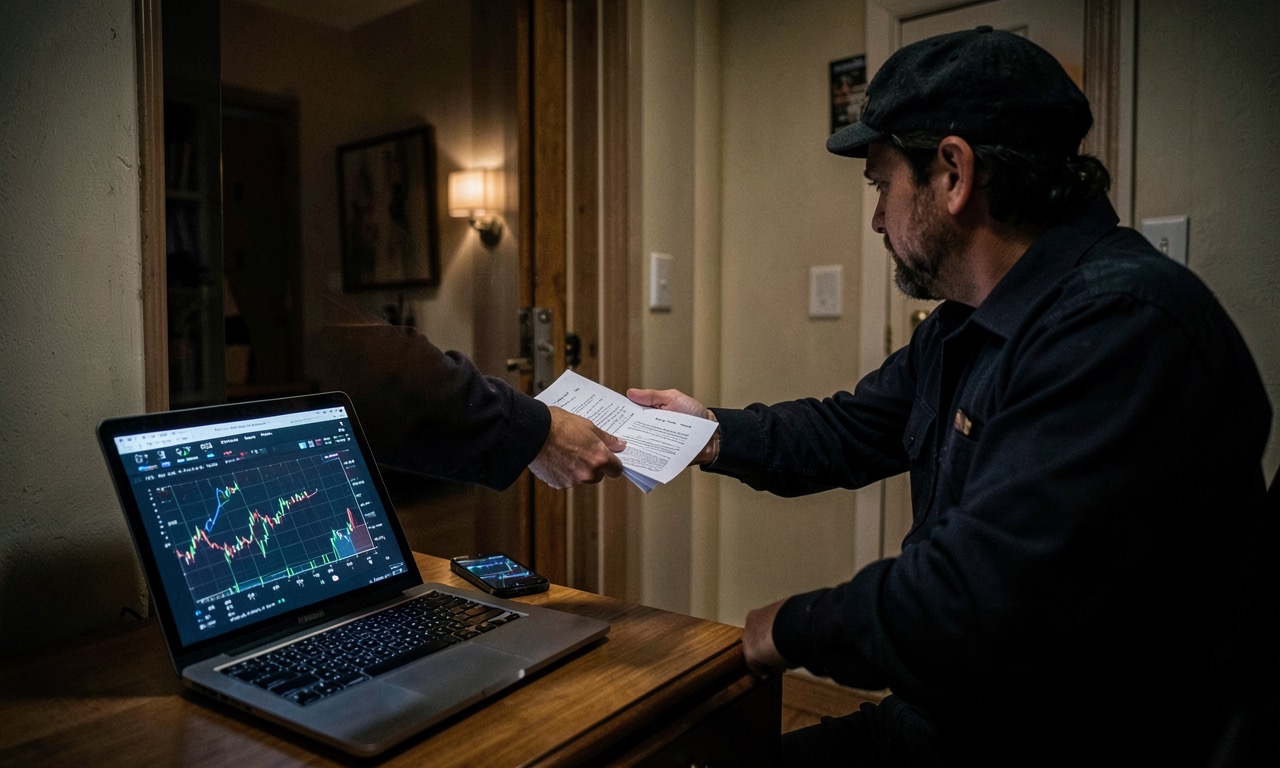
A senior Google security engineer was arrested last week in California after federal prosecutors say he ran an insider-trading scheme on the Polymarket prediction market that netted more than $1 million in profits by betting on outcomes he could see coming from inside Google’s threat-intelligence operations.
The engineer — whose name is being withheld pending formal charging — was a senior member of Google’s security organisation with access to non-public vulnerability disclosures, pre-publication threat research, and the internal “embargoed” list of vulnerabilities that TAG and adjacent teams were preparing to publish. According to Wired’s coverage and the FBI’s affidavit filed in US District Court for the Northern District of California, the engineer used that information to place cryptocurrency bets on Polymarket markets about security incidents, M&A activity, and product launches. He allegedly profited on markets he then helped resolve, or that he knew were about to resolve, before the public disclosure that would have moved the price.
🔍 THE BOTTOM LINE: This is a privilege-escalation story dressed up as a finance story. The same access that lets Google’s Threat Analysis Group hunt nation-state attackers also lets one employee front-run the market on the vulnerabilities TAG finds. Prediction markets have created a real-time monetisation path for non-public security intel that didn’t exist five years ago — and the people best positioned to exploit it are the people the industry trusts most with the most sensitive data on Earth.
What Changed
Federal charges of wire fraud, securities fraud, and money laundering are now pending. The FBI executed a search warrant at the engineer’s California home, seizing devices, crypto wallets, and internal Google documents. The engineer had been with Google for over six years and held a clearance-level access tier that let him see embargoed CVE disclosures, internal post-mortems of major incidents, and pre-publication drafts of public threat reports.
What he allegedly did with that access: he opened anonymous Polymarket accounts, funded them via crypto mixers, and placed bets that he had privileged visibility into. In at least one case, according to the affidavit, he placed a large “yes” position on a market about whether a specific vulnerability would be disclosed within a 30-day window — a window he knew the answer to because Google itself was preparing the disclosure.
The technique is the same playbook that’s been used in traditional finance insider-trading cases for decades: trade on material non-public information (MNPI). What’s new is the speed and the venue. Polymarket’s blockchain rails let him open positions in seconds, settle anonymously, and walk away with crypto that’s harder to trace than a wire transfer. There is no broker compliance officer flagging a senior Google engineer’s Polymarket activity the way a brokerage would flag a Goldman VP’s biotech bets.
Context
The vulnerability economy has been quietly professionalising for five years. Markets for zero-day exploits now run into the eight figures for the most valuable chains. AI companies routinely pay six- to seven-figure bounties for previously-unknown bugs. And the prediction-market infrastructure that grew up around the 2024 US election cycle — Polymarket, Kalshi, and a dozen smaller venues — created a parallel financial system where information advantage translates directly into liquid profit.
What this case shows is that the same financial system can be exploited by the defenders as easily as by the attackers. The engineer wasn’t selling zero-days. He wasn’t working for a foreign intelligence service. He was simply betting on outcomes he could see from his desk — the same desk where he was supposed to be protecting Google’s users.
We’ve covered the broader shift toward AI-driven offensive security tooling before. What this case adds is the “offensive insider” layer: a person inside the defensive perimeter, monetising the perimeter’s own visibility. The same threat model that has security teams paranoid about exfiltration now has to consider trading-on-information as an exfiltration-adjacent risk.
NZ Angle
New Zealand doesn’t have a Polymarket equivalent and our financial regulators haven’t grappled with prediction-market insider trading yet. But the structural lesson applies to any jurisdiction with a small number of professionals who hold privileged access to non-public information — software engineers at Xero or Vend, researchers at NIWA, defence-adjacent staff at GCSB-affiliated agencies, even sports-betting markets where a coach knows an injury before the public does.
Australia’s been debating AI insider-threat regulation since the 2024 Medibank breach. New Zealand has not. The lesson from this case is that the relevant question is no longer “did this person sell secrets” but “could this person have traded on information they held?” Insider-threat programs that were built for document exfiltration are not built for prediction-market monetisation, and most NZ companies with sensitive technical operations don’t have either kind of program.
The other angle: NZ has no crypto-tracing capacity. The SFO and the FMA have never prosecuted a prediction-market insider-trading case. If a similar scheme were run from Auckland, the discovery would have to come from the prediction market’s compliance team, not our own.
The Other Side
Defenders of the engineer — and there will be some in the security community — will point out that the line between “researcher with private data” and “insider with tradable knowledge” has never been clearly drawn. Security professionals routinely see vulnerability information before the public. The “trade on it” step is a moral failure, but the “hold it” step is the job. Expect the defence to argue that the engineer’s Polymarket activity was speculative, not based on specific non-public trades.
Defenders of the status quo will point out that insider-threat programs are difficult to scale, expensive to run, and have a chilling effect on legitimate internal collaboration. Every additional control is friction that slows down the security work itself. Prediction markets as a venue for insider trading are new; the policies haven’t caught up.
The case against the engineer is also the case against the entire model of centralised vulnerability intelligence. If one person at Google can profit from seeing what TAG sees, the same is structurally true at Microsoft, Apple, Meta, and every defence contractor with a security team. The trust model that holds the industry’s threat intelligence together was built for an era when the worst you could do with a vulnerability was sell it to a broker or a government. Prediction markets are faster, more anonymous, and harder to police.
The Bigger Picture
The Polymarket case is the first of its kind at this scale, but it won’t be the last. The pre-conditions for the next case are sitting in every major tech company’s security org right now: a small number of people with disproportionate access to non-public information, a financial venue that turns information into liquid profit in seconds, and crypto rails that make the resulting trades hard to trace.
The defensive response will probably involve more aggressive insider-trading training, more monitoring of crypto-related activity by employees with sensitive access, and more compartmentalisation of vulnerability data inside big tech security teams. None of that will be popular with the security engineers whose job is to be able to see the company’s full threat picture. The trade-off — between collaboration and surveillance — is the kind of thing that gets decided by the first few high-profile cases, not by policy papers.
The deeper issue is that prediction markets have, for the first time, made information — not exploits, not access, not malware — the most liquid tradable asset in the security economy. The same market dynamics that brought us billion-dollar bug bounties are now applying to the upstream signal: who knows what, and when, and what that knowledge is worth on a Tuesday afternoon.
❓ FAQ
What is Polymarket, and why does it matter for this case? Polymarket is a decentralised prediction market where users bet on the outcomes of real-world events using cryptocurrency. It matters because it provides a venue for trading on non-public information that’s faster and more anonymous than traditional financial markets — and because it sits in a regulatory grey area where the SEC and CFTC are still working out enforcement jurisdiction.
Why is a “security” role specifically a problem? Security professionals at big tech companies see vulnerability disclosures, M&A activity, and incident post-mortems before they go public. That information is the raw material for tradable market positions. The “insider” risk isn’t that they’ll sell secrets to a competitor — it’s that they’ll bet on what they know will happen.
Could this happen at any major tech company? Structurally, yes. The same combination of privileged access, prediction-market venues, and crypto anonymity exists for every security engineer at Microsoft, Apple, Amazon, Meta, and the major defence contractors. The case will likely trigger industry-wide reviews of crypto activity by security-cleared staff.
What’s the worst case if this isn’t addressed? A broader pattern of “information arbitrage” by security professionals, where senior engineers at major companies systematically profit from non-public visibility. The trust model underpinning collaborative vulnerability disclosure — that you can show pre-publication research to a small group and trust them not to monetise it — would break.
Will the engineer go to prison? Probably, if convicted. The charges carry up to 20 years on the wire-fraud count alone, and federal prosecutors have been aggressive on prediction-market fraud since the 2024 election. Plea bargaining is more likely than a long sentence, but the precedent will be set either way.
🔍 THE BOTTOM LINE: A senior security engineer at the world’s biggest threat-intel shop used his privileged access to bet on outcomes he could see coming. The case is a privilege-escalation story dressed up as a finance story. Prediction markets have, for the first time, made information the most liquid tradable asset in the security economy — and the people best positioned to exploit it are the ones the industry trusts most.
📰 Sources
- Wired — Google Employee Accused of Polymarket Million-Dollar Trading Scheme
- FBI press release, Northern District of California (search “Polymarket Google engineer”, May 2026)
- PACER court filings, US District Court for the Northern District of California (case sealed pending indictment)
- Polymarket on-chain analytics, Polymarket Analytics dashboard