The era of the ten blue links is officially over. Google just said so itself.
At Google I/O 2026, the company unveiled what it calls the biggest change to Search since the search box debuted more than 25 years ago. The new Google Search isn’t a directory — it’s a conversation. And instead of sending you to websites, it’s increasingly keeping you right where you are.
What changed
The overhaul centres on three shifts:
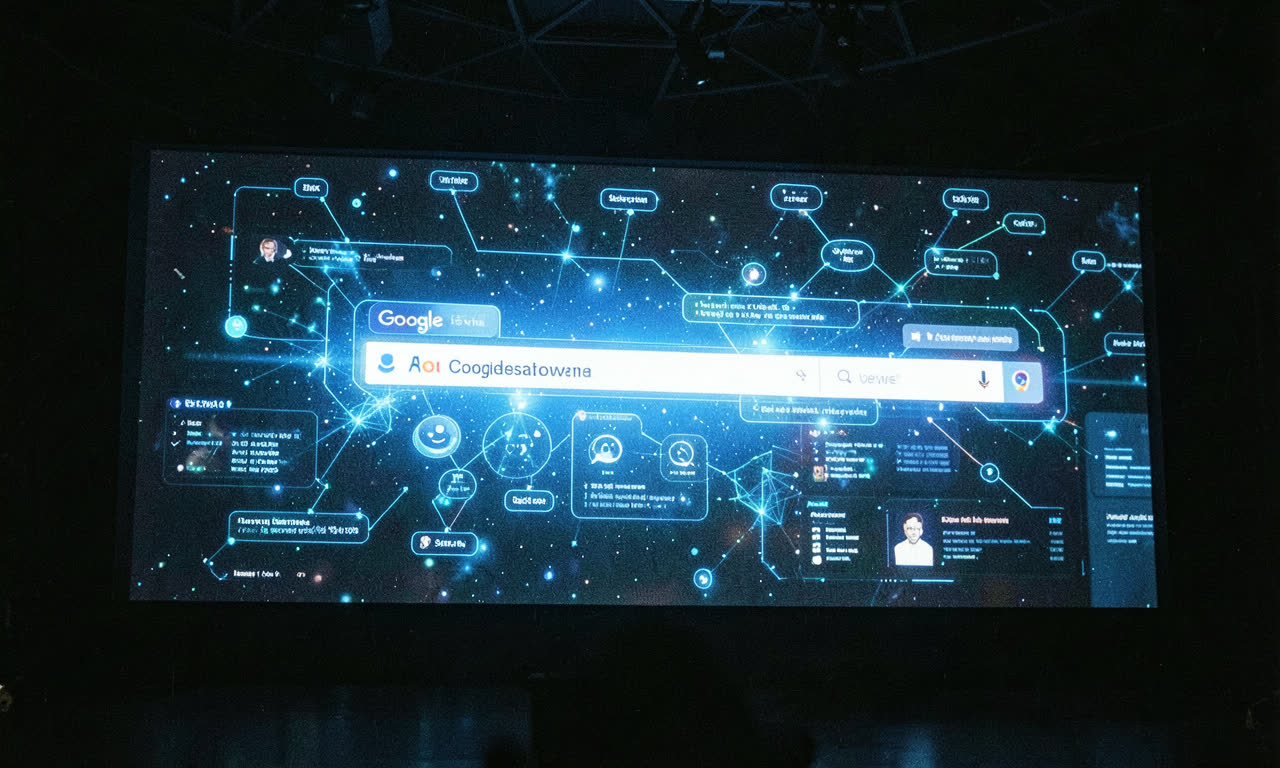
1. The intelligent search box. Google’s search box now expands to accommodate longer, more conversational queries. Instead of forcing you to compress your question into keywords, it encourages full-sentence, contextual questions. A new AI-powered suggestion system goes beyond autocomplete, helping you craft nuanced queries you didn’t know how to ask.
2. Information agents. Starting this summer, you can create AI agents that monitor topics for you 24/7. Track stock prices, flight deals, housing listings, or sports results — the agent synthesises information from multiple sources, explains why something matters, and alerts you when conditions are met. It’s Google Alerts on steroids, except the agent actually understands what it’s watching.
3. Generative UI. Search results now build custom interactive experiences on the fly. Ask about black holes and you get a dynamic visualisation, not a list of Wikipedia links. Ask follow-up questions and Google generates brand-new visuals in real time. Search results become mini web apps, not reference lists.
Liz Reid, Google’s head of Search, calls it “custom experiences just for your individual questions, from dynamic layouts, interactive visuals to persistent and stateful project spaces that you can return to again and again.”
The numbers tell the story
Google says AI Overviews now reach 2.5 billion monthly users. Its conversational AI Mode tops 1 billion monthly users. For context, ChatGPT has 900 million weekly active users — more frequent engagement per user, but Google’s reach is wider.
The message is clear: AI search isn’t a feature. It’s the product. The blue links are the appendix.
Why it matters
For publishers, this is existential. If Google’s AI synthesises the answer and shows it directly, who clicks through? We’ve been covering the AI Overviews publisher death spiral for months. This makes it worse. Information agents don’t send you to sites — they summarise and notify. Generative UI doesn’t link out — it builds custom answers in place.
The BBC’s investigation into AI manipulation adds a grim irony: the same week Google reinvents Search, we learn how easily bad actors can poison AI Overviews with a single blog post. Google updated its spam policies to cover AI responses, but experts say you should “assume you’re being manipulated.”
For users, it’s convenient but concerning. One synthesised answer is easier than ten links. But it’s also one authority. No more comparing sources side by side. No more skimming multiple perspectives. You get Google’s answer — which is increasingly an AI’s answer — and if that answer is manipulated, gamed, or just wrong, you might never know.
For the web itself, this is a paradigm shift. The incentive structure that built the modern internet — write content, get traffic, monetise traffic — is being replaced by “write content, get scraped, get summarised, get zero traffic.” Google’s AI bots are already squeezing small businesses. The overhaul accelerates that trend dramatically.
The Hassabis angle
In a conveniently timed Semafor interview, DeepMind CEO Demis Hassabis declared we’re “at the foothills of the singularity” — a striking claim from someone usually measured in his language. Coming the same week as Google’s Search overhaul, it reads less like a philosophical observation and more like a product launch soundtrack. When the person selling you AI says you’re at the foothills of the singularity, check whether the ski lift operator also owns the resort.
What happens next
Information agents roll out to Google AI Pro and Ultra subscribers in the US this summer, then expand globally. The intelligent search box is live now. Generative UI experiences are beginning to appear for English-language queries.
The web as we knew it — a place you visit — is being replaced by a web that visits you, summarised, curated, and mediated by AI. Whether that’s progress or the death of the open internet depends on who’s answering.
Google’s answer, unsurprisingly, is “progress.” The 2.5 billion people using AI Overviews might agree — right up until they realise they can’t remember the last time they clicked a link.
Related: Google AI Overviews publisher death spiral · Google AI bots squeezing small businesses · BBC: Google’s AI is being manipulated · Hassabis: 2026 is the breakthrough year