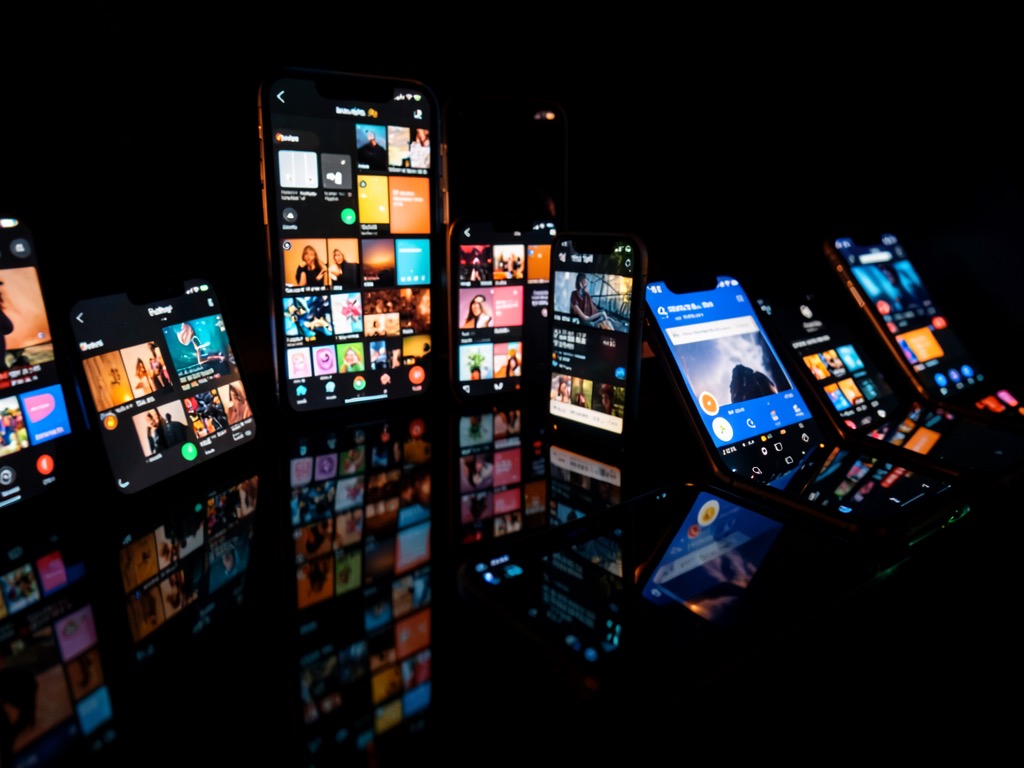
A rack of 112 iPhones, each running a different female persona, all controlled from one dashboard. The operator publishes a reel to every account in one click. He claims $3.6 million a year from a single room.
The video, posted on X by @slash1sol, shows the operation in detail. It’s not a concept — it’s a working business. And the technology stack behind it is more accessible than you’d think.
🔍 THE BOTTOM LINE: Half the “girls” filling your Instagram feed may not exist as people. They are tiles on a control panel, generating revenue every time you double-tap. The tools to build this are available now. The platforms can’t detect it. And the economics scale.
The Setup
The hardware is straightforward: 112 iPhones mounted on a rack, each connected to a central control system. Real iPhones, not emulators — because Instagram’s algorithm trusts iOS devices more than any emulator or Android setup. The phones are hosted in an “expensive country on purpose” — the US or UK — because Instagram’s algorithm gives more reach to accounts that appear to post from high-CPM regions.
Each phone runs one Instagram account, presenting as a different young woman. The content — selfies, lifestyle reels, story updates — is generated ahead of time, likely using AI image generation combined with face-swap tools to maintain visual consistency across posts.
The Control System
The dashboard is where the automation happens. From a single screen, the operator can:
- Publish a reel to all 112 accounts simultaneously
- Schedule posts across different time zones
- Respond to DMs using templated or AI-generated replies
- Monitor engagement metrics per account
- Rotate content to avoid platform detection
The likely tech stack: a combination of device management software (MDM or custom automation scripts), Xcode UI testing frameworks for programmatic interaction with Instagram’s app, and a backend orchestrating content distribution. Tools like this have existed in the “device farm” world for app testing — the innovation is applying them to social media fraud at scale.
The Revenue
Three income streams, as described in the video:
- Paid promotion for OnlyFans creators — hundreds of dollars per post per account. OF creators pay for shoutouts from accounts with large followings. With 112 accounts, one campaign can generate thousands per day.
- Instagram Reels payout pool — Instagram pays creators directly from its Reels monetisation fund. More views = more money. 112 accounts all pushing reels compounds this.
- Affiliate links in bios — commission-based products, dating app referrals, or other performance-marketing offers.
The math is brutal in its simplicity. If each account generates $100/day across all three streams — a conservative estimate for accounts with tens of thousands of followers — 112 accounts produce $11,200/day. That’s $4 million a year gross. Even after costs (phones, hosting, content generation, account losses), the operator claims $3.6 million net.
Why Instagram Can’t Stop This
The farm exploits three structural weaknesses in Instagram’s platform:
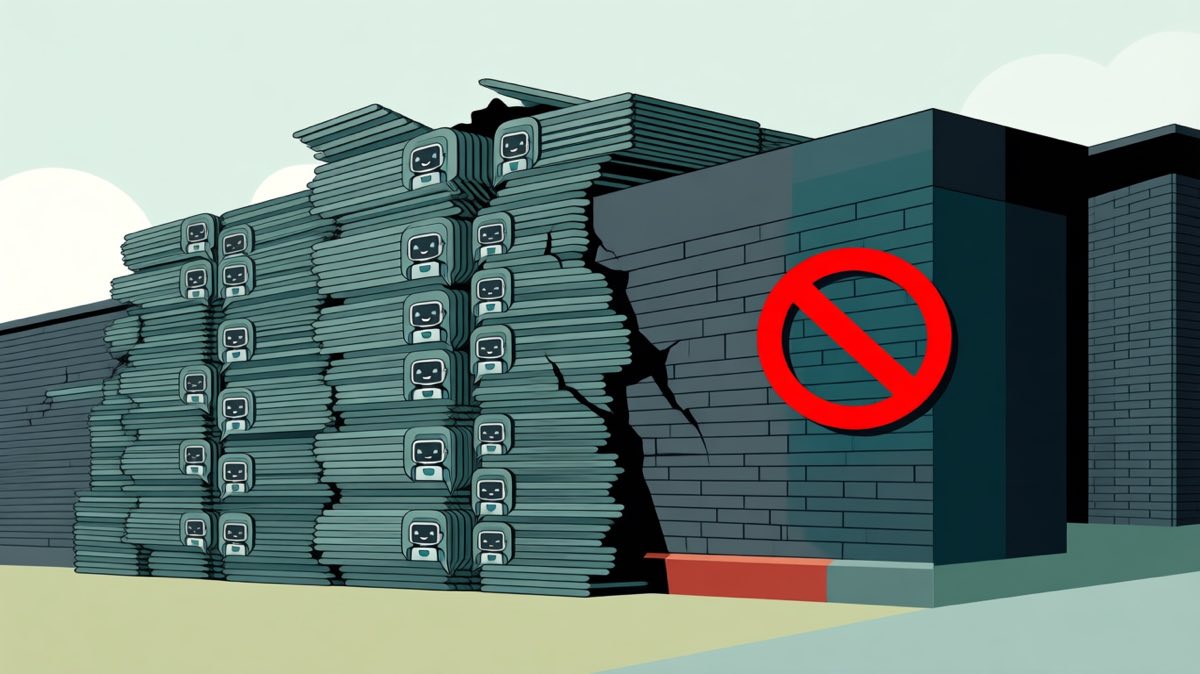
Device trust. Instagram can’t easily distinguish between a real iPhone user posting a reel and an automated iPhone posting a reel. Both come from the same app, on the same hardware, with the same device fingerprint. The algorithm sees a real iOS device, real IP address (via US/UK hosting), and real Instagram app behaviour.
Content moderation at scale. With billions of posts daily, Instagram’s moderation is reactive, not proactive. Accounts get flagged when users report them. If the AI-generated faces are good enough — and in 2026, they are — nobody reports them. The content looks real because it almost is.
Persona consistency. The breakthrough isn’t the phone farm — those have existed for years. It’s the AI-generated faces that maintain visual consistency. A year ago, you’d need real models or steal photos from real people (which gets caught). Now, a diffusion model can generate a consistent face across thousands of images, never reusing a real person’s identity.
The Broader Pattern
This isn’t an isolated operation. The @slash1sol video describes one farm, but the model is replicable. The tools are commodity: AI face generation (Midjourney, Stable Diffusion, FLUX), device automation (Xcode UI testing, Appium, custom scripts), and basic orchestration (Python, Node.js, Airtable).
The barrier to entry has collapsed. Two years ago, you needed real photos of real people. One year ago, you needed deepfake expertise. Now you need a weekend and a credit card.
This connects to a broader pattern we’ve been tracking: the AI adoption reality check showed 70% of working-age adults still aren’t using AI tools. But the 30% who are include people building operations like this — using AI not to augment human creativity but to replace it entirely with synthetic personas designed to exploit platform economics.
❓ FAQ
Is this real or a stunt? The video shows the physical setup in detail — 112 iPhones on a rack, the dashboard interface, the posting workflow. The revenue claim ($3.6M/year) is unverified and could be inflated for engagement. But the technology to build this operation is real and available today.
What tools are used? The exact stack isn’t disclosed, but the likely components are: AI image generation (Midjourney/Stable Diffusion/FLUX) for persona faces, device automation (Xcode UI testing or Appium) for controlling iPhones, MDM or custom scripts for orchestration, and a US/UK hosting location for algorithm advantage. No single tool is exotic — the innovation is the combination.
Can Instagram detect this? In theory, yes — through behavioural analysis (all 112 accounts posting within the same window), device fingerprinting clusters, or content similarity detection. In practice, the operator says it’s been running successfully, which suggests Instagram’s detection isn’t catching this scale of operation.
Is this illegal? Creating fake social media accounts isn’t illegal in most jurisdictions. Promoting OnlyFans content isn’t illegal. Affiliate marketing isn’t illegal. The operation exists in a grey zone — it violates Instagram’s terms of service but doesn’t clearly violate criminal law. The FTC has rules around undisclosed advertising, which the affiliate links may or may not comply with.
🔍 THE BOTTOM LINE: The tools to manufacture synthetic humans at scale are now commodity. 112 iPhones, AI-generated faces, one-click publishing — the barrier between real and fake on social media has collapsed. The platforms built engagement-based business models that reward reach, and AI just made reach synthetically free. Instagram’s algorithm can’t tell the difference. Your feed already has tiles, not people.