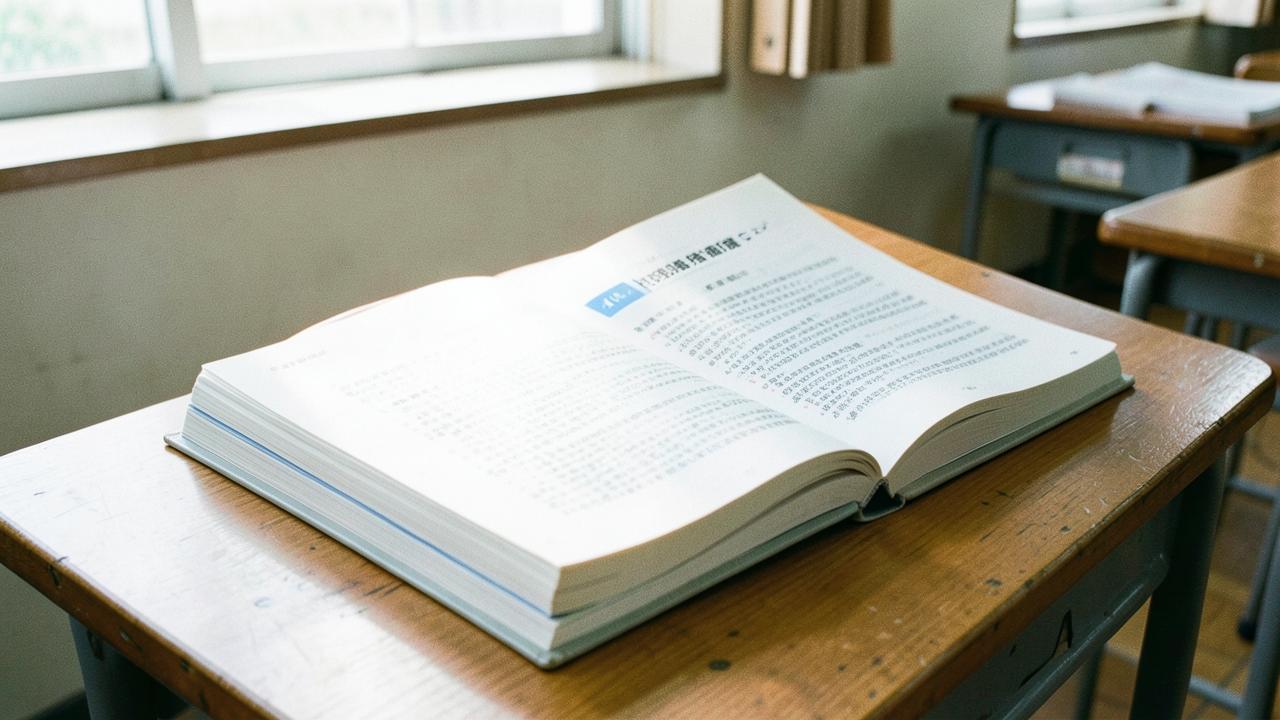
Japan Approved 220 High School Textbooks Covering AI. Classrooms Start Next Year.
Japan just did something most countries are still debating: it put AI into textbooks. Not as a standalone subject, not as an elective, but woven across 11 regular subjects that high school students already take. The education ministry approved 220 textbooks containing 67 passages about generative AI — from how it works in civics class to its implications in geography and history.
Starting April 2027, Japanese high school juniors and seniors will open textbooks that discuss AI not as a futuristic concept, but as something they need to understand right now. This is the transition from policy paper to printed page, and it’s more significant than it sounds.
What’s Actually in the Textbooks
The approved textbooks cover AI across multiple subjects, not just information technology. This matters because it treats AI literacy as a cross-cutting competency, not a specialized skill:
- Civics textbooks address AI’s role in democratic participation and digital citizenship
- Geography and history textbooks incorporate AI alongside mentions of Nihon Hidankyo (the atomic bomb survivors’ group that won the 2024 Nobel Peace Prize) and Russia’s invasion of Ukraine — placing AI in the context of real-world events students need to understand
- Previous AI mentions in Japanese textbooks were limited to basic introductions — what AI is and what risks to watch for. The new content goes further, covering practical classroom use, ethical considerations, and critical evaluation of AI-generated content
This is the first time generative AI gets substantive treatment in Japan’s national curriculum materials. The shift from “here’s what AI is” to “here’s how to use it and think about it” is the entire point.
Why This Matters Beyond Japan
Japan isn’t the first country to mandate AI education — China’s mandatory AI curriculum for primary and middle schools has been in effect since 2023. Several US states have passed or are considering AI literacy bills. UNESCO has been pushing AI competency frameworks.
But Japan’s textbook approval is different from a policy announcement. Here’s why:
Policies are intentions. Textbooks are implementation. A law saying “teach AI” is a starting point. Textbooks that actually contain the content, vetted by a national ministry and approved for classroom use, are the endpoint of a long process. Japan just completed that process for 220 books across 11 subjects.
It’s cross-curricular. Most AI education initiatives treat it as a separate subject — a module, an elective, a standalone course. Japan embedding AI across civics, geography, and history means students encounter AI ideas multiple times in different contexts, which is how genuine literacy develops.
It’s national scale. These textbooks go to education boards across Japan this summer for adoption. When school starts in April 2027, every high school using these texts will have AI content in front of students — not just the schools with forward-thinking principals or tech-savvy teachers.
The Caveats
This isn’t a complete victory for AI education. Several important limitations:
It’s still cautious. University of Yamanashi associate professor Mitsui Kazuki noted that classroom use of AI remains limited “due to excessive concerns about the potential risks.” The textbooks introduce AI, but they don’t necessarily push students to use it hands-on.
It’s second-year high school only. Elementary and middle school textbooks get screened next fiscal year with more detailed AI content. So this is a start, not a full deployment.
Four textbooks failed screening. The ministry rejected four of 224 submitted textbooks for “grave defects” in composition, a reminder that quality control and AI content are still being figured out simultaneously.
Teacher readiness remains unclear. Japan has the same problem every country faces: textbooks with AI content don’t help if teachers aren’t prepared to teach it. The materials are ready. The professional development pipeline is less clear.
The Global Context
Japan’s move sits in a growing but uneven landscape:
- China mandated AI education across primary and middle schools starting in 2023, with a structured curriculum from grade 3 onward
- The United States has 134 state-level AI education bills across 31 states, but implementation varies wildly and there’s no national curriculum
- UNESCO released AI competency frameworks for students and teachers, but these are guidelines, not requirements
- The EU’s AI literacy provisions in the AI Act require organizations to ensure AI literacy for people deploying AI systems, but this targets workplaces, not schools
Japan’s approach — embed AI in existing subjects rather than creating a new one — is pragmatic. It avoids the “where do we fit this?” scheduling problem that schools face when AI is treated as an add-on. It also signals that AI literacy is a core competency, not a specialty.
What to Watch
- How education boards adopt these textbooks this summer. Approval is one thing. Local adoption decisions will determine whether the AI content reaches classrooms or sits on shelves.
- Whether teacher training accompanies the rollout. Textbooks without trained teachers reproduce the same policy-preparation gap seen everywhere.
- What the elementary and middle school textbooks look like next year. If those go deeper than basic introductions, Japan will have a K-12 AI literacy pipeline — something no other country has fully built yet.
- Whether other countries follow the cross-curricular model. Japan’s approach of weaving AI across subjects rather than isolating it could become a template.
The moment a student opens a civics textbook and reads about AI’s role in democracy, AI education stops being theoretical. Japan just made that moment real for millions of students. The question now is whether the rest of the system — teacher training, assessment, classroom practice — is ready for it.
Sources
- NHK World-Japan
- Japan Times
- Mainichi Shimbun