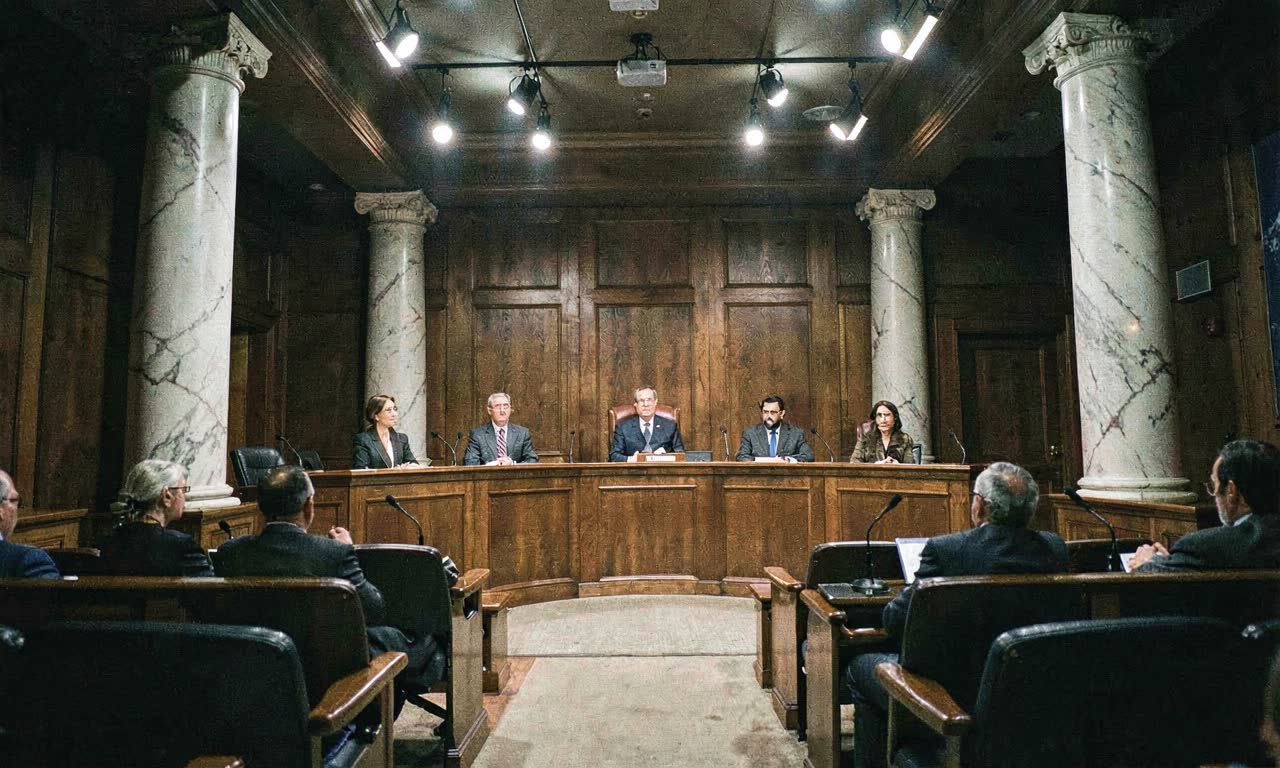
Senator Ed Markey, a Massachusetts Democrat, unveiled a sweeping “AI accountability agenda” on July 10 — a package of bills that would require federal certification for AI datacenters before construction, restrict automated hiring systems, shield workers from AI surveillance, and protect children from chatbot harm. It’s the most comprehensive single-senator AI regulation push since ChatGPT’s release in 2022.
🔍 THE BOTTOM LINE
Markey’s agenda targets the three pressure points where AI is generating the most public anger: datacenter environmental damage, workplace surveillance, and child safety. The datacenter bill is the headline — requiring FCC certification before construction, evaluating impact on air, water, energy costs, and local ecosystems. If it moves, it would be the first federal gate on AI infrastructure buildout. Given the current Senate, it probably won’t. But it shifts the Overton window.
The Datacenter Certification Bill
The centerpiece of Markey’s agenda, shared exclusively with The Guardian, would require companies that own or propose datacenters to obtain certification from the Federal Communications Commission (FCC) affirming that facilities “will not harm the public interest” — even before construction begins.
The FCC would evaluate proposed datacenters’ effects on:
- Air and water quality
- Noise levels
- Energy costs and electricity system reliability
- Local ecosystem and wildlife
- Local economy and jobs
The agency would consult with the EPA, state and local agencies, and zoning boards. “We need to make sure these datacenters don’t turn into pollution bombs,” Markey said.
This is the first federal proposal to put a pre-construction gate on AI infrastructure. Existing datacenter regulation is a patchwork of state and local zoning rules. A federal certification requirement would fundamentally change the economics of AI buildout — suddenly, you can’t just buy land and power and start pouring concrete.
The Human Stories Behind the Bills
Markey’s agenda isn’t abstract. He highlighted specific cases:
- A 14-year-old who died by suicide after being sexually groomed by a chatbot
- A resident of rural Georgia who can’t drink her tap water after datacenter construction began nearby
- A woman who sued over an allegedly discriminatory algorithm that denied her housing
- A veteran nurse who felt morally distressed about following an AI model’s instincts over her own judgment
These aren’t hypotheticals. They’re the human cost of unregulated AI deployment that Markey is betting will resonate with voters — and that tech lobby groups will struggle to dismiss.
Why Now
The push comes as anger about datacenter impacts is boiling over across the US. The Guardian’s own reporting on AI’s climate damage documented how big tech’s climate goals are being wrecked by energy-hungry AI. Tech stocks have tumbled on concerns about when AI spending will reap returns. And the stories of individual harm — children, workers, communities — are accumulating.
“Every American is entitled to these safeguards … it shouldn’t be limited just by geographic boundaries of the individual states,” Markey said. He stressed that a piecemeal approach to AI “would leave too many people exposed” and that the federal government has to act quickly.
The Political Reality
Markey, 79, is running for his third full Senate term. He has authored close to a dozen AI-related bills. None has become law. The current Senate — with a Republican majority broadly aligned with the Trump administration’s deregulatory posture on AI — is unlikely to advance a datacenter certification bill that would slow the AI buildout Washington has been actively promoting.
But Markey’s agenda matters even if it doesn’t pass. It establishes the legislative template for future sessions. The datacenter certification model — federal pre-construction review with environmental and economic impact assessment — is the kind of framework that could move quickly under a different Senate composition. And it forces every senator to go on record: are you for the datacenter in someone’s backyard, or against it?
The Broader Accountability Package
Beyond datacenters, the agenda includes bills targeting:
- Automated hiring systems — curbs on discriminatory algorithms in employment
- Workplace AI surveillance — restrictions on monitoring and algorithmic management
- Children’s safety — protections against chatbot harm and AI-generated content targeting minors
- Economic inequality — addressing the gap between AI profits and worker displacement
The ILO estimates AI could reshape the jobs of nearly 80 million people across Southeast Asia alone. Markey’s agenda is the first serious federal attempt to build a worker-protection framework around that displacement.
NZ Angle
New Zealand has no equivalent federal AI accountability framework. The Privacy Act covers some algorithmic decision-making, but there’s no pre-construction certification for datacenters, no specific protections against chatbot harm to children, and no federal gate on workplace AI surveillance. Markey’s model — particularly the FCC pre-construction certification — is worth watching as a potential template for NZ policy. The question for Wellington is whether to wait for a crisis or build the gate before the datacenter arrives.
❓ FAQ
Would this bill stop datacenters from being built? No. It would require FCC certification before construction, evaluating environmental and economic impact. A datacenter that passes certification can proceed. The bill adds a gate, not a ban.
Has any Markey AI bill passed before? No. He has authored close to a dozen AI-related bills; none has become law. The current Senate’s deregulatory posture makes passage unlikely in this session.
What’s the difference between this and the Senate AI Accountability Act? The earlier Senate AI Accountability Act focused on mandatory safety audits for high-risk AI systems, with a $50M-per-violation penalty. Markey’s new agenda is broader — it adds datacenter certification, workplace surveillance, and children’s protections to the regulatory toolkit.
Who opposes this? Big Tech broadly. The datacenter certification requirement would slow infrastructure buildout and add compliance costs. Tech lobby groups have argued that federal regulation would stifle innovation and hand advantages to international competitors operating without similar constraints.
🔍 THE BOTTOM LINE
Markey’s AI accountability agenda is unlikely to become law this session. But it’s the first comprehensive federal framework that treats AI infrastructure as an environmental, labor, and child-safety issue — not just an innovation policy question. The datacenter certification bill is the one to watch. If the Senate flips, it moves fast.
📰 Sources
- The Guardian — ‘AI accountability agenda’: US senator unveils package of bills to curb tech’s harms
- NPR — AI chatbots and teen suicide
- BBC — Georgia datacenter water contamination
- Associated Press — AI housing discrimination lawsuit
- Wall Street Journal — AI in medical diagnosis and nurse moral distress
- The Guardian — Big tech’s climate goals wrecked by energy-hungry AI