Norway just joined a club that New Zealand hasn’t even applied to — and the cost of not being in the room is going up.
The US announced this week that Norway will become the 15th country to join Pax Silica, the American-led initiative to secure AI supply chains from critical minerals through semiconductor manufacturing to AI infrastructure. The move, reported by Semafor, is aimed squarely at countering China’s dominance in the minerals and tech that make AI possible.
What is Pax Silica?
Launched by the US State Department in 2025, Pax Silica isn’t a trade agreement or a military alliance. It’s something potentially more consequential: a framework for coordinating supply chain strategy across trusted partners. Think of it as NATO for the chips-and-minerals economy.
The initiative spans the entire AI stack:
- Critical minerals — the rare earths and raw materials needed for chips
- Semiconductor manufacturing — the fabs that turn minerals into processors
- AI infrastructure — the data centres, energy, and compute that run models
- Policy alignment — shared rules on technology transfer, export controls, and investment
The 15 members now include the US, UK, Japan, Sweden, Finland, Norway, and others. Earlier this year, the US also announced a high-tech manufacturing zone in the Philippines under the Pax Silica framework — extending the alliance into Southeast Asia.
Why Norway matters
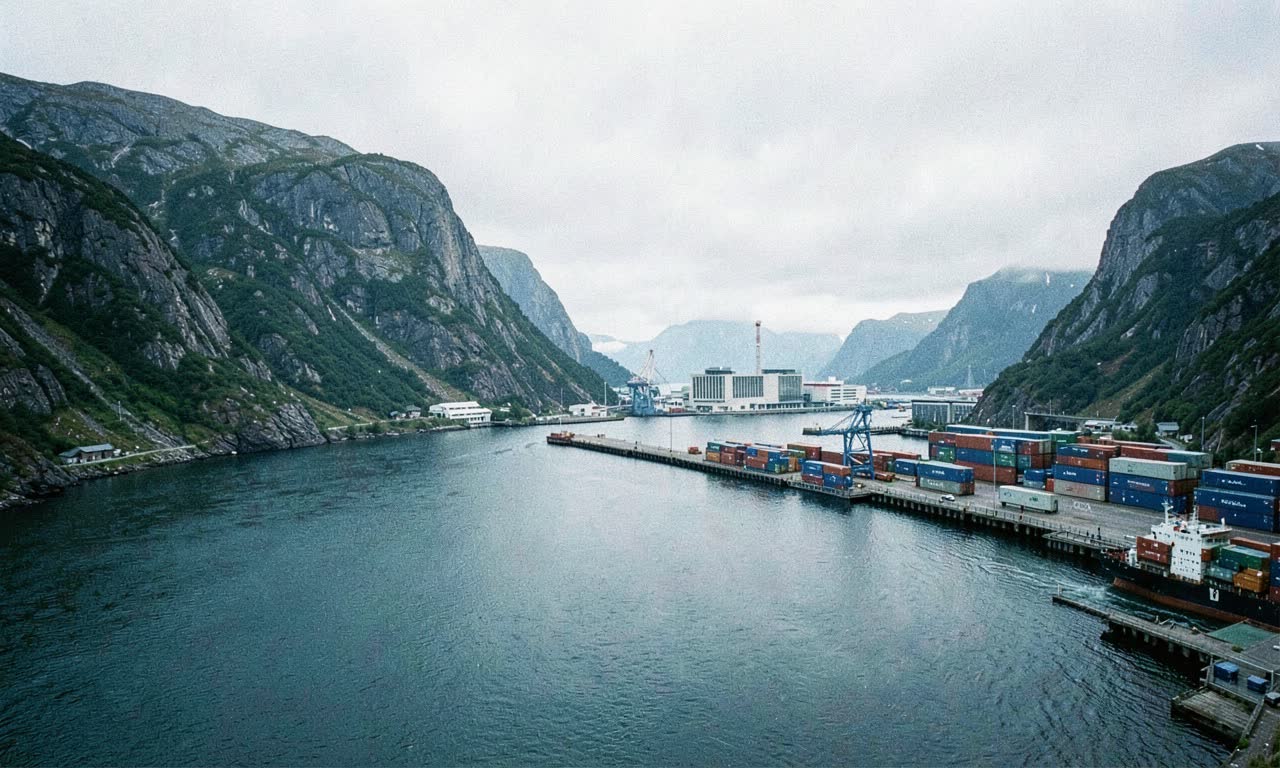
Norway isn’t just another flag on the membership roster. The country has significant rare earth deposits and is positioning itself as a non-Chinese source of critical minerals for European semiconductor production. Adding Norway to Pax Silica strengthens the alliance’s northern European mineral corridor — Finland and Sweden are already members — creating a Nordic supply chain cluster that reduces dependence on Chinese processing.
It’s a pattern: Pax Silica is building regional clusters of trusted supply chains, then connecting them globally. The Nordic minerals corridor. The Asian manufacturing zone. The existing US-UK-Japan chip coordination.
The New Zealand gap
Here’s the uncomfortable bit for anyone watching from Aotearoa. New Zealand has:
- No domestic semiconductor industry worth mentioning
- No critical minerals processing — we dig stuff up but it gets processed elsewhere
- No seat at the Pax Silica table — and no apparent strategy to get one
- Growing AI infrastructure dependency — every AI service NZ businesses use runs on chips from this supply chain
When 15 countries are coordinating policy on export controls, investment rules, and technology transfer for the minerals and chips that make AI possible, being outside the room means accepting whatever terms the inside decides.
NZ’s geographic isolation used to be a strategic advantage. In the AI supply chain era, it’s a liability. We’re not producing the minerals, not making the chips, not hosting the data centres at scale, and not in the alliance that sets the rules for all three.
The small-country play
There’s still a window. Pax Silica is expanding — 15 members today, more coming. The Philippines inclusion shows the US is willing to bring in nations that contribute manufacturing capacity rather than just raw materials or chips.
For NZ, the realistic entry point would be through the Five Eyes intelligence alliance — we’re already in that club. Australia, also a Five Eyes member, has positioned itself as a critical minerals supplier and is deepening semiconductor partnerships. The AUKUS framework provides another channel.
But none of this works without a strategy. Right now, NZ doesn’t appear to have one.
Why it matters now
The AI supply chain isn’t just about economics anymore. It’s about sovereignty. The countries inside Pax Silica will have preferential access to chips, minerals, and manufacturing capacity as geopolitical tensions with China escalate. The countries outside will face higher costs, longer wait times, and less control over the technology stack that increasingly runs everything.
Norway saw the writing on the wall. Fifteen countries have. New Zealand is still reading the wall.
SOURCES
- Semafor — US to announce Norway’s inclusion in Pax Silica group
- US State Department — Pax Silica
- Conflingo — Norway Confirms Participation in Pax Silica Initiative
- Supply Chain Digital — Pax Silica Explained: The Shift No Supply Chain Can Ignore