The US government has a problem it can’t talk its way out of. The Pentagon officially designated Anthropic a national security supply chain threat. The NSA is using Claude anyway — because there aren’t enough chips to run anything else on classified networks.
White House chief of staff Susie Wiles authorised the NSA to continue using an advanced Anthropic model, the New York Times reported. The reason wasn’t a policy reversal. It was a hardware shortage. Frontier AI models need processing power far beyond what classified government networks were built to deliver, and the chips simply don’t exist in sufficient quantities.
🔍 THE BOTTOM LINE
When your supply chain policy and your operational reality contradict each other, reality wins.
The Contradiction
This story has been building since March, when Anthropic sued the US government over the supply chain risk designation. The Pentagon’s concern centres on Anthropic’s corporate structure and foreign investment ties. But the operational reality is that Claude — particularly Mythos, Anthropic’s reasoning model — is among the most capable AI tools available for intelligence work.
The Guardian’s deep dive on the standoff laid out the tension in April. Now it’s resolved, and not by policy — by physics. You can’t run frontier AI without frontier chips, and the government doesn’t have enough of them.
The $9 Billion Fix
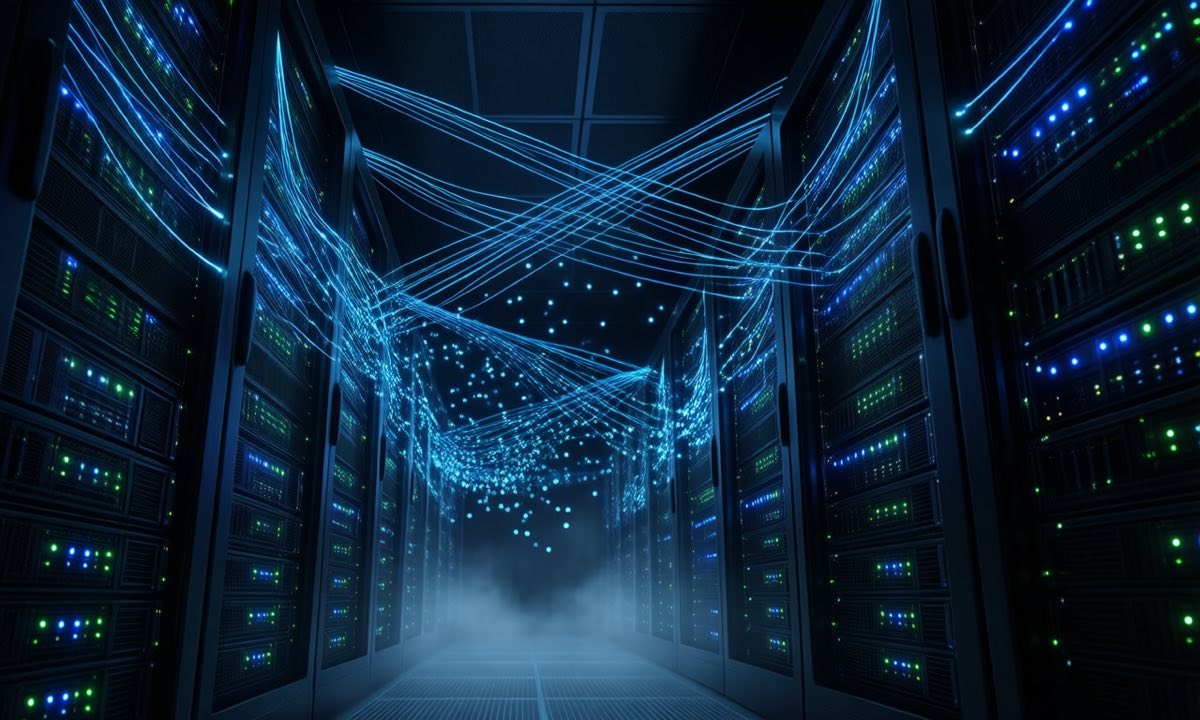
The White House approved a secret $9 billion emergency funding request to build classified data centres for the CIA and NSA. These facilities would use Nvidia’s Grace Blackwell superchip infrastructure — systems that require custom builds with massive electrical power and specialised liquid cooling. They can’t run on standard government computing grids.
In the meantime, $800 million is being redirected from other government budgets to begin purchasing computing capacity immediately. Congress still needs to formally vote on the full package.
| What | Detail |
|---|---|
| Emergency funding | $9 billion |
| Interim redirect | $800 million from other budgets |
| Target hardware | Nvidia Grace Blackwell superchips |
| Infrastructure | Custom classified data centres with liquid cooling |
| Urgency driver | Fear of China seizing computational advantage in intelligence |
The urgency is real. Intelligence agencies use AI to sift through millions of intercepted communications, satellite images, and data points. A chip shortage that stalls these tools is a genuine national security problem, not just a bureaucratic inconvenience.
Why Anthropic, Specifically?
This is where it gets awkward. Anthropic’s Project Glasswing — which gives 50 select partners access to Claude Mythos for vulnerability discovery — found more than 10,000 critical flaws in a single month. The company is simultaneously the most capable AI security tool available to Western defenders and a company the Pentagon considers a supply chain risk.
CNBC reported that Pentagon CTO Emil Michael called Anthropic “still a supply chain risk” but acknowledged Mythos as a “separate national security moment.” That’s not a resolution — that’s two contradictory statements stapled together.
Meanwhile, Anthropic’s revenue surged from $9 billion to $30 billion annualised between late 2025 and April 2026. The company is preparing for a potential IPO at a valuation that could reach $800 billion. Being blacklisted by the Pentagon hasn’t exactly hurt the share price narrative.
The Bigger Picture
The chip shortage driving this story isn’t limited to intelligence agencies. The same memory reallocation that’s killing cheap smartphones — Samsung, SK Hynix, and Micron redirecting wafers from consumer electronics to AI — is constraining the government’s ability to build classified infrastructure. The $9 billion request is the government’s version of the same problem.
And the structural tension extends beyond chips. Frontier AI capability is concentrated in a handful of private companies. The government wants to control which AI providers have access to sensitive operations. But when the hardware to run alternatives doesn’t exist, leverage disappears. The $9 billion is meant to fix the hardware gap — once those classified data centres are operational, the intelligence community could theoretically run whichever models it chooses. Until then, the NSA uses the company the Pentagon says it shouldn’t trust.
❓ Frequently Asked Questions
Q: What does this mean for NZ’s intelligence relationships? NZ’s GCSB operates within the Five Eyes intelligence-sharing framework. If the NSA is using Claude for intelligence analysis, the outputs of that analysis flow through shared intelligence channels. The supply chain risk designation doesn’t prevent that — it just means the tool generating the analysis comes from a company the US government itself doesn’t fully trust. NZ officials should be aware of this contradiction when relying on US-sourced intelligence products.
Q: Can’t the government just run open-source models instead? Technically yes, but the capability gap between open-source and frontier models is significant for the kind of reasoning-intensive intelligence work the NSA needs. Open-source models are catching up fast, but for classified analytical work right now, Claude Mythos is what’s available and what works.
Q: What happens when the $9B data centres are built? That’s the interesting question. Once the government has its own infrastructure, it can run whatever models it wants without depending on any single provider. The blacklist could then become operationally meaningful. But data centres take years to build. The contradiction isn’t going away soon.
🔍 THE BOTTOM LINE
The US government’s position on Anthropic is a policy Rube Goldberg machine: blacklist the company, authorise continued use, spend $9 billion to build the infrastructure that would make the blacklist enforceable. The chip shortage didn’t just expose the contradiction — it proved that when national security and supply chain policy collide, national security wins every time. The question is whether the $9 billion fix will actually give the government choices, or whether by the time the data centres are built, the frontier will have moved again and Claude (or whatever comes next) will still be the only game in town.