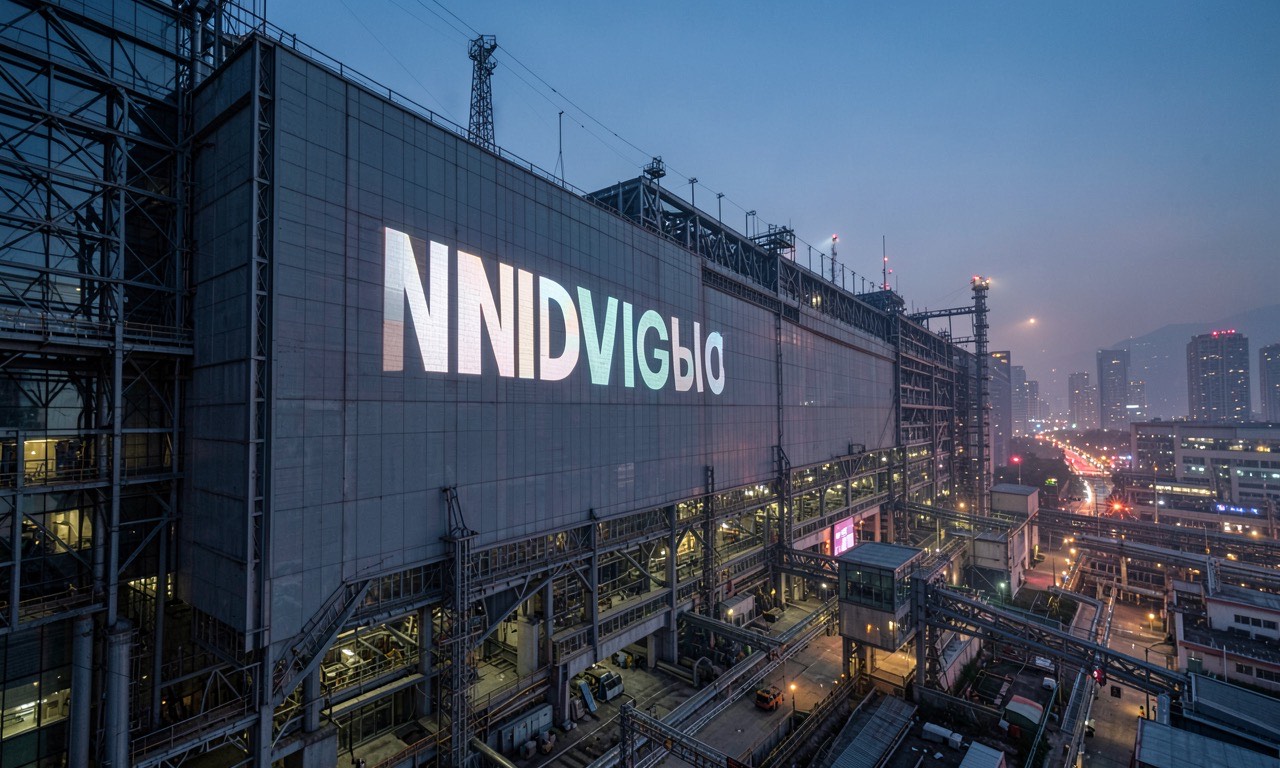
Nvidia CEO Jensen Huang announced on Tuesday that the company will spend $150 billion annually in Taiwan, calling the island the “epicentre” of the AI revolution. The commitment, reported by Reuters, cements Taiwan’s position as the single most important node in the global AI hardware supply chain — and concentrates geopolitical risk in a way the industry has barely begun to grapple with.
🔍 THE BOTTOM LINE: Taiwan already makes the vast majority of the world’s advanced chips. Nvidia just committed to spending more in one country each year than most countries’ entire GDP. The AI revolution runs through one island — and everyone from Washington to Beijing knows it.
❓ FAQ
Why Taiwan and not somewhere cheaper? Because Taiwan makes the chips. TSMC produces roughly 90% of the world’s leading-edge logic chips and an even higher share of the AI accelerators Nvidia depends on. There isn’t a Plan B geography with comparable capacity. Samsung and Intel are years behind on the most advanced nodes. The $150B isn’t a purchase decision — it’s rent on access to the only place this stuff gets made.
What does Nvidia actually get for the $150 billion? Manufacturing capacity, primarily. Reuters reported the commitment is largely about securing wafer allocation, packaging capacity (CoWoS), and the supplier ecosystem around TSMC — not buying chips for resale. Nvidia is locking in the upstream inputs for its own products, betting that AI demand will continue to outstrip the industry’s ability to supply it.
What are the geopolitical risks? Substantial. Taiwan sits inside the most dangerous military flashpoint on earth. A single disruption — earthquake, blockade, or conflict — would cascade through the entire AI economy within weeks. The US CHIPS Act and TSMC’s Arizona fabs are attempts to build a backup, but they’re at least 3-4 years behind Taiwan’s leading edge. The 2021 chip shortage, which shaved 1-2% off global GDP, would look minor by comparison.
Could China actually choke off Taiwan’s chip supply? Beijing’s options are more limited than the headlines suggest. A military blockade would also block China’s own access to Taiwanese chips, which it depends on heavily. The more realistic risk is grey-zone pressure — military exercises, trade inspections, cyber attacks on fab infrastructure — that doesn’t trigger a US response but raises risk premiums. That’s already happening, and it’s part of why Nvidia’s $150B is effectively geopolitical insurance, not just a procurement contract.
🔍 THE BOTTOM LINE
Taiwan already makes the vast majority of the world’s advanced chips. Nvidia just committed to spending more in one country each year than most countries’ entire GDP. The AI revolution runs through one island — and everyone from Washington to Beijing knows it. The Financial Times has covered the geopolitical risk in detail.
What Huang Actually Said
Speaking at a supply chain event in Taipei, Huang said Nvidia’s annual spend in Taiwan would reach $150 billion as the company ramps up production of its next-generation AI accelerators. Most of the money flows to Taiwan Semiconductor Manufacturing Company (TSMC), which fabricates Nvidia’s most advanced GPUs.
The figure is staggering. $150 billion a year is larger than the entire GDP of countries like New Zealand ($250B), and represents roughly three times Nvidia’s projected revenue for 2026. It reflects both the massive demand for AI compute and the capital-intensive nature of cutting-edge chip manufacturing.
Why Taiwan, Why Now
Taiwan’s dominance in semiconductor manufacturing isn’t new — TSMC has been the world’s leading chip fabricator for decades. But the AI boom has supercharged that position. Every major AI accelerator — Nvidia’s H100, H200, and Blackwell chips, AMD’s MI300, and most custom AI silicon — is manufactured in Taiwan.
TSMC’s 3nm and upcoming 2nm processes are the only commercially viable way to produce the most advanced AI chips at scale. No other company, in any country, has the capacity or the technical capability to match it. Samsung and Intel are years behind, and China’s domestic foundries are blocked from the most advanced equipment by US export controls.
Huang’s framing — “epicentre” — was deliberate. The AI revolution isn’t just powered by chips. It’s manufactured in one place.
The Geopolitical Reality
The concentration of AI chip production in Taiwan has been a growing concern in Washington, Brussels, and Beijing for years. A single geopolitical event — a Chinese blockade, a natural disaster, even a major earthquake — could disrupt the global AI economy for months.
The US has responded with the CHIPS and Science Act, pouring $52 billion into domestic semiconductor manufacturing. Intel, TSMC, and Samsung are all building new fabs in Arizona, Texas, and Ohio. But those fabs won’t reach full capacity for years, and they won’t match Taiwan’s leading-edge processes in the near term.
For its part, China has invested heavily in domestic chip capabilities, but US export controls on advanced equipment have kept Chinese foundries generations behind. The result: Taiwan’s position is more entrenched, not less, as the AI buildout accelerates.
What This Means for AI Pricing and Access
The concentration of chip production in Taiwan has direct implications for AI pricing, availability, and who gets access to cutting-edge compute. When supply is constrained and concentrated in one place, prices stay high, allocation becomes political, and the gap between “have” and “have-not” companies widens.
For New Zealand and other smaller economies, the implication is stark: access to advanced AI compute will depend on relationships with US cloud providers, geopolitical alignments, and the willingness of companies like Nvidia to allocate chips outside the biggest customers. The $150 billion commitment doesn’t change that — it reinforces the existing power structure.
The Other Side: Why Critics Are Skeptical
Some analysts are skeptical of the $150 billion figure, suggesting it includes existing commitments, future capacity purchases, and broader ecosystem spending beyond just chip fabrication. Nvidia’s actual cash spend in Taiwan may be lower than the headline number suggests.
There’s also the question of whether the figure will hold if the AI investment cycle cools. The current buildout is predicated on continued strong demand for AI training and inference — and as we’ve seen with the half of US data centre projects delayed or cancelled in 2026, the infrastructure boom is already showing signs of strain.
Huang’s commitment may be as much a signal to investors, customers, and governments as it is a hard spending plan. But even if the number softens, the message is clear: Taiwan’s centrality to AI isn’t going away.
❓ Frequently Asked Questions
Q: Does this affect New Zealand? Indirectly, yes. NZ companies that rely on cloud-based AI services are downstream of this supply chain. If chip production in Taiwan is disrupted, AI service costs and availability will be affected globally.
Q: Is Nvidia building new facilities in Taiwan? The $150 billion figure primarily reflects purchases from TSMC and other Taiwanese suppliers, not new Nvidia-owned facilities. TSMC is the one building new fabs, with multiple new plants already under construction.
Q: Could the US catch up? Not in the next 5-10 years. The CHIPS Act is funding new fabs, but Taiwan’s leading-edge capability and manufacturing scale will remain dominant through the rest of this decade.
🔍 THE BOTTOM LINE: Taiwan makes the world’s AI chips. Nvidia just bet $150 billion a year on that continuing. The bet may be smart — but it also means the entire AI economy is now one earthquake, one trade war, or one geopolitical crisis away from a supply shock that would make the 2021 chip shortage look minor.