New York City mayor Zohran Mamdani released a Rental Ripoff Report on Wednesday that, buried among tenant-union recognitions and code-enforcement upgrades, contains the first city-level AI disclosure rule aimed squarely at rental housing: landlords and realtors who alter listing photos with AI would have to say so.
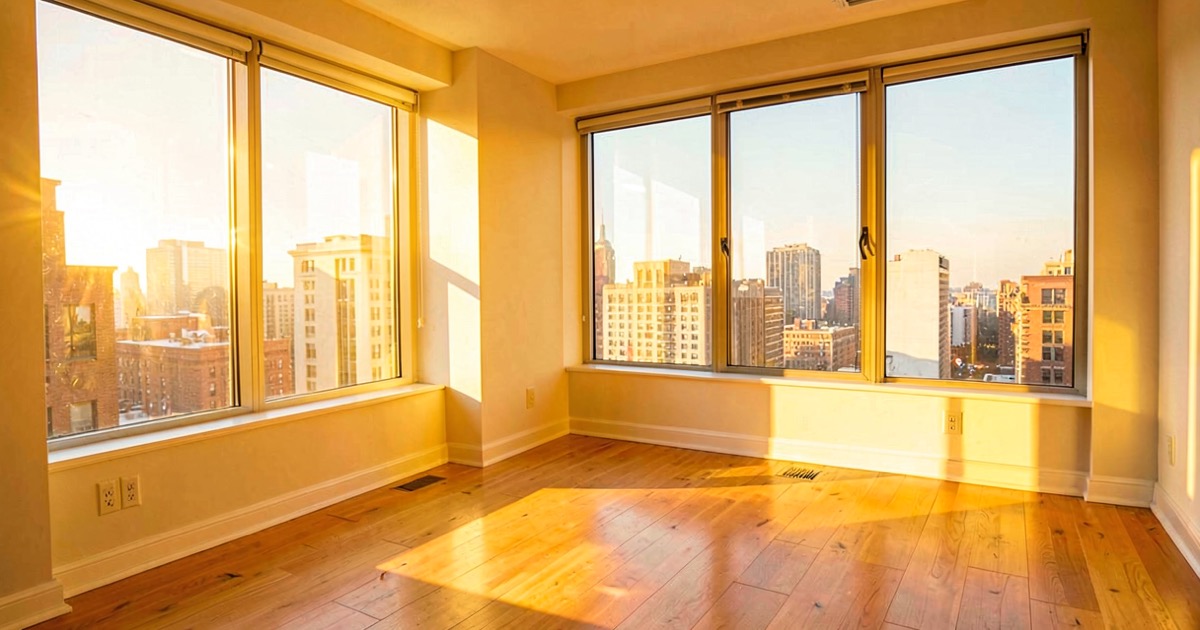
What is an AI-altered listing photo? It’s a real estate image that’s been generated from scratch by a model, or edited by one — walls widened, light added, stains erased, a “view” painted in. Generative tools make it cheap and instant. The result is a listing that looks like the apartment, but isn’t.
🔍 THE BOTTOM LINE A disclosure rule sounds small. It isn’t. It’s the first time a US city has framed AI-generated imagery as a consumer-protection issue in housing — and it lands at the exact moment remote leasing, sight-unseen rentals, and AI photo tools have all converged. Other cities will copy this. Tenants who have already signed leases based on photos that turned out to be fiction now have a policy vocabulary to push back with.
What the Report Actually Says
The Rental Ripoff Report follows the Rental Ripoff Hearings Mamdani established in his first week in office, after meeting with 2,400 New Yorkers across the five boroughs. The recommendations include recognising tenant unions, expanding bargaining rights, and — in the clause that matters here — requiring landlords and realtors to “disclose when rental listings have been altered using artificial intelligence or other digital tools.”
Per PetaPixel’s reporting, the disclosure requirement covers both AI-generated imagery and AI-edited photos — anything designed to make a property look more appealing than it is. Mamdani framed it as part of a broader tenant-accountability push: “every New Yorker deserves a safe home — and every landlord who refuses to provide one will be held accountable.”
Deputy Mayor for Housing and Planning Leila Bozorg called the policies “rooted in real experiences and address real concerns.” Cea Weaver, Director of the Mayor’s Office to Protect Tenants, framed the report as “writing a new chapter in tenant power.”
Why the Deception Problem Is Getting Worse, Not Better
This is not a hypothetical. PetaPixel noted last October that real estate agents were increasingly substituting AI-generated images for actual photos. The results, they wrote, are “occasionally funny, if not terrifying” — including one case where a horror demon appeared in a DC real estate listing photo after a model hallucinated a face into a background.
The harm isn’t the comedy. It’s the tenant who signs a lease remotely for a new job, arrives, and finds the “sunlit corner unit” is a basement with no windows. The farther the tenant is from the property — international students, cross-country movers, anyone relocating on a timeline — the more they rely on the photos, and the more the gap between photo and reality costs them.
The NZ Angle: We Don’t Have This Rule, and We Should
New Zealand has no equivalent disclosure requirement. The Residential Tenancies Act governs landlord-tenant obligations, but it doesn’t speak to AI-altered listing imagery — and Trade Me Property, the dominant listings platform, has no AI-disclosure flag.
It matters here for three reasons. One: New Zealand is a high-remote-leasing market — international students, returning Kiwis, migrant workers all sign from offshore. Two: AI image tools are already in the hands of every property manager with a $20/month subscription. Three: the same disclosure model that works for NYC — a line on the listing that says “this image has been AI-altered” — ports directly. It’s a one-line regulatory change, not a structural overhaul.
The Mamdani click-to-cancel rule Mamdani announced the day before suggests a pattern: small, specific consumer-protection rules aimed at the places AI meets everyday transactions. That template travels.
The Pushback You’d Expect
Landlord and realtor groups will argue disclosure is administratively heavy, that “AI-edited” is a fuzzy category (does auto-brightness count? does a sky replacement?), and that existing misrepresentation law already covers outright fraud. All three are partly true. None of them is a reason not to require disclosure — they’re reasons to define the category carefully.
The harder question is enforcement. A disclosure rule without audit is a suggestion. NYC’s report doesn’t detail the enforcement mechanism, which means the next fight is over whether the rule has teeth or whether it becomes a line of fine print no one reads.
❓ FAQ
Does this ban AI images in listings? No. It requires disclosure. A landlord can still use an AI-rendered image — they just have to say so. The rule targets deception by omission, not the tool itself.
What counts as “AI-altered”? The report doesn’t draw a bright line. Expect the implementation debate to focus on whether auto-enhancement (brightness, contrast) counts, or whether the rule covers only generative edits that materially change the space.
Why is this a city rule and not a federal one? Housing markets are local, and the harms are local. NYC’s scale — 3.6 million rental units — makes a city rule effectively a national standard for any platform operating there. This is the same dynamic that made California’s CCPA a de facto national privacy law.
Does this affect NZ landlords? Not directly. But if Trade Me or realestate.co.nz adopt an AI-disclosure flag to avoid being the platform named in the first NZ test case, the rule effectively arrives here without legislation. Platforms tend to harmonise upward.
🔍 THE BOTTOM LINE
The Mamdani rule is small, specific, and almost certainly the first of many. The pattern it sets — AI image manipulation as a disclosure problem in a specific consumer market — is more durable than any single executive order. Tenants signing leases sight-unseen have a new argument. Cities looking for cheap, popular AI regulation have a ready-made template. And platforms that host listings now have a reason to add the disclosure flag before someone makes them.
📰 Sources
- PetaPixel — Mayor Mamdani Says Landlords Can’t Secretly Use AI Images to Advertise Properties
- NYC Mayor’s Office — Rental Ripoff Report announcement
- PetaPixel — Real estate agents using AI images instead of actual photos (Oct 2025)
- PetaPixel — Horror demon in DC real estate listing photo
- Residential Tenancies Act 1986 (NZ)