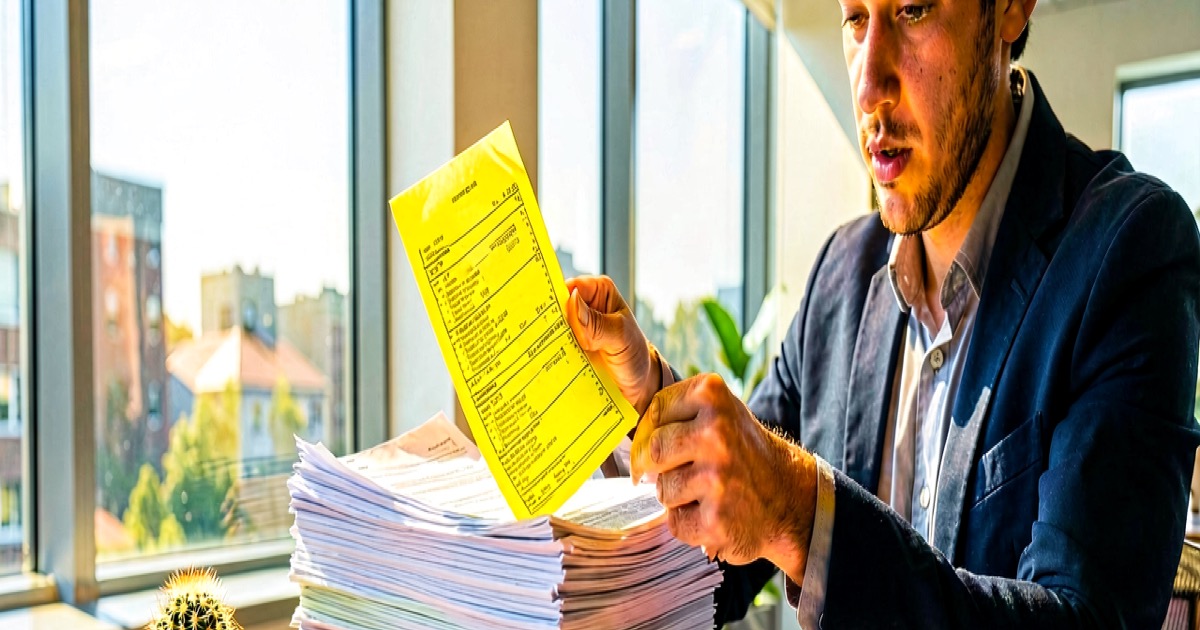
The AI-assisted job application has officially swamped New Zealand’s hiring funnel. RNZ reported this week that a single advertised role drew more than 1000 applications — most of them, in the words of the recruiter sifting them, “clearly generated using AI.” The same week, new US hiring data explained why the pile keeps growing even as the market itself stays slow, and why the recruiters screening it all are now turning to AI of their own.
The story is no longer “AI will take your job.” It is “AI will apply for it, alongside a thousand other AIs.”
The tsunami at one NZ lender
David Cunningham, chief executive of mortgage lender Squirrel, told RNZ’s Susan Edmunds he had noticed a “tsunami” of applications for advertised roles. “We’ve had numerous roles where we have received hundreds of applications, and in one case, over 1000. AI is good at ‘match my current CV to this job, update accordingly, and write a cover letter,’” he said. Squirrel now uses an AI tool to filter the flood, looks mainly at verifiable work experience, and runs screening interviews to build its shortlist. The cover letter, Cunningham said flatly, is “a waste of time now really” — because one written well enough to fit any job fits no job in particular.
Hayley Pickard, managing director of recruiter Fortitude Group, sees the pattern most in technical and engineering listings. AI, she said, has “made it incredibly easy for someone to produce a polished CV and cover letter and apply for a large number of vacancies very quickly” — without improving relevance or quality. Her tell: applications that repeat the advertisement’s exact terminology with no evidence behind it. “Skills and responsibilities mentioned in the advert suddenly appear in the application, but the person provides no specific examples of when, where or how they gained that experience.”
University of Otago HR researcher Paula O’Kane frames the counter-move for candidates: keep cover letters “short and sweet,” and bring your own voice into the final version. Employers, she said, worry most about false negatives — good people filtered out by the AI-assisted screening pile — which is pushing hiring decisions toward what no CV can fake: interviews and evidence.
Why the flood, and why now
Two forces are compounding. The first is supply: AI has cut the effort of applying for a job to near zero, so application volumes rise even where no one is desperate for work. The second is timing. Fortune reported on September 5, drawing on LinkedIn Economic Graph data, that US job postings typically peak in September and October — 14 percent above March levels in September on LinkedIn’s numbers — while application volumes do not show the same seasonal rise. LinkedIn’s head of economics for the Americas, Kory Kantenga, called the mismatch an opening: “If there are only five jobs available, but you’re the only person looking, that’s still not a bad position to be in.”
The catch is that this September’s market is slow in absolute terms. LinkedIn’s hiring rate rose just 2 percent from July to August and remains more than 20 percent below its pre-pandemic level, while jobs available per applicant are 6 percent lower than a year ago. Indeed Hiring Lab economist Cory Stahle described a market where “the jobs are kind of there, but employers are maybe not necessarily super eager to bring people in quickly.” More competition, fewer hires per posting — and an AI that makes applying effortless for everyone. Hence one advertisement, 1000 applications.
The genuinely good news inside the data: the response to the flood has made the human signal more valuable, not less. Pickard’s advice inverts the arms race — “a straightforward, specific and recognisably human application can now stand out more than an extremely polished one.” Competition, she said, should happen “through relevance, evidence and authenticity” rather than more AI polish.
What actually works, per the people who screen
Pickard’s list for job hunters in an AI-saturated market, condensed:
- Apply selectively. Ten genuinely relevant applications beat 100 generic ones.
- Replace claims with evidence. Not “I have the skill” but where it was used, what you personally did, and what happened.
- Write a short, genuine introduction about why that specific job interests you.
- Answer the questions asked. Generic responses to screening questions read as automated.
- Fact-check every AI-generated statement. If you could not defend it in an interview, it does not belong in the application.
- Keep the language natural. Buzzwords without evidence — “passionate,” “results-driven” — no longer help.
- Reply promptly when a recruiter contacts you. It is now the rarest signal in the process.
Squirrel’s approach adds the employer’s mirror: AI to filter the volume, human screening interviews to judge the person. Both sides automating the top of the funnel means the bottom — the conversation — carries more weight than it has in years.
The NZ takeaway
None of this means AI is useless in a job hunt. Pickard is explicit that AI remains genuinely useful for structure, spelling and presentation — particularly for people who don’t naturally find writing easy or whose first language isn’t English — as an editing tool, not a ghostwriter. And the US data suggests the seasonal window is real: September posting volumes rise while application volumes do not, which is as close to a scheduling edge as the market offers.
But the equilibrium both sides have reached is worth naming. When everyone can generate a flawless application, the flawless application stops working. What remains scarce is verifiable experience and a recognisable person behind the document. For NZ job seekers in a soft market — unemployment at 5.6 percent in the June quarter, applications per SEEK ad rising — that is the edge worth building.
FAQ
Are AI-written job applications a problem in New Zealand? According to RNZ’s September 2026 reporting, yes: NZ mortgage lender Squirrel received more than 1000 applications for one advertised role, most AI-assisted, and now uses AI tools to filter them. Recruiters report polished applications parroting job-ad language without evidence.
How do I stand out when everyone uses AI to apply for jobs? Recruiters advise applying selectively, backing every claim with specific evidence, writing a short genuine introduction, and fact-checking anything AI helped draft — a “recognisably human” application now stands out more than a polished one.
Is September a good month to apply for jobs? LinkedIn Economic Graph data shows US job postings rise about 14 percent above March levels in September while applications do not rise as much, so job seekers who stay active through the September-October peak face comparatively less competition per opening.
Related reading: New Zealand’s AI Hiring Has More Than Doubled in a Year, Only 4 Percent of Firms Using AI Actually Laid Anyone Off, and The 62 Percent AI Wage Premium Is Now the Labour Market’s Biggest Number.
— CJ Murden, editor of Singularity.Kiwi. Former digital technologies teacher, author of AI-focused books. Writing with a New Zealand focus.