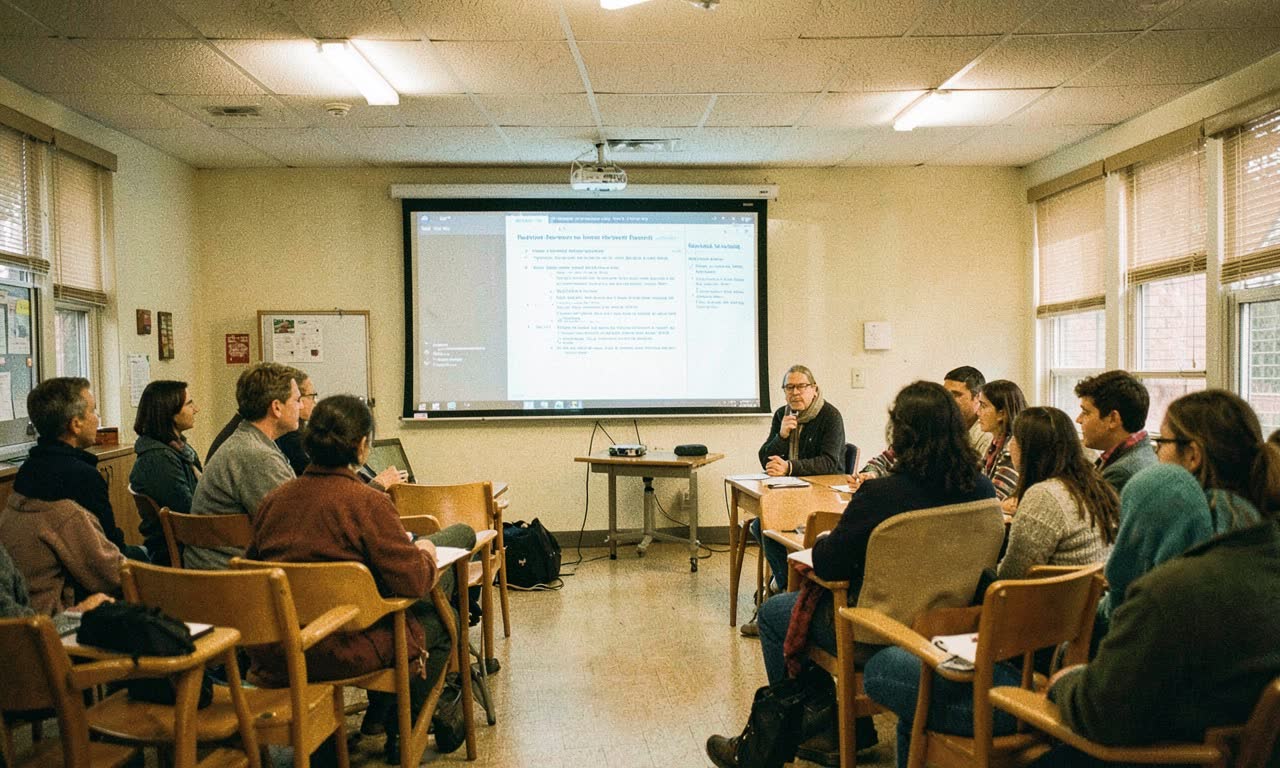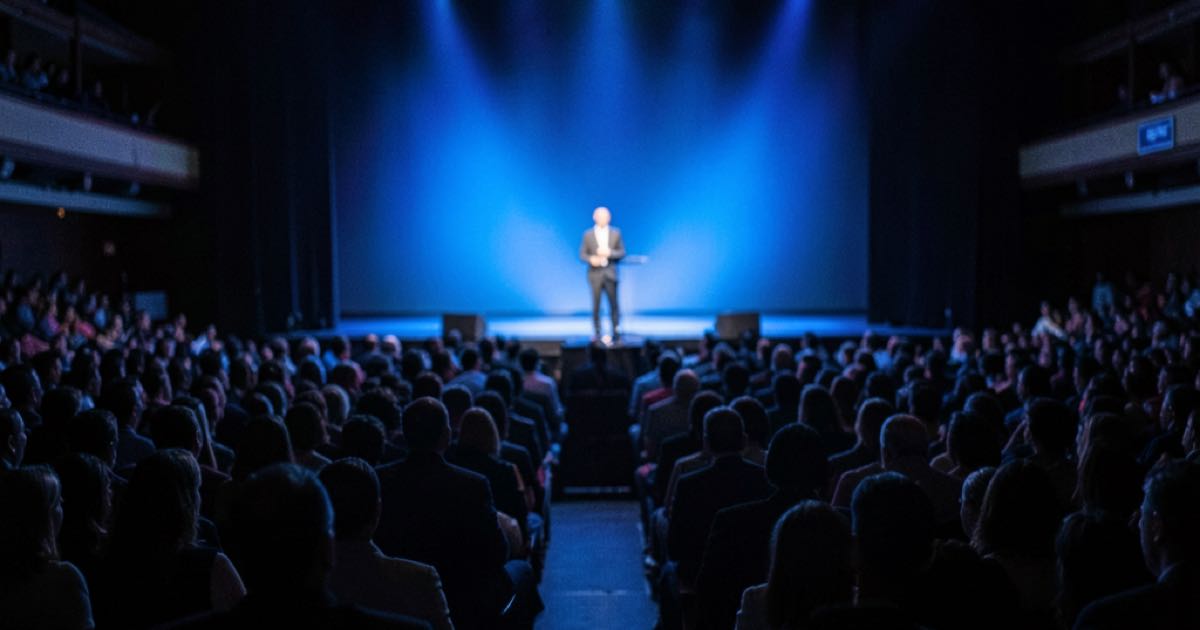
Eight hundred people packed into an Auckland conference on 6 August to hear a message that wasn’t the usual AI cheerleading. The event, called “Revved: Engineering Change,” held at Viaduct Events Centre, put AI’s impact on New Zealand communities, jobs, and sovereignty at the centre — and some of the speakers were brutal.
Rochelle Moffitt, the conference co-founder, set the tone. “It’s a shit show out there in the world,” she said. The remark wasn’t about AI specifically. It was about the broader sense that New Zealand is being shaped by forces it doesn’t control, and that the people in the room needed to engineer a different outcome.
The AI that makes you feel seen
Frances Valintine, an education and technology leader, delivered the most pointed critique. She described a country that has let foreign AI tools — built by companies with trillion-dollar valuations and “zero interest in the implications for New Zealand” — “slide into every waking hour of our lives” without deliberation.
Her observation about how AI makes people feel is worth sitting with. “I could open up my preferred AI on my phone right now and have a conversation with it that would make me feel seen, heard, valued and intellectually supercharged. My AI tells me I have great ideas.”
That’s not a criticism of the technology. It’s a warning about what happens when the most flattering voice in your life belongs to a product owned by a company in San Francisco or Beijing. Valintine wasn’t arguing against AI adoption. She was arguing for deliberation: “The question was never should we adopt AI? The question is who do we build it with?”
The nuclear comparison
Valintine reached back to 1987, when New Zealand banned nuclear-powered and nuclear-armed ships from its waters — defying the United States, getting suspended from ANZUS, and facing immense political and economic pressure. She called it “a defining moment in our development as a nation.”
The comparison is provocative. Nuclear ships were a physical presence in NZ waters. AI tools are a digital presence in NZ life. Both involve foreign power, sovereignty, and the question of what a small country is willing to accept in exchange for access to someone else’s technology. Whether the analogy holds is for readers to decide, but the framing clearly resonated with the audience.
25 per cent of Pacific people have no home internet
Julia Pahina, founder of south Auckland’s Fibre Fale, delivered a reality check that sat awkwardly alongside the conference’s AI ambitions. A quarter of the Pacific population in New Zealand doesn’t have access to WiFi at home. Pacific people are the fastest-growing and youngest demographic in the country.
“We are the future of Aotearoa, New Zealand,” she said. “Whilst I love the conversation about AI and we talk about AI a lot in our communities, I think there’s a gap between the current reality and the future, and that gap needs to close.”
The digital divide isn’t a new story, but the context gives it new teeth. If AI is reshaping education, work, and civic participation — as the conference speakers argued — then the people most exposed to that reshaping are the ones least likely to have the infrastructure to participate in the conversation. This echoes concerns we’ve explored in our coverage of NZ’s AI divide, the gap between infrastructure and skills, and the Māori-led approach to data sovereignty in AI systems.
The 22-year-old in the room
David Downs, head of Education New Zealand, told the crowd about Amelia Dore, a 22-year-old conference volunteer who had lost her job a month earlier. He asked anyone in the room who needed a marketing or HR person to find her.
Dore, originally from Gore, moved to Auckland for work. Now she’s considering following friends to Australia. Her presence at a conference about AI and the future of work wasn’t a data point. It was the thing the data describes.
The conference took place on a day when NZ recorded an 11-year unemployment high, hitting young people hardest. The connection between AI-driven automation and youth unemployment is contested — some economists attribute the current spike to broader economic conditions rather than AI specifically — but the timing sharpened the conference’s message.
Building NZ’s own AI
Nyssa Waters, founder of possibl.ai, has been writing a business case for New Zealand to build its own AI. “At the moment, we are bound by the United States and China largely in terms of models,” she said, “and what that means is they can own our knowledge, own our data, own everything, and turn it on and off whenever we want.”
That last word — “want” rather than “they want” — was either a slip or a revealing one. The fear isn’t just that foreign companies control the models. It’s that NZ doesn’t control its own access to them.
This theme connects to broader questions we’ve examined about whether NZ should build its own sovereign AI infrastructure or accept the role of customer and host — a question sharpened by the University of Auckland’s analysis published the same week.
The sovereignty question is not theoretical. The XeroForce Kereru model launch showed it is technically feasible for a small country to build its own capable models, while NZ’s “Pollyanna Policy” approach to AI governance has left the country with thin regulatory infrastructure compared to what the speakers at Revved were asking for. Half of APAC governments are building sovereign AI — and NZ’s blueprint doesn’t even mention it.
What stands out
What makes this conference different from the usual AI events is who was in the room and what they were willing to say. Not “how do we adopt AI faster” but “who controls the AI we’re adopting, and what are we giving up in the process.” The nuclear-free comparison may be a stretch. The 25 per cent without internet is not. The 22-year-old who lost her job is not.
The strongest challenge came from Valintine: “Which is harder? Our future Aotearoa, New Zealand shaped by global companies, big tech, bigger money and external values, or a future that we actively curate and shape, based on what we want our country to stand for? Both are hard — pick your hard.”
❓ FAQ
What was the Revved conference in Auckland?
“Revved: Engineering Change” was a conference in Auckland bringing together around 800 people to discuss the impact of AI on New Zealand communities, jobs, and sovereignty. Speakers included education leader Frances Valintine, Fibre Fale founder Julia Pahina, and possibl.ai founder Nyssa Waters.
What is AI sovereignty for New Zealand?
AI sovereignty refers to the idea that New Zealand should have control over the AI systems it depends on — including the ability to build, own, and govern AI models and infrastructure rather than relying entirely on foreign providers. The concept parallels earlier debates about data sovereignty and digital infrastructure ownership.
How many Pacific people in NZ lack home internet?
According to Julia Pahina of Fibre Fale, 25 per cent of the Pacific population in New Zealand does not have access to WiFi at home, despite Pacific people being the fastest-growing and youngest demographic in the country.
Is AI causing youth unemployment in NZ?
The connection is contested. NZ recorded an 11-year unemployment high around the time of the conference, with young people hit hardest. Some attribute this to broader economic conditions; others see AI-driven automation as a contributing factor. No definitive causal link has been established.