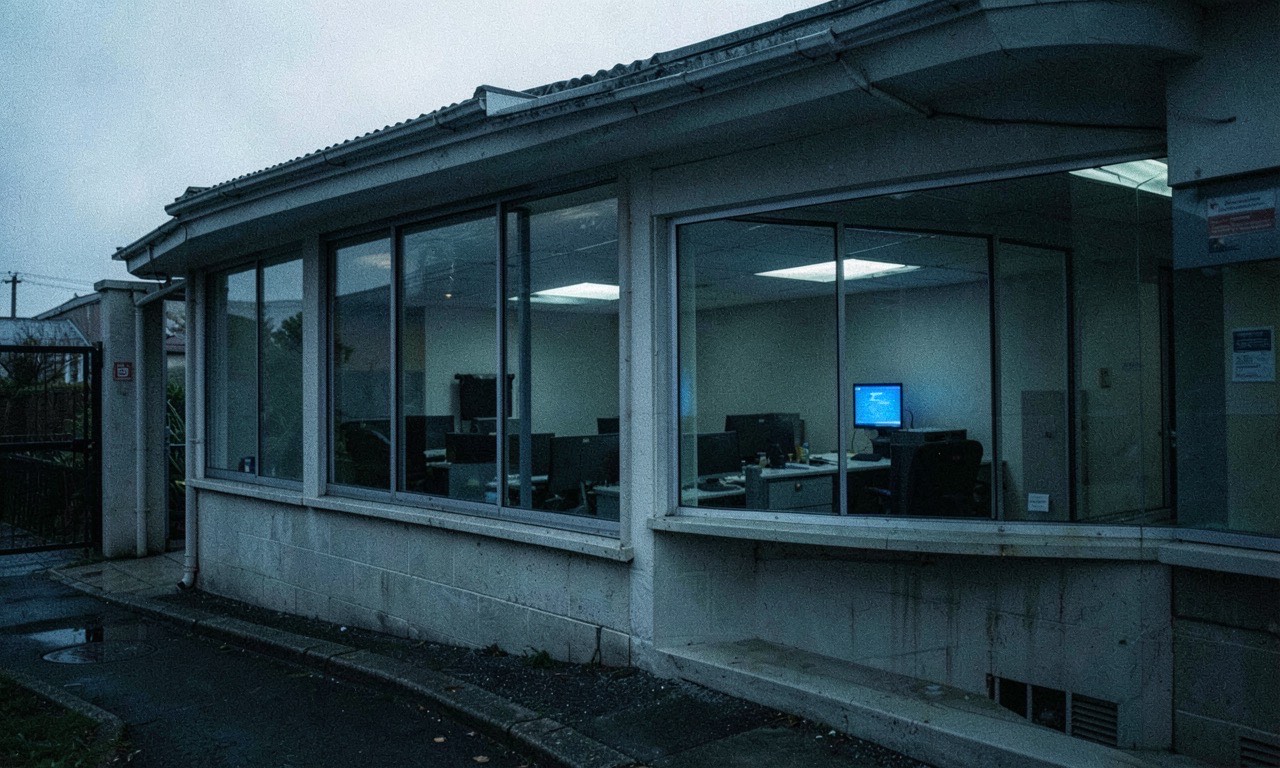
The New Zealand government plans to cut 8,700 public sector jobs across 40 agencies and replace much of that work with AI, claiming $2.4 billion in savings — but critics say the actual cost of enterprise AI has not been accounted for.
Finance Minister Nicola Willis announced the cuts this week as part of the coalition government’s ongoing public sector overhaul. The recipe: reduce headcount, increase AI adoption. The savings target: $2.4 billion over four years.
But when Labour pressed Digitising Government Minister Paul Goldsmith in Parliament for details on AI rollout and licensing costs, the answer was telling: “I don’t have that exact figure at the moment, but of course it varies.”
🔍 THE BOTTOM LINE
The government’s AI-for-bureaucrats plan relies on a savings number nobody has audited, with costs nobody has calculated. That’s not a plan — it’s a guess.
The numbers that don’t add up
Enterprise-scale AI isn’t cheap. A single Microsoft Copilot licence runs about $30 USD per user per month. For 40,000 public servants that’s $1.2 million USD monthly just for one tool. And as Professor Alexandra Andhov, chair of law and technology at the University of Auckland, pointed out to RNZ, that’s before you factor in:
- Ongoing licence fees for multiple AI platforms across different agencies
- Model upgrade costs as vendors retire old versions
- Integration expenses to connect AI tools with existing government IT systems
- Training and change management for remaining staff to actually use the tools
Retired forestry consultant Roger May of Motueka put it more bluntly when he emailed Willis directly: “8700 knowledgeable bureaucrats are about to be axed. She expects that AI will replace a lot of these people. But there’s not been any explanation of the costs and time involved, and I wouldn’t mind betting that’s going to eat into their $2.4 billion.”
He got an acknowledgement from the minister’s office. Nothing more.
The local AI problem
Goldsmith was also asked whether the government would use local or overseas AI technology. His response: “I’m not aware of a current local AI provider in the scale of Claude or Copilot.”
That’s a problem. If NZ’s entire public sector digitisation relies on US-owned AI platforms, there are sovereignty, data residency, and cost implications that don’t appear in the $2.4 billion savings projection. Andhov noted that enterprise AI isn’t a one-off purchase — “you’re at the mercy of companies dictating when and how models are replaced or integrated.”
ACT’s David Seymour, ever the pragmatist, asked if the public sector would build its own silicon chips or import them. Goldsmith sidestepped, suggesting NZ should “focus on the things that we do well and sell them to the world and then purchase the things that other people in the world do better.”
What this means for the NZ tech sector
If the government proceeds with this plan, it creates a massive enterprise AI procurement pipeline — but with no local provider capable of filling it. That means US hyperscalers (Microsoft, Google, Amazon) are the likely beneficiaries. The $2.4 billion “saving” becomes, in part, a transfer from NZ public sector salaries to US cloud providers.
There’s also the question of whether the 8,700 workers being cut include the IT and data staff who would actually be needed to manage and maintain AI systems. You can’t fire everyone and then ask an AI to manage itself — as the PROMPTSPY malware story demonstrates, that’s not how this technology works.
🗣️ Editorial Voice
Let’s be clear: I’m not opposed to AI in government. A well-implemented AI system could handle FOI requests, triage benefits applications, and free up human staff for complex casework. That’s genuinely good.
But the government hasn’t presented a plan. It’s presented a target number and a vague assumption that AI will fill the gap. The fact that Goldsmith couldn’t answer basic questions about licensing costs in Parliament suggests this is ideology-driven efficiency rather than evidence-based policy.
The $2.4 billion figure is going to look very different once the enterprise licence agreements are signed.
❓ Frequently Asked Questions
Q: How many public sector jobs are being cut? 8,700 across approximately 40 core government agencies, on top of previous rounds of cuts.
Q: Does the government have a specific AI plan? Not one that’s been published. Goldsmith acknowledged they’re working on “a more coherent and centrally guided system” but couldn’t provide costings.
Q: What would a realistic AI implementation cost NZ government? Unknown, but comparable enterprise deployments suggest tens of millions annually in licensing alone for a workforce this size — before integration, training, and upgrade costs.
Q: Are there NZ AI providers that could fill this gap? Goldsmith said he’s not aware of any at the scale required. There are NZ AI companies, but none operating at the enterprise scale needed for whole-of-government deployment.
🔍 THE BOTTOM LINE
The government’s AI-driven efficiency plan has a savings number, but no cost column. Until someone does the actual maths, the $2.4 billion is a political promise, not a fiscal plan. And in enterprise AI, the hidden costs always, always show up.
SOURCES
- RNZ — Replacing public servants with AI could come with hidden costs
- RNZ — Nearly 9000 public sector jobs to go
- NZ Parliament — Hansard (Paul Goldsmith response to Labour questions)