OpenAI just made its biggest strategic move since launching ChatGPT — and it’s not a new model. It’s a bet that one app can be everything.
On Friday May 16, OpenAI co-founder and president Greg Brockman formally took charge of the company’s entire product strategy, merging ChatGPT, Codex, and the developer API into a single organisation. In an internal memo, Brockman wrote that OpenAI will “invest in a single agentic platform and to merge ChatGPT and Codex into one unified agentic experience for all.”
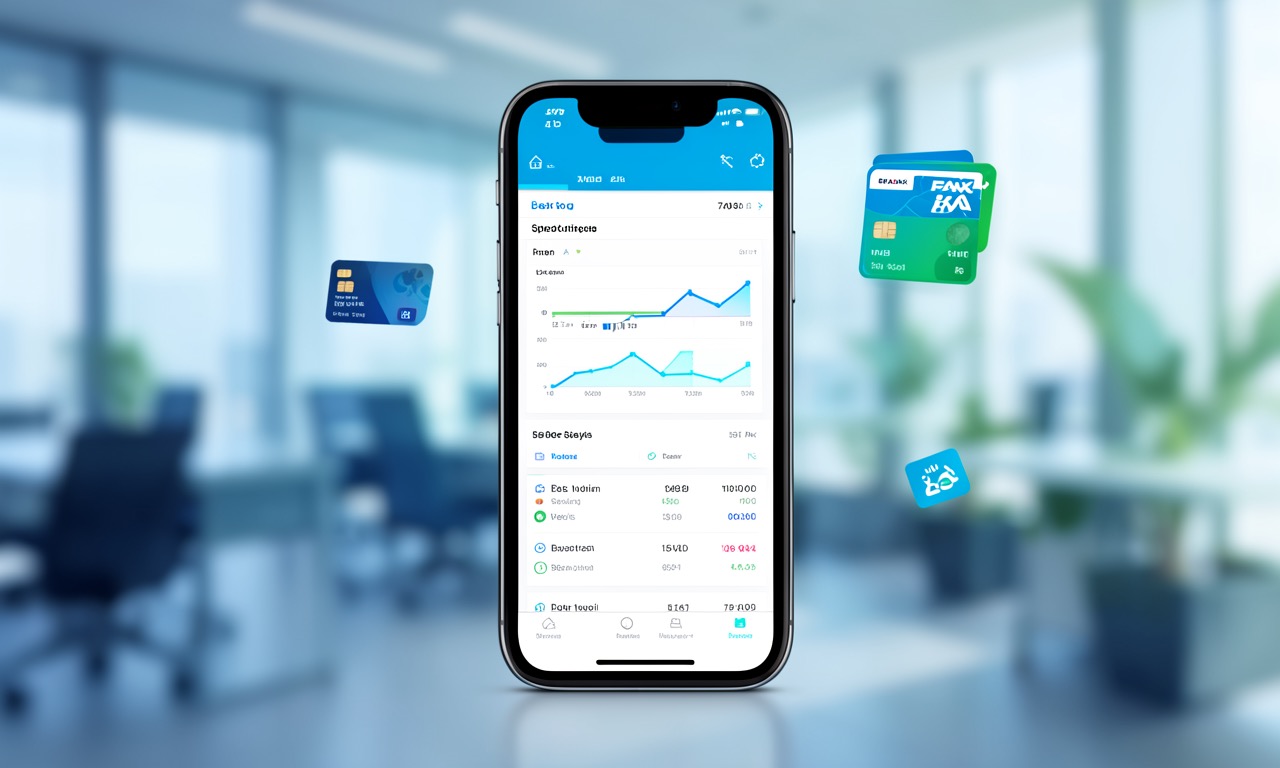
One day earlier, OpenAI launched personal finance tools inside ChatGPT Pro — connecting to 12,000+ banks via Plaid, letting users view spending, investments, and subscriptions in a dashboard, then ask questions grounded in their actual financial data.
These aren’t two separate announcements. They’re the same story: OpenAI is building a super app, killing off anything that doesn’t serve it, and racing toward a reported $852 billion IPO in Q4 2026.
🔍 THE BOTTOM LINE
OpenAI is consolidating everything into one platform — chat, code, finance, agents — because it can’t afford not to. The super app play is either brilliant or reckless. Probably both.
The Great Consolidation
The restructuring places four pillars under Brockman:
- Thibault Sottiaux (who built Codex into OpenAI’s fastest-growing product) now leads core product and platform across consumer, enterprise, and developer surfaces
- Nick Turley (who oversaw ChatGPT’s growth to 900 million weekly active users) moves to enterprise products and critical industries
- Brockman himself retains AI infrastructure, including the Stargate data centre programme
- Fidji Simo, CEO of AGI deployment, collaborated on these changes but is on medical leave with no return timeline
The consolidation is the culmination of a strategic retreat that began in December 2024, when CEO Sam Altman declared a “code red” and told staff the company needed to refocus on its core ChatGPT experience. Since then:
- Sora (video generation) was shelved — too expensive, too little revenue, and it killed a planned $1 billion Disney investment
- Adult mode for ChatGPT was cancelled after pushback from staff, advisors, and investors
- OpenAI for Science was halted
- Kevin Weil (Sora head) and Bill Peebles (product lead) both departed
Internally, these cancelled initiatives are called “side quests.” The message is clear: the side quests are over.
Brockman explained the compute constraint on a recent podcast: OpenAI’s computing power is “not enough for even a personal assistant and the Codex line.” When you’re resource-constrained, you can’t maintain separate teams, separate roadmaps, and separate engineering organisations for products converging toward the same capability.
Your Bank Account, Now a ChatGPT Feature
The personal finance launch is the clearest signal yet of where the super app is heading. OpenAI partnered with Plaid to let Pro subscribers ($200/month) connect accounts from over 12,000 financial institutions — Schwab, Fidelity, Chase, Robinhood, American Express, Capital One — and see a dashboard of portfolio performance, spending, subscriptions, and upcoming payments.
More than 200 million people already ask ChatGPT financial questions every month, according to OpenAI. Now those questions can be answered with your actual data, not just general advice.
The feature comes one month after OpenAI acquired the team behind personal finance startup Hiro, backed by Ribbit Capital, General Catalyst, and Restive. OpenAI says the Hiro team’s finance expertise was useful but wouldn’t confirm whether the entire feature was built by them.
Key details:
- Pro only for now (US), rolling out to Plus later
- Plaid handles connections; Intuit support coming soon (tax impact analysis, credit card approval odds)
- Financial memories — tell ChatGPT about a mortgage, savings goal, or loan, and it remembers across conversations
- Data deletion — disconnect an account, and synced data is removed within 30 days
- Explicit disclaimer — ChatGPT “is not a replacement for professional financial advice”
But here’s the uncomfortable question: OpenAI is currently the subject of lawsuits over stored chat data being shared with third parties. The same company asking you to connect your bank accounts is fighting in court over how it handles your conversations. Meta saw this opening and launched Incognito Chat for Meta AI — end-to-end encrypted, device-only, deleted when the session ends. It’s sharp competitive positioning by Zuck, and OpenAI hasn’t offered a convincing answer.
The Competitive Pressure Is Real
The restructuring isn’t happening in a vacuum:
| Competitor | What They Did | OpenAI’s Response |
|---|---|---|
| Cursor | $2B ARR, talks for $50B valuation | Merge Codex into unified platform |
| Claude Code | Gaining enterprise developers | Consolidate dev tools under one roof |
| Google Gemini | Web traffic share 5.7% → 21.5% in 12 months | Org chart reshuffle (not a product launch) |
| Perplexity | Launched financial research agent | Launch personal finance first |
| Meta | Incognito Chat (privacy differentiator) | Not yet addressed |
Two years ago, OpenAI countered Google I/O by unveiling GPT-4o the day before the conference. This year, Google I/O 2026 opened on May 19 with agentic coding and Gemini updates. OpenAI’s counter? An org chart.
ChatGPT’s web traffic share declined from 86.7% to 64.5% over the past year, according to SimilarWeb. When you’re losing 22 percentage points of market share, restructuring is what you do while you figure out the next model.
The IPO Shadow
Everything connects to the IPO. OpenAI is preparing to go public in Q4 2026, targeting roughly $852 billion. A simpler product story — one platform, not a portfolio of separate apps — is easier to sell to institutional investors. One subscription tier, one developer platform, one enterprise offering, all building on the same model infrastructure.
The old structure, where ChatGPT chased consumer reach, Codex served developers, and the API monetised the ecosystem separately, created internal competition for compute, engineering talent, and strategic attention. The new structure eliminates that redundancy.
But the timing is complicated. The Musk v. Altman trial began jury selection on May 12 in Oakland federal court. Musk seeks up to $150 billion in damages and the unwinding of OpenAI’s nonprofit-to-profit conversion. The most damaging evidence? A 2017 diary entry from Brockman himself: “I cannot believe that we committed to non-profit if three months later we’re doing b-corp then it was a lie.” The person now running product strategy is also a central figure in the trial that could unwind the company’s legal structure.
What This Means for NZ
OpenAI’s personal finance tools are US-only for now, with no announced timeline for other markets. But the implications are relevant:
- Banking competition — NZ banks already offer AI-powered insights (ASB’s AI tools, BNZ’s budgeting features). If ChatGPT becomes the default financial advisor for 200M+ users, local banks’ app experiences need to compete or integrate
- Privacy regulation — NZ’s Privacy Act 2020 is stricter than US federal law. How OpenAI handles financial data for NZ users, whenever it arrives, will face regulatory scrutiny
- Financial advice boundaries — NZ’s Financial Markets Act requires anyone giving personalised financial advice to be authorised. OpenAI’s disclaimer (“not a replacement for professional financial advice”) is the same dance every fintech plays. NZ regulators have been watching
- The super app question — WeChat in China, Grab in Southeast Asia. Super apps dominate by owning multiple surfaces. If OpenAI is building one, every other app in the ecosystem — including NZ’s — should be paying attention
🔍 THE BOTTOM LINE
OpenAI is making the biggest strategic bet of its short history: that one agentic platform can be everything — your chatbot, your coding assistant, your financial advisor, your agent runner. The side projects are dead. The IPO clock is ticking. And the founder who wrote “it was a lie” about the nonprofit mission is now the one running the product. What could go wrong?
❓ Frequently Asked Questions
Q: Can I use ChatGPT’s personal finance tools in New Zealand? Not yet. The feature is US-only, Pro subscribers only, in preview. OpenAI says it plans to expand to Plus users and other markets based on feedback, but no timeline has been announced for NZ.
Q: Is OpenAI going to see my bank transactions? OpenAI says financial data is accessed through Plaid (a third-party connection service used by thousands of fintech apps) and that you can disconnect accounts with data deleted within 30 days. However, OpenAI’s data practices are currently the subject of multiple lawsuits, so trust is a legitimate concern.
Q: What happens to Codex as a standalone product? It’s being merged into the unified ChatGPT platform. Codex’s leader, Thibault Sottiaux, now heads core product across all surfaces. The coding capabilities won’t disappear — they’ll just live inside the same app as everything else.
Q: Why should I care about an OpenAI restructure? Because it signals OpenAI is resource-constrained and racing toward an IPO. When the most valuable AI company in the world says it doesn’t have enough compute for two products, that tells you something about the state of AI infrastructure. And when it starts connecting to your bank account, that tells you something about where consumer AI is going.
Sources
- The Next Web — OpenAI merges ChatGPT and Codex under Greg Brockman
- TechCrunch — OpenAI launches ChatGPT for personal finance
- OpenAI Blog — A new personal finance experience in ChatGPT
- Big Technology — OpenAI President Greg Brockman: Doubling Down on Text Models, The Superapp Plan
- Wired — Internal memo on restructuring