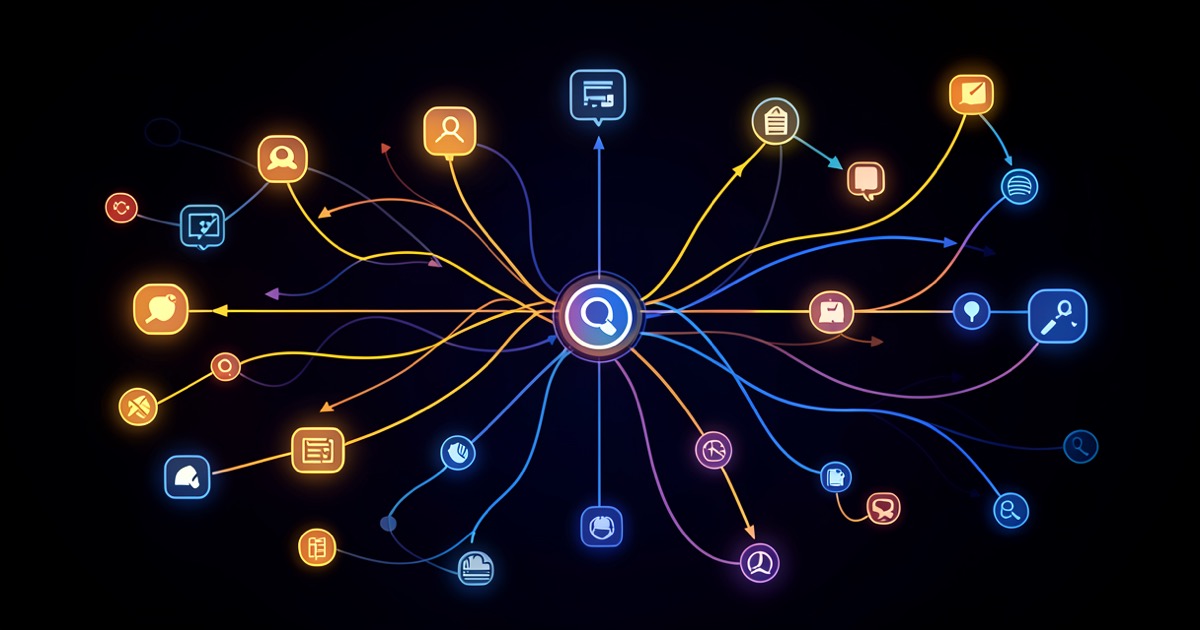
OpenAI just made its most aggressive play for the enterprise: Workspace Agents, autonomous AI workers that run on Codex, connect to your existing tools, and handle entire workflows without human supervision. They cost $20/month. They work while you sleep.
Announced April 22 as part of OpenAI’s launch week, Workspace Agents are being positioned as the successor to Custom GPTs — but the difference is fundamental. Custom GPTs were chatbots with instructions. Workspace Agents are workers with jobs.
🤖 What They Actually Do
Each Workspace Agent is a Codex-powered autonomous worker that can:
- Use apps — Connect to Slack, Salesforce, Google Workspace, and other enterprise tools
- Write and deploy code — Run in a personal cloud workspace with full development environment
- Work asynchronously — Start a task, go to sleep, come back to results
- Share across teams — Agents are collaborative, not single-user
OpenAI is launching with four pre-built agent types:
| Agent | Role | Example Tasks |
|---|---|---|
| Sales | Lead outreach, vetting, candidate research | Qualify inbound leads, draft outreach sequences, research prospects |
| Analyst | Market sizing, research, generate reports | Compile competitive analysis, build financial models, generate slide decks |
| Security | Software reviews, bug fixes | Scan code for vulnerabilities, suggest patches, run security audits |
| Customer Success | Product feedback, product ideas | Analyse support tickets, identify feature requests, draft response templates |
One agent has already saved a sales rep 6 hours of work, according to OpenAI’s announcement.
💰 The Pricing Signal
$20/month per agent. Not per seat. Not per team. Per agent.
That’s the same price as a ChatGPT Plus subscription, but instead of getting a chatbot you talk to, you get an autonomous worker that does tasks for you. The economics are deliberately aggressive. OpenAI is making it cheaper to hire an AI worker than a human intern — and that’s not an accident.
For context: the average US sales development rep costs $55,000-75,000/year in salary alone. An OpenAI sales agent costs $240/year. Even if it only handles 10% of the workload, the ROI is immediate.
⚡ Why This Matters: Custom GPTs Are Dead
Workspace Agents don’t just improve on Custom GPTs — they make them irrelevant. Custom GPTs were limited to conversations within ChatGPT. They couldn’t use external tools. They couldn’t work asynchronously. They couldn’t share context across teams.
Workspace Agents do all of that. They run in a personal workspace with a full development environment. They connect to the tools your team already uses. They work while you’re offline. They’re shared across your organisation.
The trajectory is clear. OpenAI launched ChatGPT in November 2022 as a conversational AI. Custom GPTs came a year later as configurable chatbots. Now Workspace Agents are autonomous workers. Each step moves further from “AI you talk to” and closer to “AI that replaces tasks.”
🔍 The Catch
Several things worth noting:
They’re enterprise-only. Workspace Agents require a ChatGPT Business or Enterprise subscription. The $20/month per agent is on top of the base subscription ($25/user/month for Business). So the real cost is $45/month for your first agent — still cheap, but not quite the headline price.
They run on Codex, not GPT-5. Codex is OpenAI’s code-focused model. It’s good at structured tasks and code execution, but it’s not a frontier reasoning model. Complex analytical work may still need human oversight — or a more capable model.
They’re only as good as the tools they connect to. Salesforce integration is only useful if your Salesforce data is clean. Slack integration only works if your team actually uses Slack. The agents amplify your existing workflows — they don’t replace bad ones.
Security and compliance questions remain. Giving an AI agent access to your CRM, email, and internal communications is a significant trust decision. OpenAI says data is not used for training, but enterprise customers will need to verify this with their own compliance teams.
🏢 The Competitive Landscape
OpenAI isn’t alone in the autonomous agents space. Anthropic has Claude Code and managed agents. Microsoft has Copilot Studio. Google has Gemini agents in Workspace. Salesforce has Agentforce.
But OpenAI’s move is significant because of the distribution. ChatGPT has over 200 million weekly users. Workspace Agents are immediately available to every Business and Enterprise subscriber. No new platform to learn. No separate vendor contract. It’s already in the tool they’re paying for.
The $20/month pricing is also disruptive. Anthropic’s Claude Code costs more per token for extended use. Microsoft Copilot Studio requires a Power Platform licence. OpenAI is pricing agents to be an impulse buy, not a procurement decision.
🔍 THE BOTTOM LINE
OpenAI just told us exactly what it thinks the future of work looks like: autonomous AI workers, priced below an intern, running on the platform 200 million people already use. Workspace Agents aren’t a research demo or a future roadmap item. They’re available today, for $20/month, and they work while you sleep.
The question isn’t whether AI agents will replace entry-level knowledge work. OpenAI just started the clock. The question is how fast organisations adopt them — and what happens to the people whose tasks they absorb.
Sources: OpenAI | VentureBeat | 9to5Mac