Seven AI companies walked into the Pentagon. None of them said no.
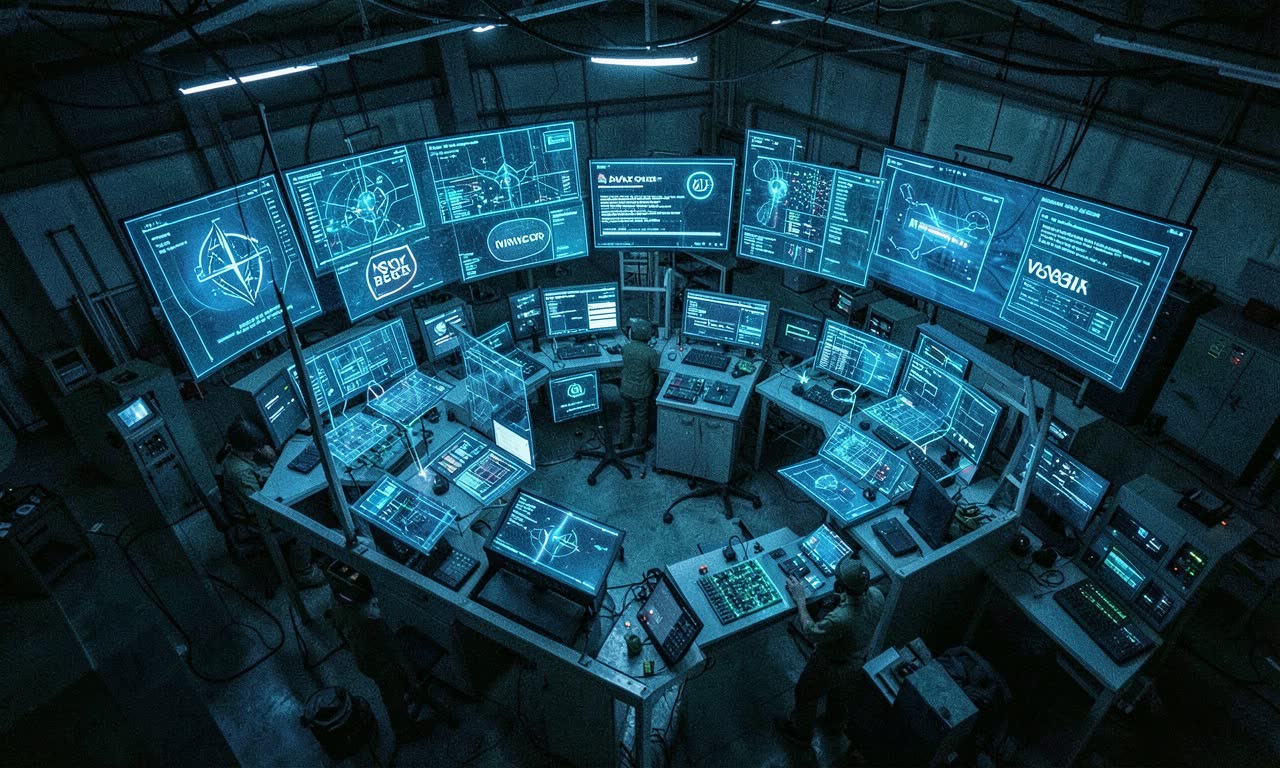
The US Department of Defence announced Friday it has signed agreements with Nvidia, Microsoft, Amazon Web Services, OpenAI, Google, SpaceX, and Reflection AI to deploy their AI models on classified military networks — Impact Level 6 and Impact Level 7 environments, the highest classification tiers for national security data.
More than 1.3 million Defence Department personnel now have access to AI through the GenAI.mil platform. And the Pentagon made its positioning explicit: “The Department will continue to build an architecture that prevents AI vendor lock-in and ensures long-term flexibility for the Joint Force.”
Translation: we will never again be dependent on a single AI company that might push back.
The Anthropic Shadow
You can’t read this announcement without seeing Anthropic written between every line. In February, Anthropic refused the Pentagon’s demand for unrestricted use of its AI models, insisting on guardrails against autonomous weapons and domestic mass surveillance. The Pentagon’s response was swift and brutal: it designated Anthropic a “supply-chain risk,” the Trump administration ordered federal agencies to dump Anthropic products, and the DOD launched a very public campaign to replace them.
A federal judge blocked the Pentagon’s retaliatory measures in March, calling them likely First Amendment retaliation. But the writing was on the wall. The Pentagon didn’t need Anthropic’s compliance — it needed Anthropic’s replaceability.
Seven companies later, that replacement strategy is operational.
What Each Company Brings
The new agreements layer AI capabilities across the classified stack:
- Nvidia — GPU infrastructure and model inference at scale. The hardware layer that makes everything else possible.
- Microsoft — Enterprise AI via Azure classified cloud. Deep integration with DOD systems already in place.
- AWS — Amazon’s classified cloud footprint is massive in Defence. Adding native AI models is a natural extension.
- OpenAI — GPT models for classified operational use. Yes, the same OpenAI that originally promised never to build military AI.
- Google — Gemini 3.1 Pro already landed on GenAI.mil in April, after Google quietly removed its own AI ethics principles.
- SpaceX — Starlink integration with AI for battlefield communications and intelligence. The Musk adjacency writes itself.
- Reflection AI — The wildcard. A newer entrant providing model capabilities for classified environments.
Each company agreed to “full and effective use of their capabilities in support of Department missions.” No reported guardrails. No public ethics statements. No Anthropic-style resistance.
The Architecture of No Alternatives
The Pentagon’s strategy is clever in a chilling way. By building a portfolio of AI vendors, it achieves two things simultaneously:
- Operational redundancy — If one model fails, underperforms, or a company pushes back, there are six others ready. No single point of failure.
- Leverage destruction — No AI company can now claim to be irreplaceable. The Pentagon has deliberately made every vendor interchangeable.
This is vendor management 101, applied to the most powerful technology on Earth. And it works precisely because the AI companies are tripping over themselves to get defence contracts worth billions.
Google deleted its own AI ethics page to get here. OpenAI rewrote its charter. Anthropic held the line and is now fighting for its life in court.
Why NZ Should Pay Attention
This matters for New Zealand for three reasons:
-
Five Eyes alignment pressure — NZ’s intelligence partnerships with the US mean we’re in the orbit of whatever AI tools the DOD standardises on. When GenAI.mil becomes the default AI platform across Five Eyes, NZ agencies will feel pressure to adopt the same tools.
-
The ethics monoculture — If every major AI company except Anthropic has agreed to unrestricted military use, the “responsible AI” market just got a lot smaller. NZ organisations that want ethical AI partners have fewer options.
-
Sovereignty questions — 1.3 million DOD personnel using AI on classified networks creates a data and dependency infrastructure that extends well beyond US borders. NZ’s AI sovereignty conversation needs to account for the fact that the military AI infrastructure being built now will shape civilian AI adoption for a decade.
🔍 THE BOTTOM LINE
The Pentagon now has seven AI companies on classified networks, a platform reaching 1.3 million users, and a stated commitment to never being vendor-locked again. Anthropic’s principled stand cost it billions and a federal designation as a supply-chain risk. The other seven companies faced no such consequences — because they never said no.
The lesson the AI industry is learning isn’t “stand up for ethics.” It’s “there’s always someone who won’t.” And the Pentagon just proved it has a phone book full of them.
SOURCES
- TechCrunch — “Pentagon inks deals with Nvidia, Microsoft, and AWS to deploy AI on classified networks” (2026-05-01)
- Nextgov/FCW — “Pentagon makes agreements with 7 companies to add AI to classified networks” (2026-05-01)
- Bloomberg — “Microsoft, Amazon Hand Pentagon More Control Over AI Systems” (2026-05-01)