A clean home — and a recorded one
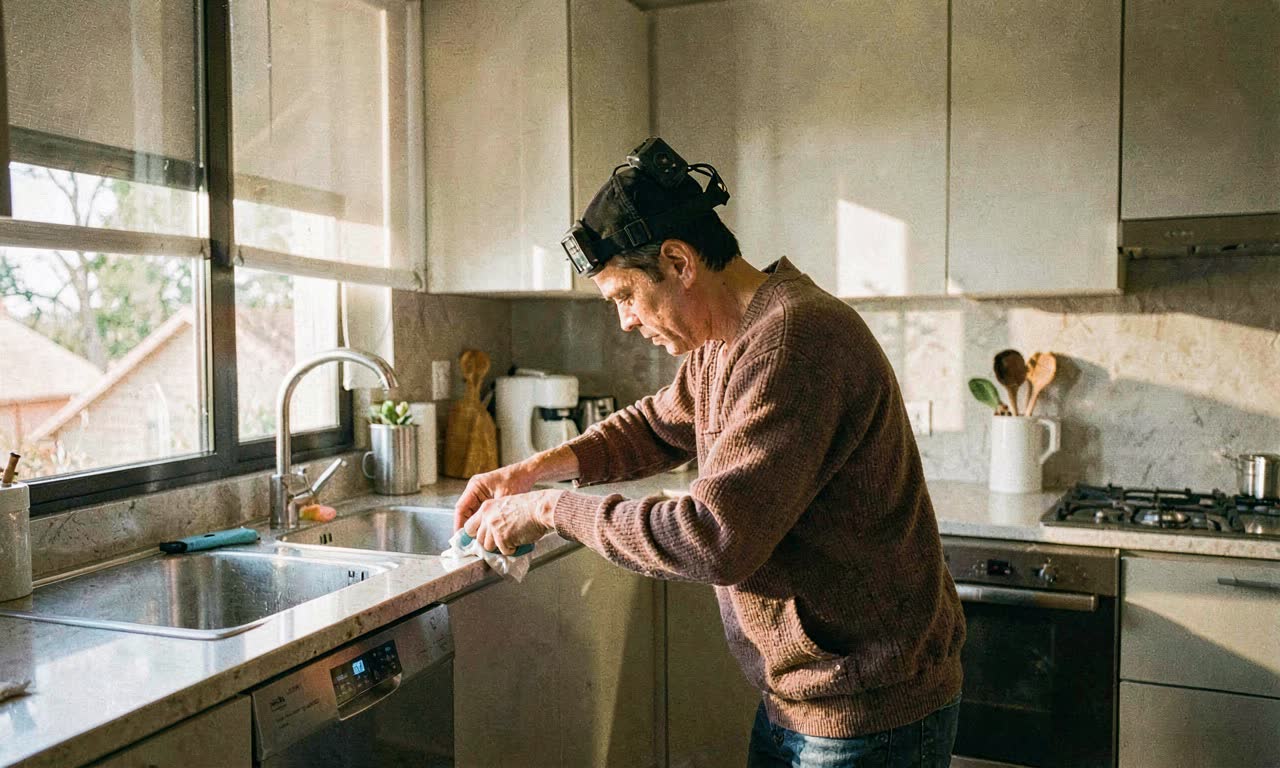
German startup Shift is offering free home cleaning in New York City. No subscription, no hidden fees, no upsell. Just one small catch: the human cleaner wears a camera on their head, and everything they see gets recorded to train future robots.
The company announced the offer on Thursday. As its website puts it: “You get a spotless apartment. We get training data. Everyone wins.”
Everyone, that is, except the cleaner whose labour is being double-harvested — once to scrub your floors, once to feed the algorithm that might someday replace them.
What is Shift?
What is Shift? Shift is a German AI training data startup that pays people across 15+ countries to record their daily activities through its app. The footage becomes training data for robotics companies building humanoid and domestic robots. The free cleaning service is its latest — and most controversial — data collection method.
The “magic hat” is the key hardware. Shift co-CEO and co-founder Bercan Kilic says the hat-mounted camera captures footage from the cleaner’s point of view — first-person video of wiping counters, mopping floors, scrubbing dishes, vacuuming. The kind of mundane, repetitive physical tasks that robotics companies are desperate to train on.
Shift says it already pays tens of thousands of people across 15 countries to record their activities through its app. Free cleaning is just the latest acquisition channel — and the most visible one, because it literally enters your home.
The privacy question
Shift says customers’ “privacy is fully protected,” with sensitive details like names, faces, personal information from screens and ID cards blurred and anonymised before being used for AI training. Cleaners are vetted by Shift’s partners, though the company stresses they are not Shift employees.
But the gap between “anonymised” and “private” is enormous. A camera recording a cleaner’s first-person view inside your home captures:
- The layout of every room
- Personal belongings and their locations
- Documents or screens visible during cleaning
- The general condition and contents of your living space
Anonymising faces doesn’t anonymise floor plans. Blurring ID cards doesn’t blur the medication on your nightstand. The data that’s most valuable for robotics training — how humans navigate and manipulate objects in domestic spaces — is exactly the data that’s most intimate.
The labour question
Then there’s the cleaner. Shift’s model is elegant in its ruthlessness: the cleaning service is “free” because the data has more value than the labour. The cleaner gets paid (presumably) for the cleaning job, but the data their work generates — the real product — flows entirely to Shift and its robotics clients.
This is surveillance capitalism with a physical twist. When Facebook tracks your clicks, at least you’re the product and the customer simultaneously. When Shift’s cleaner scrubs your sink, three parties are in the room: you (getting a clean home), the cleaner (getting a wage), and the robot (getting trained to replace the cleaner).
Cleaning is just the start. Shift’s promotional video says it plans to expand into plumbing, cooking, and building. Each new trade means more first-person footage of skilled physical labour — and more training data for the robots that will eventually do it autonomously.
The NZ angle
Shift says it’s launching in London, Zurich, and Munich “very soon,” with San Francisco also on the list. No mention of Auckland or Wellington — yet. But NZ’s relatively lax privacy framework compared to the EU’s GDPR makes it a plausible future market. The Privacy Act 2020 doesn’t have teeth equivalent to GDPR’s €20M-or-4% penalties, and NZ hasn’t updated its privacy law for the AI era.
If Shift arrives here, the question isn’t whether Kiwis will take the free cleaning. It’s whether anyone will ask what the camera hat is really for.
🔍 THE BOTTOM LINE
Shift is the most honest AI company in the world right now — it tells you exactly what it’s doing with your data. The problem is that “we’re filming inside your home to train robots” sounds less like a cleaning service and more like the premise of a Black Mirror episode. The robots are coming for domestic work. The question isn’t whether they’ll be trained — it’s whether the humans doing the training will still have jobs when the training’s done.
❓ Frequently Asked Questions
Q: What does this mean for NZ? Shift hasn’t announced plans for NZ yet, but our weaker privacy protections compared to GDPR make us a potential target. If it launches here, the Privacy Commissioner would likely need to assess whether the data collection meets the Privacy Act 2020’s requirements — particularly around purpose and consent.
Q: Is the data really anonymised? Shift blurs faces and personal details, but the footage still captures room layouts, belongings, and domestic patterns. “Anonymised” doesn’t mean “private.” The most valuable training data is exactly the most intimate: how you live in your space.
Q: Should I use this service? That depends on your threat model. If you’re comfortable with a stranger’s camera recording the inside of your home for corporate AI training, it’s free cleaning. If that sentence makes you uncomfortable, pay a cleaner the old-fashioned way.
SOURCES
- The Verge — AI startup will clean your home for free to train future robots
- Ars Technica — Shift free cleaning coverage
- Semafor — Shift robot training data report
- Forbes — Shift startup analysis