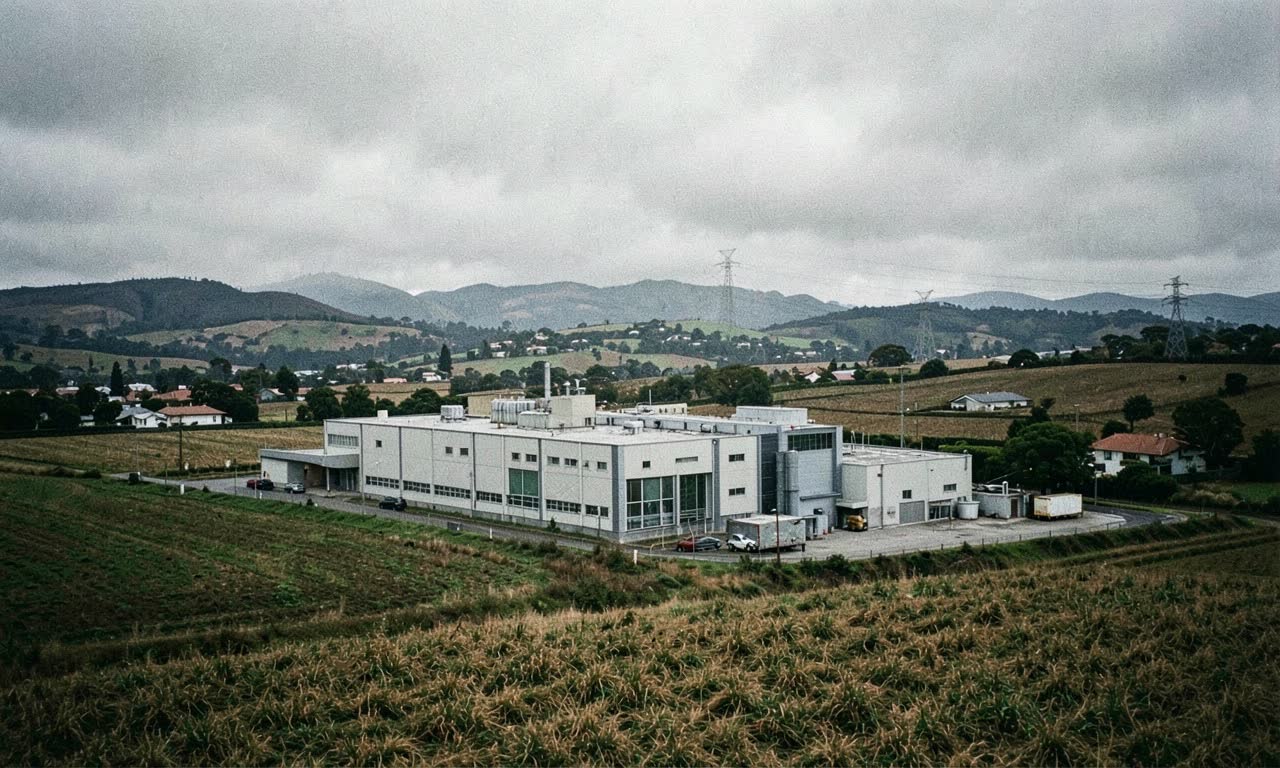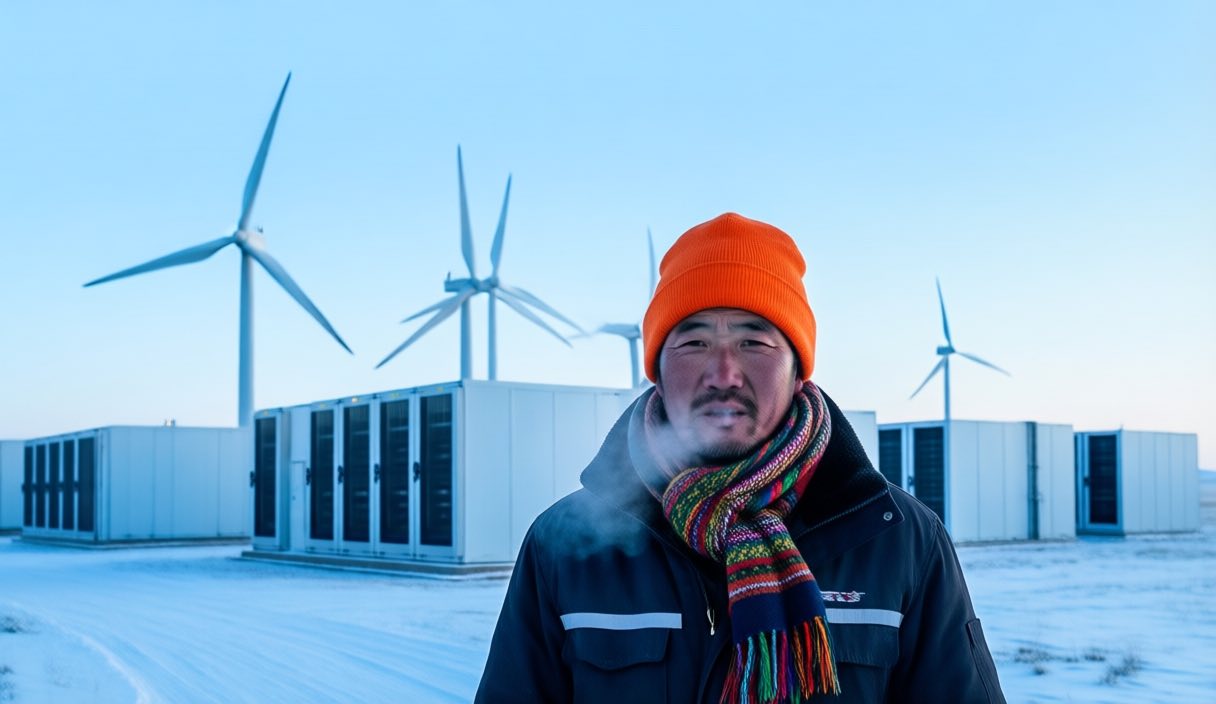
Yesterday we published the story of Latham & Watkins buying its own Nvidia servers — a law firm deciding that owning its compute was worth more than renting capability it couldn’t audit. Today, the same logic at the other end of the scale: an entire prefecture in Inner Mongolia being converted into one of the largest AI compute concentrations on Earth.
🔍 THE BOTTOM LINE
Ulanqab, a city of 1.5 million people on the Inner Mongolian steppe, has become China’s fastest-growing AI data centre hub. Per China’s official Science and Technology Daily, the city has over 100 data centre projects and more than 5 million contracted standard server racks; per a Goldman Sachs research note cited by Wired, its committed capacity of 12.5 gigawatts exceeds the 10GW planned for OpenAI’s US$500 billion Stargate project — with over 70% of those commitments announced in just the last year. Operated capacity is far smaller — roughly 1.2GW running today — and that gap between contracts and reality is the story’s honest caveat. But the direction is unmistakable, and the reasons why it’s being built there — cheap land, natural cooling, some of China’s lowest power prices, fibre to Beijing fast enough for real-time inference, and a national plan pairing compute with surplus renewables — are the same “own the stack” logic that is now driving boardrooms in the West.
The viral thread, and what checks out
The story broke wide via a thread by Arnaud Bertrand, a commentator with 410,000 followers, framing Ulanqab as “the most important AI story in the world” and the reason US lab CEOs are “really, really scared of China.” The thread’s numbers are largely real; its framing needs unpacking.
Verified against the primary Chinese source. We pulled the Science and Technology Daily article — the official newspaper of China’s Ministry of Science and Technology — that Bertrand cites. Its exact wording: Ulanqab has attracted Huawei, Alibaba, Apple, Kuaishou, GDS, VNET and other giants, with contracted standard rack scale exceeding 5 million racks. The article’s own headline framing: the city is repositioning itself from “compute factory” to “token ranch” — a phrase that tells you exactly how China’s tech establishment now thinks about this infrastructure.
The same article gives the operating numbers: operational compute of 172,000 petaFLOPS, up 112% year on year, over 95% of it AI-optimised; first-half-2026 compute-industry investment up 38.1%, and electricity consumption up 89.5%. In August, Envision Group’s “Galaxy Campus” went live — a 2-gigawatt facility built for around a million AI accelerators, powered by the wind turbine maker’s own clean generation, described as China’s largest single AI data centre by token output.
The household electricity stat is real. Ulanqab consumes nearly 1% of China’s electricity with 1.5 million people. Divided across its 795,000 households, that works out to roughly 105,000 kWh per household — around ten times the US average, and not because anyone in Ulanqab owns ten American homes’ worth of appliances. The consumers are the server halls.
Where the thread oversells. “A thousand times the scale of Colossus” compares xAI’s operating 200,000 chips to Ulanqab’s contracted racks. Contracted capacity is signed intent, not running hardware: reporting that leans on the same Goldman note puts Ulanqab’s actually operational capacity at about 1.2GW against 12.5GW committed — a tenfold promise-versus-reality gap. China’s own senior officials have warned against data centre overinvestment, and even the IEA’s latest analysis notes a large number of Chinese data centre projects have been cancelled in recent months. Building 4GW of additional capacity requires substations, transmission lines and grid interconnection agreements that take years. The trajectory is real. The “already built” reading is not.
Why there
The geography is the story. Ulanqab sits at elevation on the Mongolian plateau, with an average temperature around 4°C — free cooling for most of the year, driving power usage effectiveness down to roughly 1.2-1.3 versus 1.5+ in warm climates. Electricity in Inner Mongolia is among the cheapest in China, backed by abundant wind, solar and coal. The city sits two hours from Beijing, connected by dedicated fibre built in 2017 and 2019 that cuts latency below five milliseconds — fast enough to serve real-time inference to China’s population centres, not just offline training runs. Huawei built the first data centre there in 2016; Apple followed in 2019; and in 2021 the area was designated a main hub of the national “Eastern Data, Western Computing” project, which routes compute to China’s energy-rich interior.
The deeper logic is what a Carnegie China researcher described to Wired as a win-win: China catches up on AI infrastructure while soaking up surplus renewable generation that would otherwise be curtailed. It is the same distributed-generation logic that small countries are waking up to — energy that already exists, put to work by compute that would otherwise crowd someone else’s grid.
And the who matters as much as the where. Wired’s reporting: for years Chinese AI companies spent far less on physical infrastructure than their American peers; Ulanqab signals they have started catching up — and, notably, DeepSeek, ByteDance, Alibaba and Xiaohongshu are building their own data centres rather than renting from cloud providers. First-time owners, all of them.
The honest ledger
Three constraints keep the hype honest:
Coal. About 37% of Ulanqab’s electricity still comes from coal. “Inner Mongolia has long been the West Virginia of China,” as Carnegie China’s director put it. The renewables build-out is real and fast, but the compute runs around the clock and operators still lean on fossil reliability today. The “green AI city” framing is a direction of travel, not a present-tense fact.
Water. Ulanqab gets roughly 14 inches of rain a year — about as dry as Denver. The local water company recently shut several waterworks for seven hours a night to manage peak demand, before most of the planned data centres are even running. Cooling needs drop in winter, but this is a genuine environmental constraint on the build-out’s ceiling.
Utilisation. The West’s own GPU glut (we covered enterprise GPU utilisation averaging around 5% this morning) is a warning about what happens when contracted capacity outruns actual demand. Contracted racks are a claim on the future; tokens are what pays the bills. The official “token ranch” framing is, in that light, either a confident bet or an oversupply hedge — time will tell which.
Scale context from the IEA. The agency’s latest projections see global data centre electricity consumption roughly doubling to ~950 TWh by 2030, with AI-focused facilities tripling — and China and the US together accounting for nearly 80% of that growth. Ulanqab’s contracted capacity would, if realised, put a single prefecture at a meaningful fraction of that global total. That is the sense in which the “world brain” framing, however florid, points at something real: a growing share of the world’s thinking is being routed through a handful of places chosen for cheap electrons and cold air.
The sovereignty pattern, at every scale
Put today’s story beside this morning’s and the pattern is complete:
- A law firm buys racks because client privilege means it cannot let its data ride on someone else’s cloud. Owning became cheaper than trusting.
- Chinese AI companies build their own data centres for the first time, rather than renting — in a state-planned corridor designed so the compute and the power are both domestic.
- A researcher feeding unpublished work into a chat box has none of these options and no audit trail — the chat-input problem sits at the bottom of the stack, where the individual has no rack to own.
The common thread is verifiability. Whoever controls the machine can check what it does; whoever rents it can only trust. China has made the build-out a national strategy, pairing its surplus wind and solar with the compute demand of its AI industry. The United States is running the same race through private megaprojects. New Zealand’s version of this argument we have made before: a country with abundant renewable electricity is exactly the kind of place compute wants to live — and the places that host the world’s compute, rather than renting from it, end up owning a piece of how the next decade thinks.
The caveat for every version of this story, East and West, is the same one Cast AI’s utilisation data taught us this morning: hardware without demand is a very expensive way to store electricity. Contracted is not operational. Signed racks do not think. What pays is tokens — and the prefecture that converts its wind into tokens at scale first will have earned the hype the other is still spending on signage.
❓ FAQ
How big is Ulanqab’s AI build-out, really? Over 100 data centre projects since 2016, more than 5 million contracted standard server racks and 12.5GW of contracted capacity per Goldman Sachs-cited reporting. Operational capacity is much smaller — roughly 1.2GW and 172,000 petaFLOPS as of August 2026, growing at triple-digit rates. The gap between contracted and operational is the main caveat.
Is it bigger than xAI’s Colossus? The contracted figure is roughly a thousand times the rack count of Colossus’s ~200,000 chips — but that compares China’s signed contracts with xAI’s operating hardware. The fairer comparison today is operational versus operational, and there Stargate’s 10GW plan and Ulanqab’s 12.5GW contracted are the closest peers.
Is it actually powered by renewables? Partly. Envision’s new 2GW campus connects to its own wind power, and the region has strong wind and solar — but about 37% of Ulanqab’s electricity is still coal, and data centres run around the clock.
Why does this matter outside China? Two reasons. It is the largest single demonstration that AI compute follows cheap, clean-ish electricity — which reshapes where in the world AI infrastructure lands. And it is the “own the stack” pattern at national scale: the same logic pushing Western enterprises to buy their own GPUs is, in China, a stated national strategy.
— CJ Murden, editor of Singularity.Kiwi. Former digital technologies teacher, author of AI-focused books. Writing with a New Zealand focus.