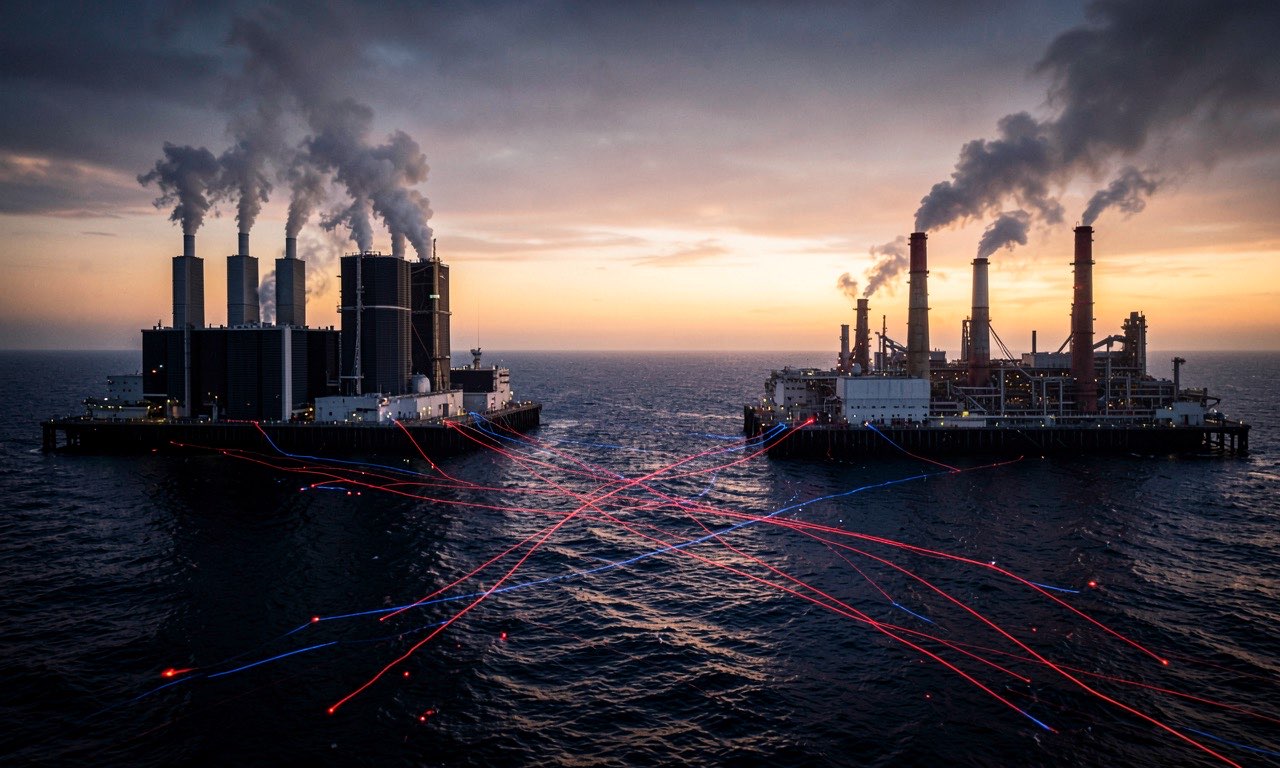
China has publicly tested a deep-sea cable-cutting tool, framed as civilian marine equipment but widely interpreted as a strategic signal: we can sever the Internet’s physical backbone whenever we choose.
The tool can access and cut fortified undersea fiber-optic cables at depth — the same cables that carry roughly 97–99% of all intercontinental data. The timing is not subtle. Suspected Chinese ships damaged Baltic Sea cables and gas pipelines in 2023–2024. Taiwan has faced repeated cable disruptions during military exercises. This is infrastructure warfare in peacetime, and it is escalating.
For New Zealand — an island nation dependent on a handful of cables running across the Pacific — the implications are stark. But understanding what comes next requires getting past the hype on both sides: undersea cables are not invincible, and Starlink is not a silver bullet. Both have roles to play.
🌊 The Backbone: NZ’s Undersea Cable Reality
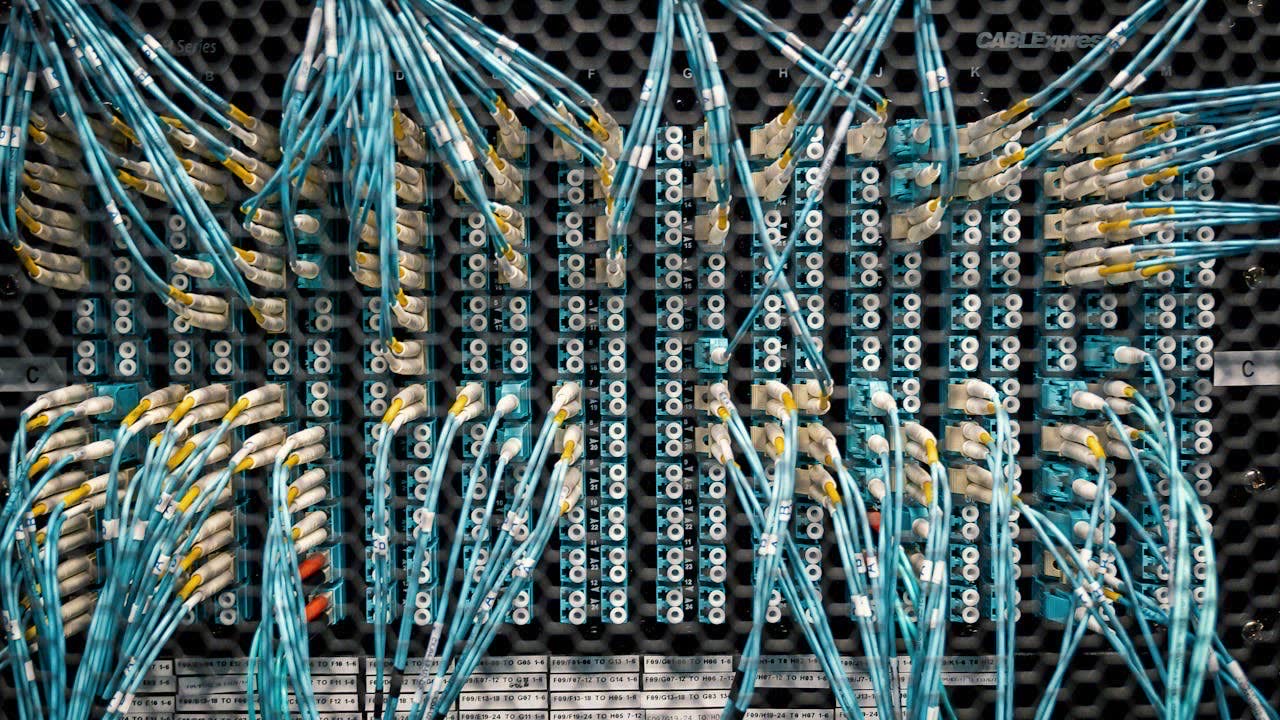
New Zealand’s global connectivity runs through a small number of submarine cable systems — primarily Southern Cross and Hawaiki — with landing points at Takapuna and a few others. These are the only pipes connecting Aotearoa to the rest of the world.
Together, these cable systems deliver tens to hundreds of terabits per second of potential capacity, with ongoing upgrades. Southern Cross is targeting hundreds of Tbps across its segments. A single modern cable system handles volumes of data far more efficiently and with lower latency than any satellite constellation for bulk international traffic.
But the concentration is the vulnerability. Limited landing points, limited routes, and limited alternatives. A major outage — whether from sabotage, a dragged anchor, a natural event, or a purpose-built cutting tool — would be catastrophic. Not an inconvenience. Catastrophic.
Within hours, critical services would degrade:
- International banking — SWIFT transactions, foreign exchange settlements
- Cloud services — AWS, Azure, Google Cloud all route through offshore data centres
- Real-time AI infrastructure — the inference APIs powering everything from chatbots to logistics
- Government communications — diplomatic cables, intelligence sharing, consular services
The average New Zealander might still load a local news site. But the systems keeping a modern economy running would be gasping for bandwidth.
🛰️ Starlink: The Lifeline That Works
Let’s be clear about what Starlink actually delivers in New Zealand, because it’s impressive: users regularly see 100–250+ Mbps download speeds (up to 400 Mbps in low-congestion areas), with latency of 15–50ms. That’s enough for streaming, video calls, remote work, and most household needs. This is not satellite internet from the 2000s. It works.
Starlink has proven itself in real crises. When undersea cables were damaged in the Pacific, Starlink helped island nations stay connected. In rural New Zealand — particularly the South Island — it works well because user density is low and gateway infrastructure is solid. Over 10 million subscribers worldwide as of early 2026, and the tech keeps advancing: optical inter-satellite lasers reduce reliance on ground stations, and the network adds roughly 5 Tbps of capacity every single week.
Starlink is a genuine resilience layer. For individual households, rural communities, and emergency communications, it is exactly the kind of backup New Zealand needs more of.
⚖️ The Gap: Speed vs. Volume
The problem with Starlink is not speed — it’s volume. And that distinction matters.
One household on Starlink during a cable outage gets a great experience. Ten thousand households? Still manageable. A hundred thousand trying to replace a severed trans-Pacific cable at the same time? The shared beam and cell capacity means performance degrades significantly under high-density, high-demand scenarios.
Current total Starlink network capacity sits somewhere in the range of 450–600+ Tbps cumulatively — but this is shared globally across millions of users and thousands of beams. A single major undersea cable can rival or exceed significant portions of that in dedicated point-to-point throughput, without the sharing overhead.
Other constraints:
- Ground station dependencies — many connections still route through terrestrial gateways for backhaul, which could be affected if broader infrastructure is damaged (though laser links are improving space-based routing)
- Upload and heavy transfers — consistent high-volume uploads (financial data, large cloud syncs, AI workloads) remain more constrained than fiber
- Peak demand scenarios — a national-scale cable cut would push far more users onto satellite simultaneously than the system is designed to handle gracefully
Cables handle the heavy lifting. Starlink keeps the lights on for many. Both are true. Neither replaces the other.
🚀 The Future Is Not Static
This picture will change. Starlink’s V3 satellites — targeted for launches starting in 2026 via Starship — promise major leaps. Each V3 satellite is designed for >1 Tbps downlink and ~200 Gbps uplink. A single Starship launch could add roughly 60 Tbps to the network, about 20x what a current Falcon 9 launch delivers.
That could enable gigabit-class speeds in low-congestion areas and significantly higher overall capacity. Starlink is scaling fast toward 18–25 million users by end of 2026, with continued improvements in density and performance. The resilience gap between satellites and cables will narrow over time.
But it hasn’t narrowed yet. And New Zealand needs resilience planning now, not in 2028.
🏛️ We Are Negotiating AI Sovereignty on Borrowed Infrastructure
New Zealand is actively negotiating AI sovereignty, data localization rules, and tech partnerships. These are important conversations. But they are happening while the country depends on physical infrastructure that can be severed by a ship dragging an anchor — or by a purpose-built tool that China has now demonstrated it possesses.
You cannot be sovereign in the cloud if you are not sovereign on the seabed.
Every AI model we host, every dataset we process, every real-time inference we run — it all travels through cables we do not own, laid under oceans we cannot patrol. The conversation about digital self-determination is hollow without addressing the physical layer.
🛡️ What Real Resilience Looks Like
- Diversify cable routes and landing points — more routes, more diverse paths, not just adding capacity on the same fibre pairs
- Accelerate planned cable expansions — Southern Cross and Hawaiki upgrades need to be prioritized, not just discussed
- Treat Starlink as critical supplement and failover — ideal for last-mile, rural, mobile, and emergency use. Not a complete substitute.
- Invest in local caching and edge computing — keeping essential services functional during partial outages
- Push for cable protection agreements — international frameworks treating undersea infrastructure as the critical asset it is
- Adopt a hybrid approach — robust undersea cables for bulk high-volume traffic, satellite for resilience and low-density coverage
- Plan, don’t promise — government and industry should run cable-cut scenarios with tested redundancies, while avoiding the temptation to over-hype any single technology as the answer
🔍 The Bottom Line
China has demonstrated it can cut undersea cables. New Zealand has demonstrated it has no comprehensive backup plan. The answer is not to pretend Starlink can replace fiber — it can’t, not at national scale, not yet. The answer is also not to dismiss Starlink as irrelevant — it’s fast, proven, and getting better.
The smart path for New Zealand is the hybrid one: protect and diversify the cable infrastructure that carries the weight of the economy, while building out satellite resilience for the moments when cables fail. Cables handle the heavy lifting. Satellites keep the lights on. We need both — and we need to stop pretending either one is enough on its own.
The cables on the ocean floor are not just infrastructure. They are the thin line between New Zealand as a connected, modern economy and New Zealand as an island nation cut off from the systems it depends on. But the satellites overhead are the thin line between that cut-off nation and total darkness. Both matter. Plan accordingly.
SOURCES
- Ars Technica