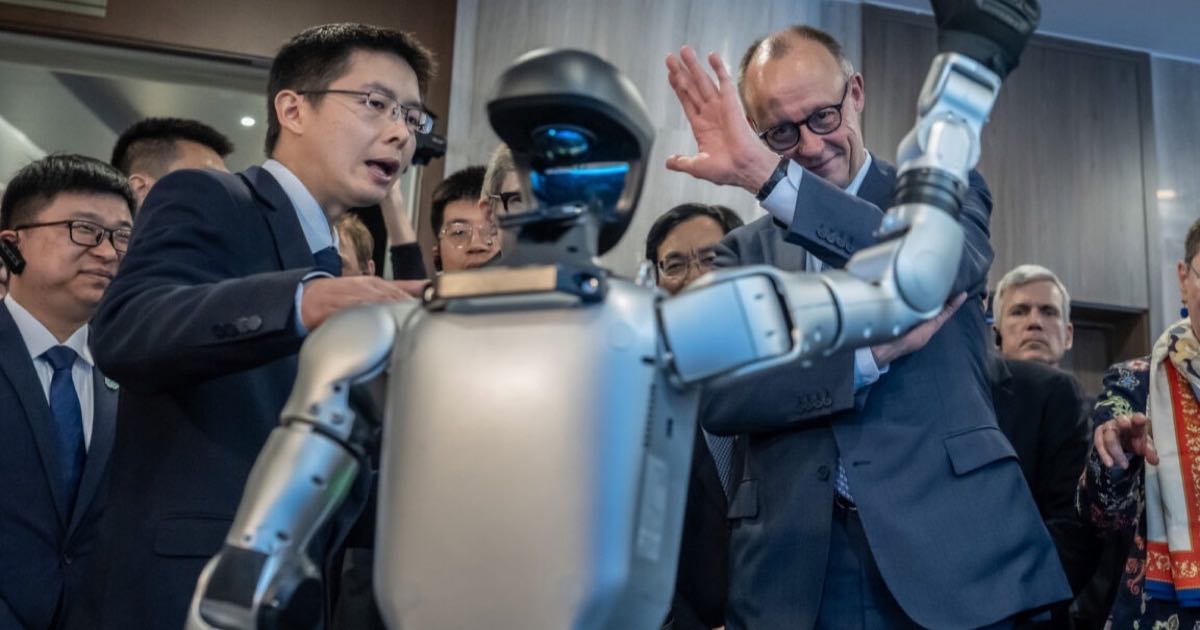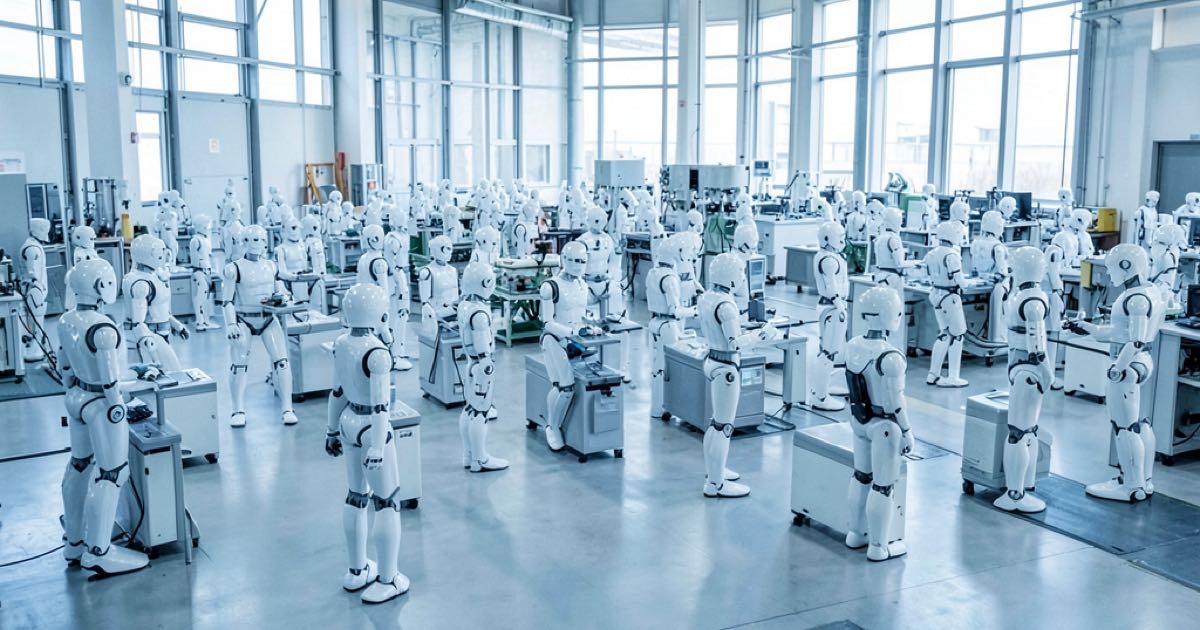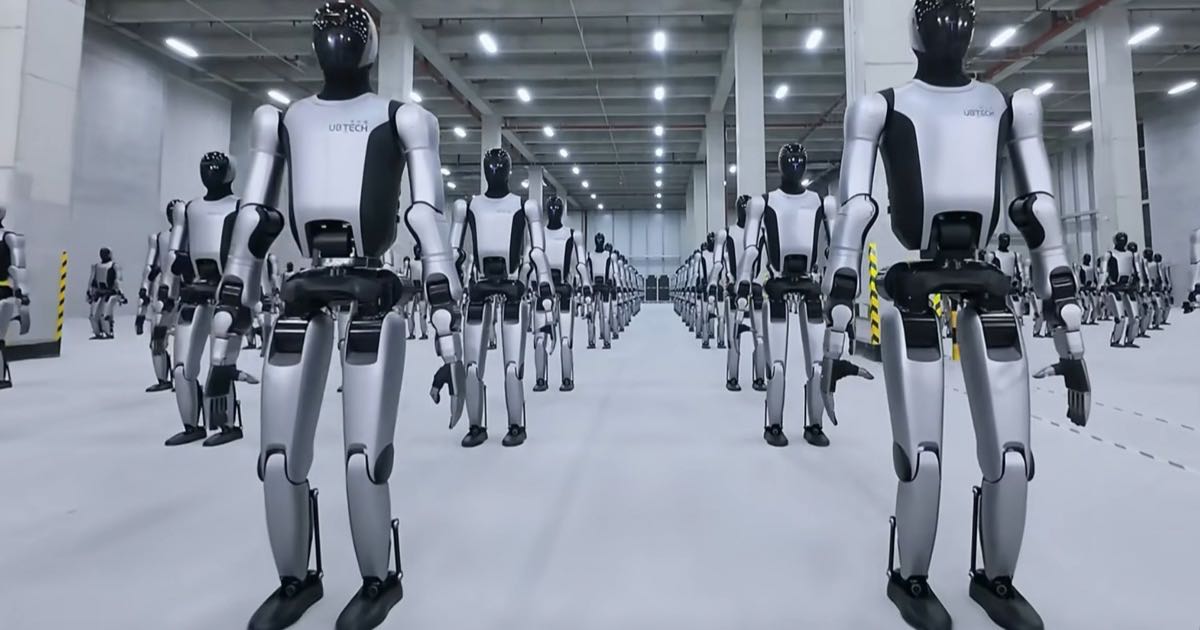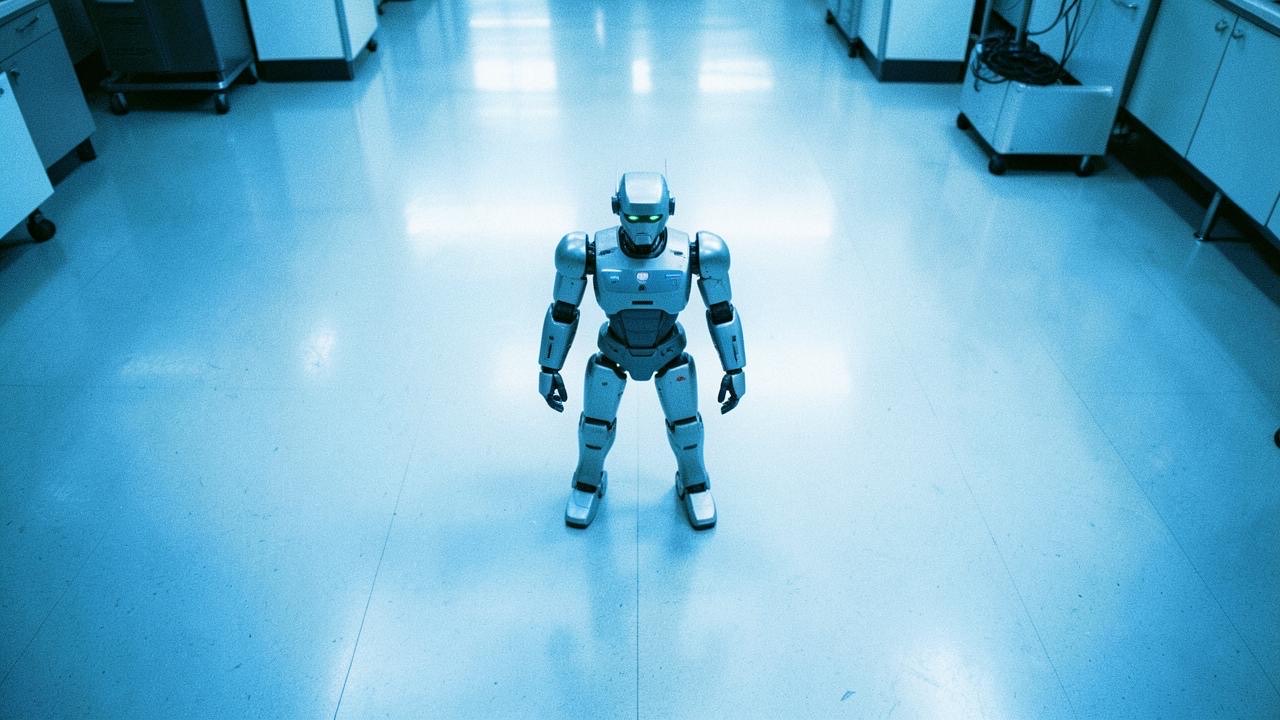
You can now add a humanoid robot to your shopping cart on AliExpress. That sentence would have sounded like science fiction two years ago. Today it’s a product listing.
Chinese robotics company Unitree is selling its R1 humanoid robot on AliExpress with a starting price of $4,900 for the R1 AIR model and $5,900 for the standard configuration. The listing went live for international buyers in April 2026, marking the first time a bipedal humanoid platform has been available through a mainstream consumer marketplace.
The price point is staggering. Two years ago, humanoid robots were six-figure research platforms locked behind institutional procurement processes. The R1 AIR costs less than a high-end gaming laptop.
What You Actually Get
The R1 isn’t a household helper. Think of it as a development chassis — a bipedal platform for researchers, educators, and hobbyists to test walking algorithms, human-robot interaction, and embodied AI systems in the physical world.
The specs:
- Height: 123 cm (roughly 4 feet)
- Weight: 27–29 kg (60–64 lbs)
- Degrees of freedom: 20–26 depending on configuration
- Battery life: Approximately 1 hour
- Price: $4,900 (R1 AIR) / $5,900 (standard R1)
The AIR variant offers 20 degrees of freedom. The standard model provides 26, allowing for more nuanced motion and manipulation tasks. Both variants include cameras, microphones, and Unitree’s ROS-compatible software stack for joint-level control.
One hour of battery life is a real constraint. It means the R1 is designed for focused testing sessions, not continuous operation. Every fall, every recovery, and every recharge cycle eats into development time. For researchers, that’s a manageable trade-off. For anyone imagining a robot butler, it’s a hard reality check.
Why This Matters: The Price Floor Moment
The significance of the R1’s AliExpress listing isn’t the robot itself. It’s what the distribution channel represents.
When humanoid robots are sold through institutional procurement, they’re available to a few hundred labs worldwide. When they’re listed on a consumer marketplace with standardized checkout, shipping, and returns, they become accessible to thousands — potentially tens of thousands — of teams and individuals.
Unitree is leveraging AliExpress’s Brand+ program, which includes product authentication and qualified free shipping. The marketplace infrastructure handles payment processing, international logistics, and buyer protection. These are not trivial details when you’re shipping a 30-kilogram robot across borders.
The landed cost reality is more complicated than the sticker price suggests. Import duties, VAT, carrier fees, and cross-border shipping for a device this size and weight can add significantly to the total. A $4,900 robot in China could easily cost $6,000+ by the time it reaches a buyer in Europe or North America.
But the psychological threshold has been crossed. Humanoid robots are now in the same price bracket as professional camera equipment. For universities, maker spaces, and small robotics teams, that’s a budget line item — not a capital expenditure request.
The Development Platform, Not the Product
Unitree’s own positioning makes clear that the R1 is a platform, not a finished product. The company’s documentation and open-source resources focus on ROS simulation packages, joint-level control interfaces, and embodied AI training datasets.
The real value isn’t in the hardware. It’s in what developers build on top of it. A compact bipedal chassis with known joint geometry, sensor inputs, and controllable surfaces gives software teams a physical test bed that previously required custom hardware development.
Seven use cases that make immediate sense:
- STEM education — Schools can run hands-on bipedal experiments instead of simulation-only coursework
- Interaction prototyping — Testing voice, vision, and timing in physical environments
- Gait research — Safe, low-cost study of walking stability and recovery
- Agent integration — Connecting AI outputs to real joint commands through ROS2
- Motion design — Creating short motion routines for demonstrations and testing
- Curriculum pilots — Students learning the impact of friction and motor saturation by comparing controllers to real hardware
- Embodied AI testing — Iterating on perception and planning loops in real time
Each of these use cases becomes accessible at a price point that doesn’t require grant applications or committee approvals.
The China Humanoid Scale-Up Context
The R1 listing doesn’t exist in isolation. It sits inside a broader Chinese effort to industrialize humanoid robotics at a pace that outstrips both the United States and Europe.
China has implemented a national standard system for humanoid robots and embodied AI, explicitly incorporating safety and ethics throughout the product lifecycle. The country is building robot training schools to accelerate data collection and standardized evaluation. The global automation density trendline from the International Federation of Robotics shows China closing the gap with South Korea and Singapore in industrial robot deployment.
Unitree itself has previously demonstrated the Go2 robot dog at a price point that disrupted the quadruped market. The company has form in taking high-end robotics platforms and compressing costs through vertical integration and manufacturing scale.
The question isn’t whether the R1 is ready for your living room. It isn’t. The question is whether the trajectory from “development platform available on AliExpress” to “consumer household product” follows the same curve that personal computers, smartphones, and drones did — where the development platform of one decade becomes the consumer product of the next.
The Safety Conversation Changes When Anyone Can Buy One
The democratization of humanoid robotics creates a safety conversation that didn’t exist when these machines were locked in research labs.
A bipedal robot that can walk, see, and respond to voice commands is a powerful tool. It’s also a 30-kilogram machine that can fall over, behave unpredictably, and — in the wrong hands — be modified for purposes its designers didn’t intend.
The R1’s 1-hour battery life is a natural safety constraint. So is its limited payload capacity. But the software is open, and the hardware is modifiable. The same qualities that make it a good development platform — accessibility, hackability, low cost — are the qualities that make safety researchers nervous.
The regulatory infrastructure for consumer humanoid robots barely exists. There are no mandatory safety standards for personal bipedal robots, no certification requirements for home use, and no clear liability framework when a modified robot causes harm. China’s national standards apply to manufacturers, not to end users who modify their devices.
As the price floor continues to drop, the safety conversation will shift from “how do we regulate institutional deployments” to “how do we regulate a device that anyone can buy on a shopping website and modify with open-source software.” That shift is happening faster than most policymakers realize.
See the full Unitree breakdown → Learn more about Unitree
Sources
- Interesting Engineering — “Unitree’s cheapest R1 humanoid robot to debut in US via AliExpress”
- Intelligent Living — “Now You Can Buy Unitree R1 Humanoid Robots on AliExpress: Democratized Access to Embodied AI Research”
- IBTimes — “US Army Builds First AI Chatbot for Troops”