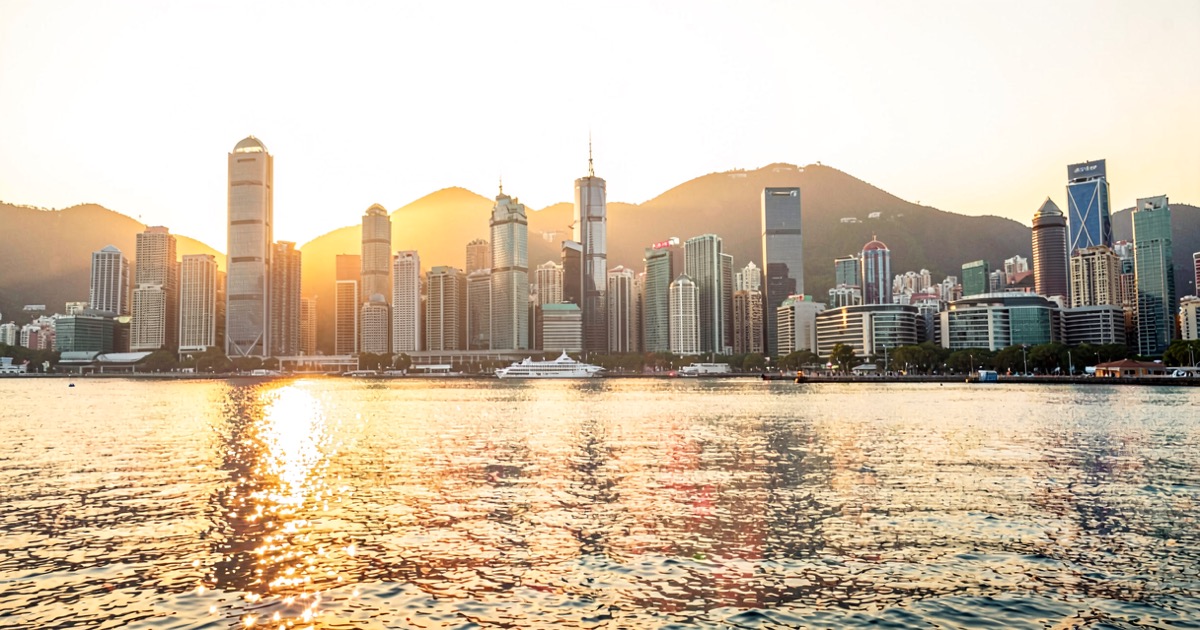
Wall Street’s biggest investment banks were largely absent from a $5.8 billion fundraising spree by Chinese artificial intelligence companies in Hong Kong this week — and the deals they missed are not coming back. Chinese banks captured the league table, the fees, and the future pipeline, while Goldman Sachs and Morgan Stanley watched from the sidelines.
The absence is not an accident. It is the product of a structural shift that has been building for two years: Beijing’s push to build a homegrown Goldman Sachs, Washington’s export control regime that makes AI deals politically sensitive, and a Hong Kong IPO market that has surged back to life on the back of Chinese AI companies that no longer need Western capital to go public.
🔍 THE BOTTOM LINE
Hong Kong raised nearly US$44 billion in share sales in the first half of 2026 — a five-year high, up 29% year on year. Chinese banks took the top spots. Wall Street was sidelined on the most sensitive AI deals, and the deals it could participate in are shrinking as the AI supply chain becomes the defining “one big trade” in Chinese capital markets.
The Numbers
The scale is staggering. In the first quarter of 2026 alone, total IPO fundraising in Hong Kong exceeded HK$109.9 billion — a year-on-year surge of 489%, ranking first among global exchanges. As of mid-May, cumulative fundraising exceeded HK$150 billion. More than 500 companies are queuing for IPOs, from manufacturing giants to cash-burning AI unicorns.
For the first half of 2026, IPOs, placements, and block trades raised almost US$44 billion in Hong Kong, a 29% jump from a year ago. Hong Kong accounted for the biggest portion of the US$122 billion raised across the entire Asia-Pacific region. Chinese corporate giants including CATL and Victory Giant Technology led the charge with multibillion-dollar offerings.
The latest addition is Momenta, the autonomous driving AI company, which debuted on the Hong Kong Stock Exchange with a market value exceeding HK$70 billion. Its cornerstone investors read like a who’s-who of global capital: GIC, BlackRock, Fidelity, Mercedes Benz, BYD, and Franklin Templeton subscribed US$376 million. The public offering was 413 times oversubscribed.
Who Took the Fees
Chinese investment banks, not Western ones. According to LSEG data cited by the South China Morning Post, Beijing-based China International Capital Corporation (CICC) took the top ranking in both the Hong Kong and mainland China markets in the first half of 2026.
CICC helped raise US$3.23 billion from 36 deals in Hong Kong, capturing 12.23% market share — up 166% year on year. Huatai Securities ranked second with US$2.48 billion from 18 offerings. Citic Securities took third with US$1.88 billion from 31 deals. The top five IPO underwriters in the A-share markets were all Chinese firms: CICC, Citic Securities, Guotai Haitong, Shenwan Hongyuan, and SDIC Securities.
This is not a marginal edge. Chinese banks are dominating the most profitable segment of the IPO business, and Beijing is pushing consolidation to make them stronger. The merger of Guotai Junan and Haitong Securities, Guosen’s acquisition of Vanho Securities, and CICC’s proposed acquisition of Cinda Securities are all part of President Xi Jinping’s ambition to build China into a financial superpower with two or three globally competitive securities firms by 2035.
Why Wall Street Sat Out
The reasons are structural, not cyclical. First, US export controls have made AI deals politically radioactive. International investment banks have been largely absent from listings involving companies caught in geopolitical and trade tensions — the deals that carry sanctions risk also carry reputational risk for Western banks with US regulators watching.
Second, Beijing has tightened the path Chinese companies use to list in Hong Kong through overseas vehicles, restricting some Cayman Islands-incorporated firms and demanding restructuring before approval. The regulatory complexity favors Chinese banks with deeper relationships with mainland regulators.
Third, the AI supply chain has become what one analyst called “the one big trade” — diverting liquidity from previously popular themes like consumer brands and innovative drugs. The companies raising billions are AI chip designers, model makers, and robotics firms. These are exactly the companies most likely to be on US export control lists, making Western bank participation complicated.
The SambaNova $1 billion raise showed that US AI chip startups can still attract Western bank participation — but that deal happened in the US, not Hong Kong. The deals flowing through Hong Kong are Chinese AI companies with Chinese bank leads and Asian cornerstone investors.
The Pipeline Keeps Filling
The frenzy is not slowing. Among those waiting in the wings are electronics manufacturer Luxshare Precision Industry, readying a roughly US$3 billion listing; optical transceiver maker Zhongji Innolight; and Baidu’s AI chip unit Kunlunxin. Companies that recently listed are also returning for more: CATL raised US$5 billion in a placement after its Hong Kong listing, and AI model maker Zhipu, which went public in January, is already planning to raise several billion dollars.
PwC projects Hong Kong IPO fundraising could reach HK$380 billion in 2026, with AI, new materials, semiconductors, chips and creative robotics as the dominant sectors. The pipeline is deep, the appetite is strong, and the deals are getting bigger.
“We expect activity across Greater China to accelerate in the second half,” said James Wang, head of Asia ex-Japan equity capital markets at Goldman Sachs — one of the few Western banks still publicly bullish on the market. “The AI ecosystem continues to be one of the most important drivers of capital formation.”
NZ Angle
New Zealand’s financial sector is not directly affected, but the pattern is worth watching. When the world’s fastest-growing IPO market is dominated by banks from one country, financing one industry, under one government’s political framework — that is a capital market being shaped by industrial policy, not market forces. For a small economy that relies on open capital markets, the trend toward segmented, politically-directed finance is a slow-moving structural risk. The more the global capital market fragments along geopolitical lines, the harder it becomes for companies in non-aligned countries to access the full range of funding options.
❓ FAQ
Why can’t Wall Street banks just participate in the AI IPOs?
They can participate in some, but deals involving companies on US export control lists or with deep ties to the Chinese military carry sanctions risk and regulatory scrutiny. The compliance cost and reputational risk often outweigh the fees.
Is the Hong Kong IPO boom sustainable?
The pipeline is deep — over 500 companies queuing — but pressure points include lock-up period expiries that could trigger concentrated selling, and the AI theme diverting liquidity from other sectors. PwC’s HK$380 billion projection for 2026 suggests the market can absorb the volume, but volatility is expected.
What happens to Western banks’ Asia business?
They are not leaving — Goldman Sachs, JPMorgan, and Morgan Stanley still participate in non-sensitive deals. But their market share is shrinking in the segment that is growing fastest. The structural shift favors Chinese banks with regulatory access and political alignment.
Does this affect the global AI investment landscape?
Yes. Chinese AI companies are raising capital from Asian and Middle Eastern investors, not Western ones. That shifts the investor base, the governance expectations, and the exit options. A company listed in Hong Kong with Chinese bank leads and GIC cornerstone investors operates in a different capital ecosystem than one backed by Sequoia and listed on Nasdaq.
🔍 THE BOTTOM LINE
Hong Kong’s AI IPO bonanza is real, record-breaking, and largely closed to Wall Street. Chinese banks are capturing the fees, the league table, and the pipeline — backed by a government actively building them into national champions. The global capital market is bifurcating along geopolitical lines, and the AI supply chain is the fault line. For Western banks, this is not a cyclical dip they can wait out. It is a structural lockout.
📰 Sources
- Bloomberg — Wall Street Banks Miss Multibillion-Dollar AI Deals in Hong Kong
- South China Morning Post — Chinese banks surge ahead amid Hong Kong’s IPO wave
- The Business Times — AI fever powers Hong Kong share sales to 5-year high
- Coinlive — AI Craze Boosts Hong Kong IPOs; Wall Street Investment Banks Rush to Hong Kong
- PwC Hong Kong — Hong Kong IPO fundraising expected to reach HK$380 billion in 2026