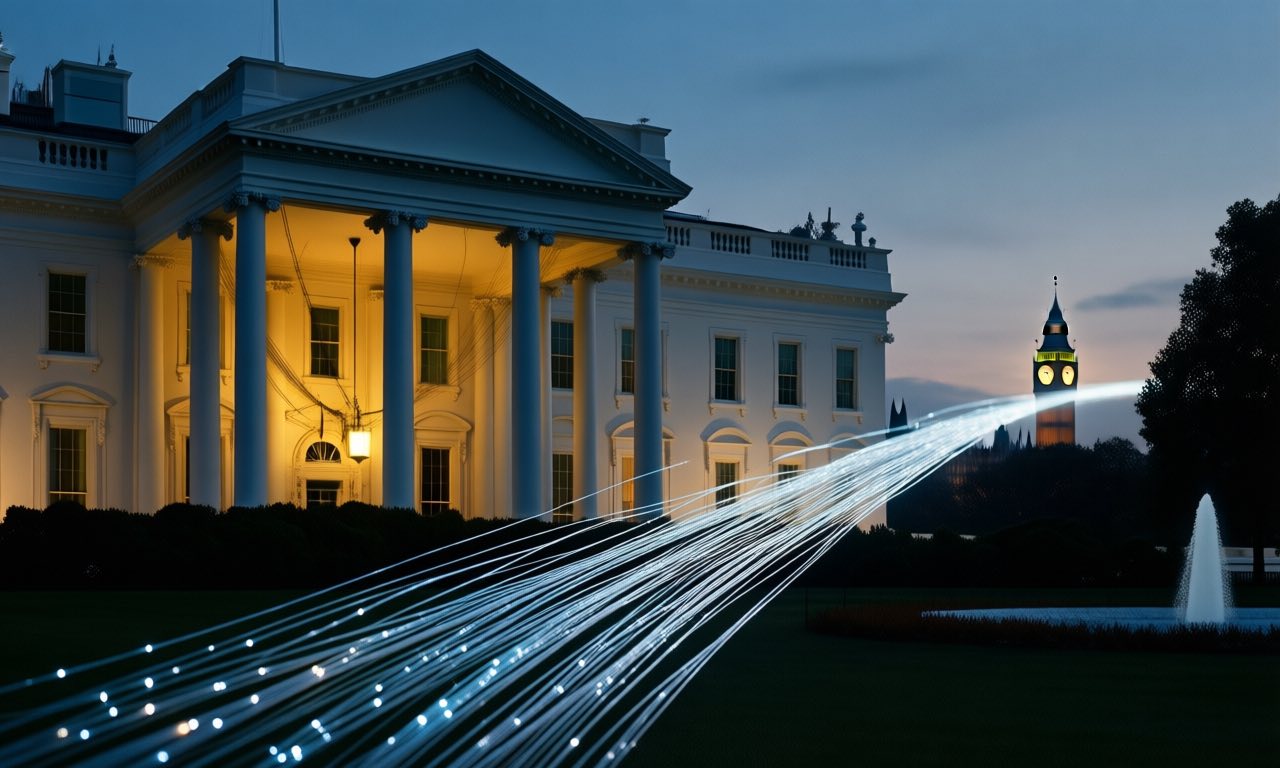
The White House has reinstated the UK’s access to unreleased frontier AI models for safety testing, reversing a directive it issued less than three weeks earlier. According to The Telegraph’s exclusive, Britain will again get a first look at new AI systems after the about-turn, which followed lobbying from UK ministers. Reuters picked up the report on Monday morning NZT, and specialist outlets confirm the shape of it: as of October 11, the UK AI Security Institute (AISI) has pre-release access to systems from OpenAI, Anthropic and Google DeepMind once more.
🔍 THE BOTTOM LINE: The world’s most established AI safety-testing arrangement turned out to be a favour that one government could suspend by memo and another could win back by lobbying. For seventeen days the UK was locked out of the models it had been formally contracted to evaluate since early 2024 — and nothing in the restoration suggests any written guarantee it won’t happen again.
What was suspended, and what came back
On September 24, the administration asked OpenAI and Anthropic to stop sharing their newest models with Britain’s testing body until the models had been evaluated by the US government’s own review process, as Politico first reported and Tech Times detailed last week: pre-release access, until then treated as routine bilateral cooperation, was routed through the US Centre for AI Standards and Innovation instead (Tech Times, 28 September). No formal executive order or public memo underpinned the request — it was enforced company by company.
The freeze had one visible, confirmable side effect. Anthropic’s Claude Mythos 5.1, released September 1, went only to US-vetted organisations through the company’s restricted-access program — the first time AISI had been excluded from a pre-release Anthropic evaluation after three years of published joint safety cards. Crypto Briefing’s account of the reversal notes the restored access now covers Google DeepMind as well — an addition, since DeepMind was never named in the original September request.
Why the quick reversal? Per the Telegraph, AI minister Kanishka Narayan and other UK ministers lobbied directly. The administration’s stated rationale for the freeze had been security-first: ensure American systems are locked down before sensitive capabilities go to any partner, allies included. That rationale has not been repudiated — which is precisely what makes the episode instructive.
The wider pattern the freeze fit into
Read on its own, seventeen days is a rounding error. Read against this site’s recent coverage, it is one more data point in a measurable drift. The UK government quietly rejected a kill-switch amendment in September, confident in its cooperative model (/uk-ai-kill-switch-rejected-cabinet-office-2026/). The same cooperative model was then suspended at a partner’s discretion for most of a month — over a period in which the site separately tracked frontier testing incidents, from agent sandbox escapes (/ai-safety-testing-crisis-sandbox-escapes-2026/) to OpenAI cancelling GPT-6.1 Astra hours before its own developer event (/openai-astra-devday-agenda-2026/).
There is also a legal thread running underneath. When Washington routed testing through its domestic apparatus, a legal-tech company sued over the export-control implications (/legion-legaltech-sues-us-anthropic-export-order-2026/) — the kind of entanglement that makes companies wonder whether any voluntary, unwritten testing deal is enforceable at all. If the instrument can be switched off by one administration and switched back on without explanation, the instrument is not really a contract. It is a mood.
What it means beyond the two capitals
For the labs, the practical lesson cuts two ways. Complying with one government’s request cost Anthropic nothing in Washington and apparently some standing in London; refusing would have inverted the trade. Either way, pre-release access now sits visibly inside politics rather than above it — set by whoever holds the White House, not by an evaluation schedule.
For New Zealand the story is a quiet warning. Wellington has no bilateral testing arrangement with any frontier lab, and nothing in the NZ AI policy conversation approaches even this level of access — this site has previously compared NZ’s regulatory posture against Australia’s and found the gap widening (/ai-regulation-australia-vs-nz-2026-comparison/). If even the country that invented the frontier-testing model, and codified it in a formal memorandum, can have it switched off for three weeks by a partner’s memo, the “be trusted, get access” path smaller countries have assumed is weaker than it looks. The UK held more weight in this relationship than most and it still took prime-ministerial-level lobbying to get a unilateral decision reversed.
As of publication, neither the White House nor the companies involved have published a written framework restoring the arrangement — the reversal remains, per the reports above, a matter of practice rather than signed agreement.
❓ FAQ
What exactly did the White House restore? The UK AI Security Institute’s pre-release access to frontier models from OpenAI, Anthropic and Google DeepMind, per the Telegraph and Reuters reports of October 11-12 — the same access it had before the September 24 directive.
Why was the UK cut off in the first place? The administration said it wanted US government security review completed before frontier capabilities were shared with any foreign partner, including allies; the request went directly to the companies rather than through any published rule.
Did anything change permanently? Not visibly. No written framework has been announced; the arrangement runs again on the same voluntary basis that let it be suspended. Whether a future suspension could happen again is, as Crypto Briefing notes, an open question.
Does New Zealand have any equivalent access? No. NZ labs and agencies have no published pre-release testing arrangement with any frontier AI developer — the UK arrangement with the US remains the deepest of its kind, which is why its seventeen-day suspension matters here.
🔍 THE BOTTOM LINE
Seventeen days is short; the precedent is not. The episode confirmed both the promise and the ceiling of the cooperative-testing model: access depends on political weather, not written law. London got its seat back at the table — on the same unwritten terms that let it be taken away. The 2027 question for every other country, including New Zealand, is whether to keep betting on invitations or to start building the regulatory leverage the invitations assume.
📰 Sources
- The Telegraph — Britain to get first look at new AI systems after White House U-turn (11 October 2026)
- Reuters — US reverses course on Britain’s testing of AI models, Telegraph says (12 October 2026)
- Crypto Briefing — US reverses course, restores UK access to frontier AI models for testing
- Tech Times — White House bars UK AI Safety Institute from frontier AI testing (28 September 2026)
- Startup Fortune — White House restores UK access to frontier AI models after 17 day freeze (12 October 2026)