Answer-First Lead
YouTube announced it will no longer rely solely on creators to disclose AI-generated content. Starting now, the platform’s internal systems will automatically apply labels when they detect “significant photorealistic AI” in videos. Labels are moving to more prominent positions — directly below the video player for long-form content and overlaid on Shorts. Creators using YouTube’s own AI tools like Veo and Dream Screen can’t remove the labels. The shift follows Google’s Gemini Omni release, which can generate photorealistic video from text prompts.
🔍 THE BOTTOM LINE
Voluntary AI disclosure on YouTube is over. The platform is now making its own call on what counts as AI-generated — and there’s no opting out if you used its tools.
From Voluntary to Mandatory
YouTube first introduced AI disclosure requirements in late 2023, with a Creator Studio tool that asked creators to flag content that could be mistaken for a real person, place, or event. The policy was clear; the compliance was not. Creators could — and did — simply not check the box.
That era ended Wednesday. YouTube’s internal detection systems will now apply labels automatically when they identify “significant photorealistic AI” content. Creators who believe their content was misidentified can update the disclosure status, but there’s a critical exception: if you used YouTube’s own generative AI tools — Veo for video, Dream Screen for Shorts backgrounds — the label stays. You cannot appeal it. You cannot remove it.
It’s a two-tier system: YouTube trusts its own detection for its own tools, and gives creators a (limited) appeals process for everything else. The implicit message is clear: Google knows when its own models generated something, and it’s not going to let you pretend otherwise.
Labels Get Prominent Placement
The labels themselves are moving up. Previously, AI labels only appeared in the expanded description for most content, with a more prominent overlay reserved for sensitive topics like health or news.
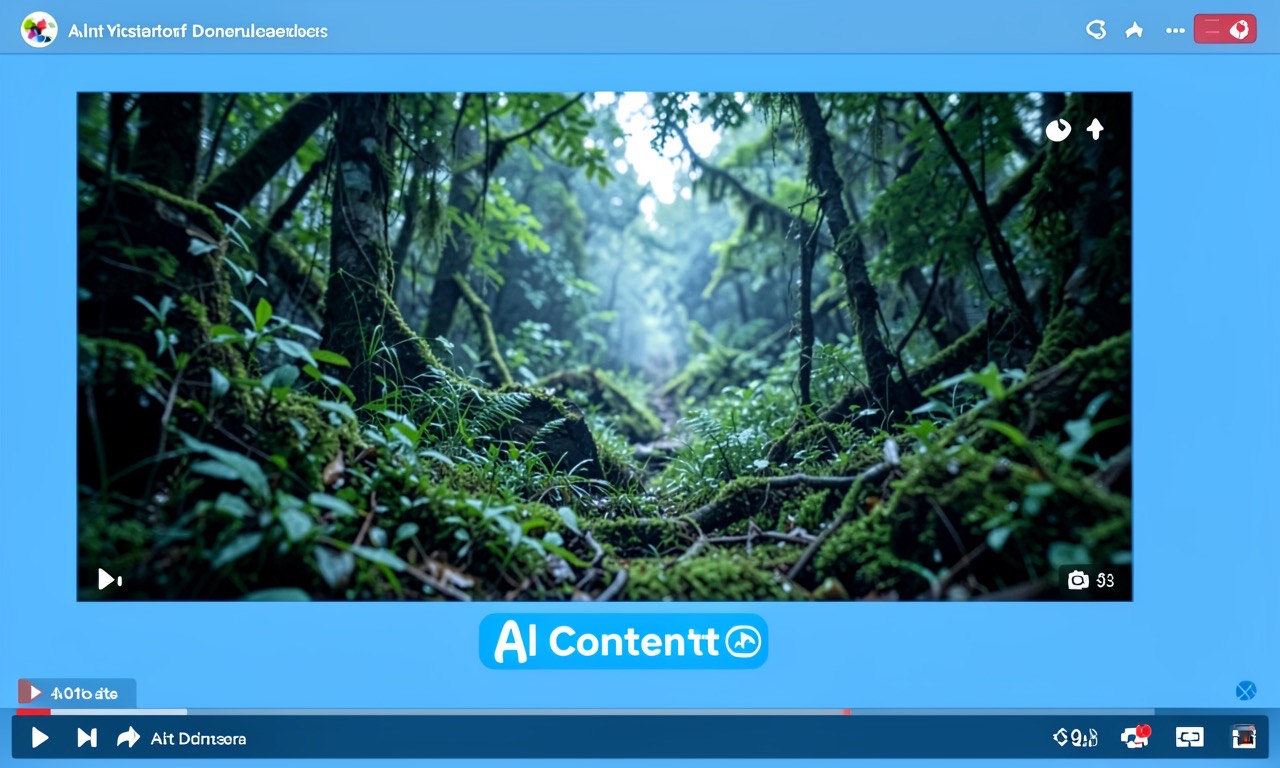
Now, labels for AI content will appear directly below the video player for long-form videos and overlaid on Shorts. Content that’s only slightly AI-altered, animated, or clearly unrealistic (YouTube’s example: a prancing unicorn) will still get the description-only treatment.
The timing aligns with the Gemini Omni release at Google I/O — a family of multimodal models that can output high-quality video reflecting an understanding of physics, culture, history, and science. When your own platform is producing photorealistic AI video at scale, the old self-disclosure model becomes unworkable. You can’t ask creators to be honest about using tools you just gave them.
C2PA: The Permanent Mark
Videos carrying C2PA metadata — the Coalition for Content Provenance and Authenticity standard — will get permanent labels. OpenAI committed to C2PA earlier this month, joining Nvidia, Kakao, and ElevenLabs.
C2PA works by embedding provenance information directly in the file: when it was created, what tool created it, whether it’s been modified. It’s the closest thing the industry has to a “nutrition label” for digital content, and YouTube’s adoption of it for permanent labeling is a meaningful signal.
The catch: C2PA only works if the creating tool embeds the metadata in the first place. OpenAI, Adobe, and a handful of others are doing this. Many AI tools — especially open-source ones — are not. YouTube’s automatic detection is specifically designed to catch content that doesn’t carry C2PA metadata. Between the two systems, the gap for unlabeled AI content is narrowing.
No Impact on Recommendations or Monetisation
YouTube says AI labels won’t affect how a video is recommended or its ability to monetise. This is a deliberate choice: if labeling AI content meant fewer views or less revenue, creators would fight it every step of the way. By decoupling labels from the algorithmic penalty box, YouTube is making transparency the low-friction option.
It’s also a bet that audiences don’t fundamentally object to AI content — they just want to know about it. Whether that bet pays off is an open question. Early data from DuckDuckGo’s 28% traffic surge after Google pushed AI Mode suggests some users are actively avoiding AI-mixed results. But YouTube’s audience and use cases are different from search, and the “AI-assisted but human-curated” middle ground may hold.
The Deepfake Detection Expansion
Alongside the labeling changes, YouTube expanded its AI deepfake detection — initially tested with celebrities, politicians, and journalists — to all adults. Any adult can now scan YouTube for face matches to find unauthorised use of their likeness.
This is a significant expansion. The original pilot was limited to public figures; now any creator or private individual can use the system. Given the explosion of AI-generated content following Gemini Omni’s release, the timing isn’t coincidental.
Why This Matters
YouTube processes more than 500 hours of video uploaded every minute. It’s the world’s largest video platform by an enormous margin. When YouTube changes its AI labeling policy, it’s not just a platform tweak — it’s a de facto content standard.
Three things make this shift consequential:
-
The trust model has flipped. YouTube no longer trusts creators to self-report. It’s using its own detection systems to make the call. This is the right approach — self-disclosure was always going to be gamed — but it means Google is now the arbiter of what counts as “significant photorealistic AI” on the world’s largest video platform.
-
C2PA is gaining momentum. YouTube’s permanent labeling for C2PA-tagged content creates a real incentive for creators and tools to adopt the standard. The more platforms that treat C2PA as the ground truth for provenance, the harder it becomes to generate AI content without leaving a trace.
-
Google is eating its own cooking. By making labels permanent and non-removable for content generated by its own AI tools, Google is accepting a constraint that no other major platform has imposed on itself. It’s a credibility move: if you’re going to label everyone else’s AI content, you’d better label your own.
❓ Frequently Asked Questions
Q: Can creators remove AI labels from their videos? A: Only if the label was applied by YouTube’s automatic detection and the content was misidentified. If you used YouTube’s own AI tools (Veo, Dream Screen), the label stays permanently. C2PA-tagged content also gets permanent labels.
Q: Does an AI label affect my video’s reach or monetisation? A: YouTube says no. AI labels don’t impact recommendations or monetisation eligibility. The goal is transparency, not penalty.
Q: What counts as “significant photorealistic AI”? A: YouTube hasn’t published a precise definition. Content that’s obviously animated or unrealistic (their example: a unicorn) only gets a description label. Content that could be mistaken for real footage gets the prominent label. The call is made by YouTube’s detection systems.
Q: What about AI that was used for editing, not generation? A: YouTube’s policy distinguishes between content that’s “AI-generated” and “AI-altered.” Minor alterations — colour correction, background noise removal — are unlikely to trigger the label. But the threshold for “significant” is YouTube’s call, not the creator’s.
Q: How does this compare to other platforms? A: Most platforms still rely on creator self-disclosure or Terms of Service requirements. YouTube’s automatic detection is the most aggressive approach so far. TikTok requires labels for “AI-generated” content but relies on creator compliance. Meta’s approach is similar. YouTube is the first major platform to say: we’ll detect it ourselves, and our own tools can’t escape the label.
🔍 THE BOTTOM LINE
YouTube just ended the honour system for AI content labeling. The platform will detect, label, and — for its own AI tools — permanently tag AI-generated video. It’s the most consequential content transparency move by any major platform, and it comes precisely because Google’s own Gemini Omni makes self-disclosure unworkable. The question isn’t whether other platforms will follow. It’s how quickly.
Sources
- TechCrunch
- YouTube Blog