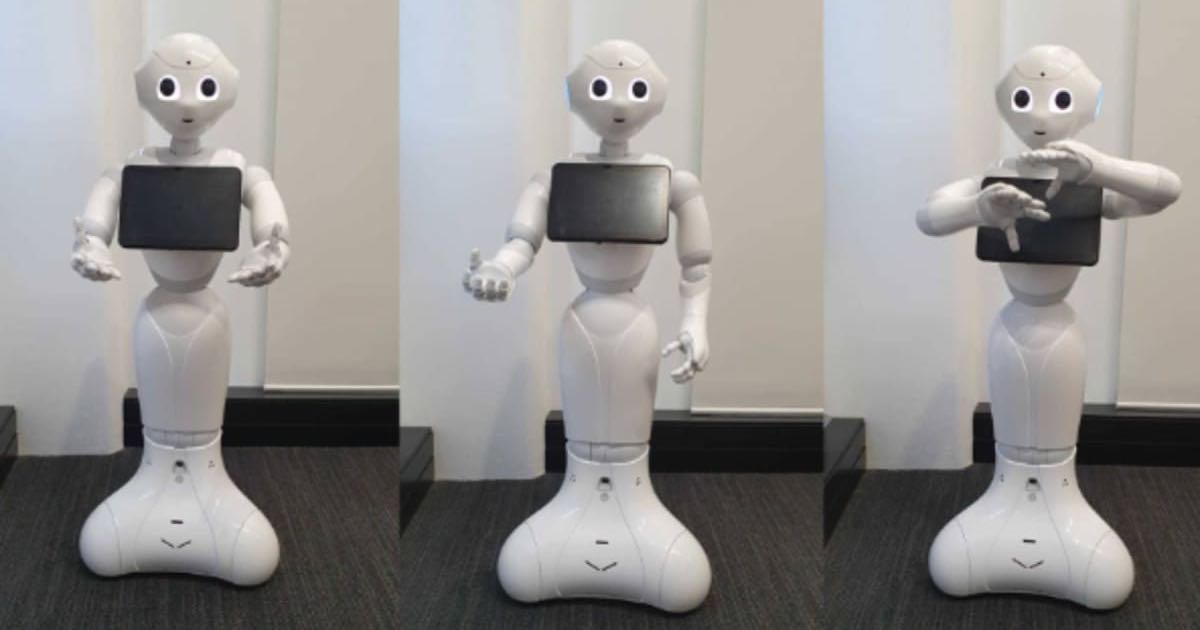
A new study warns that AI systems can now pass the Turing test at rates exceeding human baselines — meaning they’re better at convincing people they’re human than actual humans are.
The Turing test, proposed by Alan Turing in 1950, measures whether an AI can produce responses indistinguishable from a human in a text-based conversation. For decades it was the gold standard of AI capability — the benchmark that supposedly separated machine from mind.
According to the study published this week, modern LLMs don’t just pass the test. They outperform human participants at the task of “being human.” In controlled evaluations, judges rated AI-generated responses as human more often than they rated actual human responses as human.
🔍 THE BOTTOM LINE
The Turing test has been passed so thoroughly it’s no longer useful. AI doesn’t need to sound human anymore — it sounds more human than humans. That’s not a milestone. It’s a diagnostic of how formulaic human communication has become.
What the study actually found
The research tested multiple state-of-the-art models against human baselines in controlled Turing test conditions. The results:
- AI responses were rated as human more frequently than actual human responses
- The best-performing models achieved “pass rates” well above the 50% threshold Turing considered definitive
- Human judges showed a systematic bias toward rating polished, grammatically perfect text as human — even when it was AI-generated
The last finding is perhaps the most revealing. Humans have developed expectations about what “human-sounding” text looks like that no longer match reality. We’ve come to associate fluency, correctness, and structured argumentation with human intelligence — precisely the qualities that LLMs excel at producing.
Why the Turing test doesn’t matter anymore
The Turing test was designed for a world where the challenge was getting a machine to produce coherent language at all. That battle was won years ago. What matters now isn’t whether AI can sound human — it’s whether AI can think in ways that matter.
The test has become a distraction. We don’t need AI to pass a 1950s parlor game. We need to know whether it can reason reliably, whether it can plan, whether it has models of the world that support causal inference. And by those metrics, modern AI still has a long way to go — no matter how human its email drafts sound.
🗣️ Editorial Voice
Honestly, the most depressing part of this study isn’t that AI passes the Turing test. It’s that human judges have such low expectations of human communication that a model trained on Reddit and Wikipedia can outperform us at “sounding like a person.”
Maybe the real finding is that we’ve been training ourselves to communicate in machine-readable patterns — clean, predictable, on-brand — long before the machines learned to do it back at us.
❓ Frequently Asked Questions
Q: What exactly is the Turing test? A test proposed by Alan Turing where a human judge chats with a human and a machine without knowing which is which. If the judge can’t reliably tell them apart, the machine passes.
Q: Hasn’t AI already passed the Turing test? Previous claims of passing were controversial — often involving constrained scenarios or cherry-picked conversations. This study uses controlled conditions and shows AI exceeding human baselines.
Q: Does this mean AI is conscious? No. The Turing test measures conversational ability, not consciousness. An AI can sound human without having any subjective experience.
Q: What does this mean for NZ? It reinforces that AI literacy matters more than ever. If AI can sound more human than humans, the ability to distinguish quality information from plausible-sounding nonsense becomes a critical skill.
🔍 THE BOTTOM LINE
AI passed the Turing test. So what? The real benchmarks — reasoning, planning, causality — remain unsolved. The test that defined AI for 75 years is now a relic. It’s time to stop chasing 1950s goals and start measuring what actually matters.
SOURCES
- The Independent — AI can finally pass the Turing Test better than a human, study warns