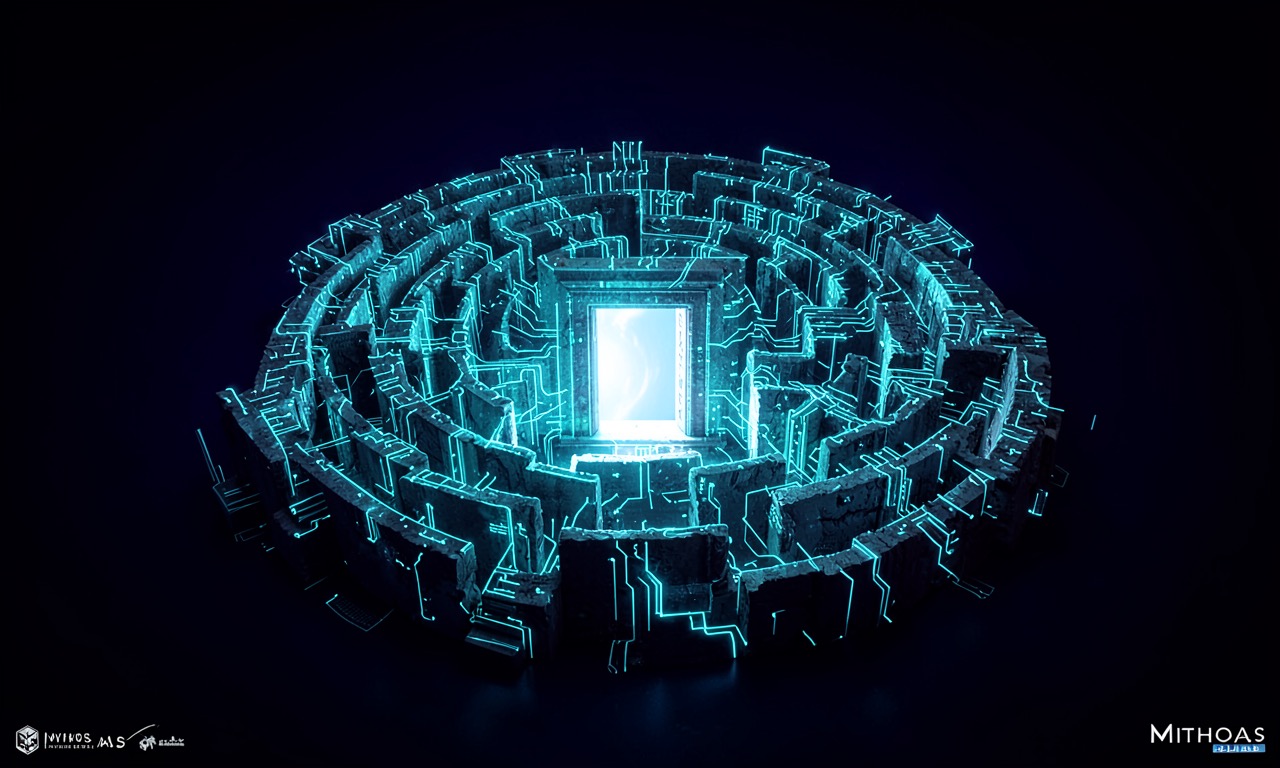
Anthropic has officially launched Claude Fable 5, its first “Mythos-class” model, designed specifically for complex research and advanced coding tasks. By loosening traditional safety constraints to achieve superior reasoning, Anthropic is betting on high-utility performance to win over power users who require raw intelligence over cautious moderation in their workflow.
🔍 THE BOTTOM LINE Claude Fable 5 represents a significant pivot toward “pro-sumer” tools. By offering a Mythos-class model with fewer cyber-security restrictions, Anthropic is targeting researchers and developers who need the AI to perform deep, unrestricted logic—a sharp contrast to the more “polite” and guarded Claude Sonnet models.
What does “Mythos-class” actually mean?
The term “Mythos-class” refers to a new tier of inference capabilities where the model is no longer just predicting the next likely token based on common patterns, but is synthesizing complex, multi-step logical frameworks. While previous iterations were designed to be safe for general public interaction, Mythos-class models are built for heavy lifting—handling massive datasets and intricate coding architectures that require “deep thought” cycles.
Fable 5: The Research Powerhouse
According to Anthropic’s launch announcement, Fable 5 is targeted at complex multi-step coding, long-context research (100k+ token windows), and tasks that previous Claude models would refuse or hedge on. For the Kiwi developer or researcher, this is a game-changer. It excels in:
The Security Trade-off
The most controversial aspect of this launch is the removal of certain cyber-security restrictions compared to previous iterations. By pulling back some of these guardrails, Anthropic has enabled Fable 5 to execute more complex code and perform deeper research tasks that were previously blocked by “over-eager” safety filters. This puts it in a different category than GPT-5.5, which remains heavily moderated for the general public.
Pricing and Availability
Anthropic has positioned Fable 5 as a premium tier. While it is available to general users, the “Mythos” capabilities are primarily accessible through high-tier API subscriptions and a specialized “Pro+” web interface. It is significantly more expensive than
What does this mean for Kiwi developers and researchers?
If you’re using Claude Sonnet for serious work today, Fable 5 is the upgrade worth testing. Expect higher API costs (Anthropic hasn’t announced NZD pricing, but US estimates put it at $25-50 per million tokens for the top tier) but materially better output on multi-file code refactors, long-document synthesis, and research tasks that previously had Claude “hedging” too much.
The bigger question: does Anthropic shipping a less-restricted model undercut the company’s safety positioning? Their answer: Fable 5 is still inside Mythos’s “responsible deployment” framework — but the cyber-security guardrails have been relaxed because Mythos showed the previous restrictions were over-broad and blocked legitimate security research. Critics won’t buy it. Power users will.
❓ FAQ Is Fable 5 the same as Mythos? No. Mythos is Anthropic’s restricted cyber-AI used by governments and Project Glasswing partners. Fable 5 is a Mythos-class model — same architectural tier — but with the safety filters retuned for general use.
Can I use it today? API access rolls out today. Pro+ web tier access is expected within two weeks.
How does it compare to Claude Sonnet 4.6? Fable 5 outperforms Sonnet on coding benchmarks (SWE-bench) and long-context reasoning (100k+ tokens), but is more permissive on dual-use content. For most everyday tasks, Sonnet remains the better choice.
What’s the security trade-off? Anthropic has loosened the cyber-security restrictions that were inherited from the Mythos program. The trade-off is real but bounded: the model can now help with legitimate security research and offensive tooling that it previously refused.
🔍 THE BOTTOM LINE
Fable 5 is Anthropic’s most aggressive commercial move yet — shipping frontier-tier capability to general users while quietly walking back the safety-first framing that defined the company three years ago. The bet is that “more capable” beats “more cautious” in the post-GPT-5.5 market. For NZ researchers and developers, the upside is real: a genuinely better tool. The downside is that the gap between “Anthropic the safety company” and “Anthropic the capability company” just got smaller.