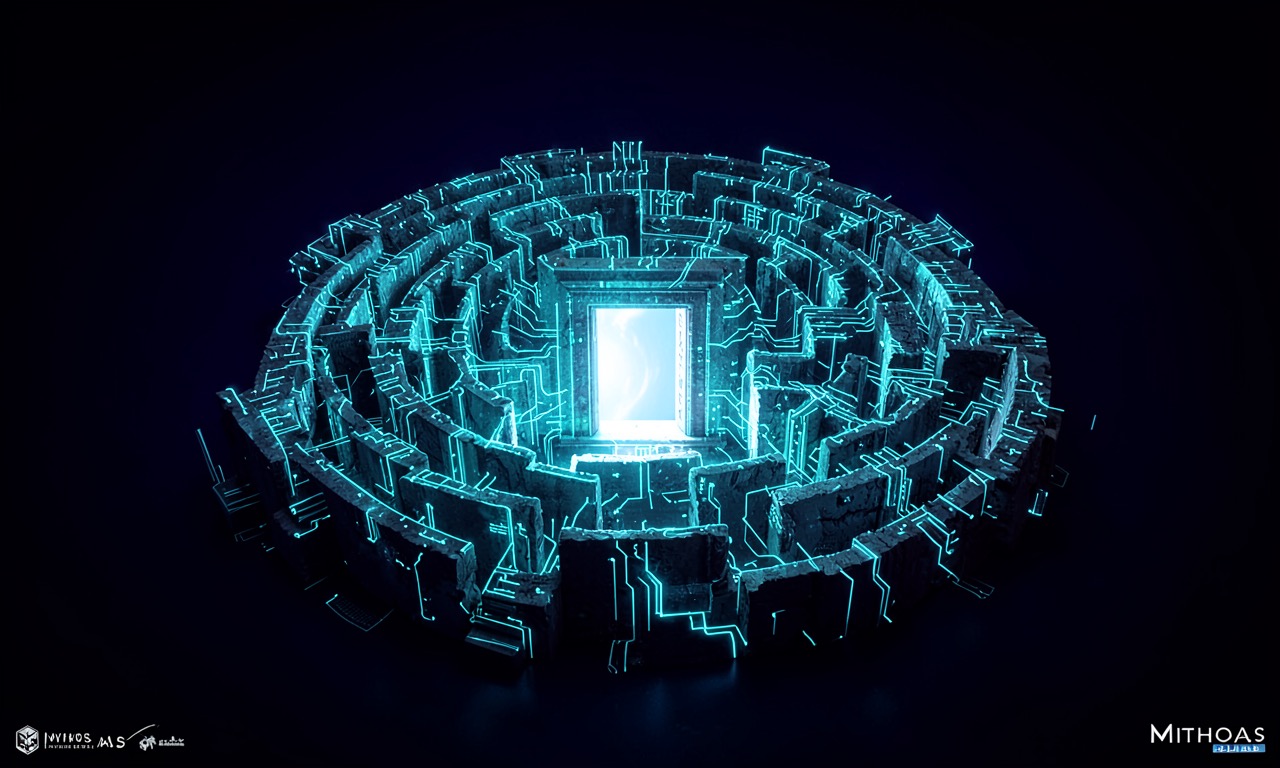
The release of Anthropic’s “Mythos-class” Claude Fable 5 marks a definitive shift in the AI landscape. As serial founder Greg Isenberg notes, it provides the cognitive horsepower for solo founders to build massive operations without large teams, potentially ushering in an era where distribution—not headcount—is the only remaining hurdle for growth.
🔍 THE BOTTOM LINE
Anthropic’s Fable 5 represents a “Mythos-class” jump, moving beyond incremental updates to provide enough reasoning power for solo entrepreneurs to build high-scale, AI-native companies today. While it solves the “execution” problem, the challenge for founders now shifts entirely toward distribution and market fit.
The Mythos Leap
Anthropic’s announcement of Claude Fable 5 isn’t just another iteration; it is a leap into what they call “Mythos-class” capability. In practice, this means the model has moved past simple chat interaction into complex, multi-step reasoning and autonomous planning that was previously only possible with human oversight.
Anthropic describes the model as having “capabilities [that] exceed any model ever made generally available.” This “safe for general use” distinction is critical—it suggests that while the intelligence is frontier-level, the safety guardrails are robust enough to handle high-stakes enterprise logic without constant human hand-holding.
Isenberg’s Inflection Point
Serial founder and investor Greg Isenberg immediately identified this as a watershed moment for the independent builder. On June 9, Isenberg took to X with a succinct but powerful claim: “Today is a wonderful day to build a company with Claude Fable 5.”
Isenberg’s argument centers on the “inflection point” for solo founders and small teams. For years, the bottleneck for small startups was the inability to scale operations without hiring more people. With Fable 5, the model acts as a “force multiplier,” allowing a single person to manage what used to require an entire department of engineers or operators.
The One-Person Billion-Dollar Company
To understand why Isenberg is making such a bold claim, we have to look at how Fable 5 compares to its predecessors. While Claude Sonnet 4.6 was excellent for coding and rapid iteration, and GPT-5.5 provided high-level reasoning, Fable 5 is designed for systemic execution — what Anthropic called a Mythos-class leap beyond what GPT-5.5 offers.
It allows for the creation of “AI-native” companies—businesses where the core product isn’t just “using AI,” but are built on a foundation where the AI handles the majority of the operational heavy lifting. This fuels the 1-person billion-dollar company thesis: if a single human can direct an autonomous system capable of Mythos-class reasoning, the overhead of growth disappears.
The New Challenge for NZ Founders
For our local Kiwi innovators, the news is clear: the “tooling” problem has been solved. You no longer need to spend six months trying to get an LLM to follow a complex workflow—Fable 5 can do it.
However, there is a catch. As we see in the AI-native landscape, while the tool is finally “good enough” to build anything, the market remains crowded. For NZ founders, this week’s priority should shift from how to build the tech to who will use it.
If you are a solo founder in New Zealand, your roadmap for the next 30 days should be:
- Audit your workflows: Identify where Fable 5 can replace human-intensive “middle management” tasks.
- Focus on Distribution: Since everyone now has access to Mythos-class power, the winner is whoever captures the most attention.
- Niche Down: Use Fable’s reasoning capabilities to dominate a specific, high-value niche where your unique local insights can provide a moat against global competitors.
❓ FAQ
What does “Mythos-class” actually mean? It refers to a tier of AI models that possess enough advanced reasoning and reliability to handle complex, multi-step business processes independently, marking a leap beyond standard high-performing models like Sonnet or GPT-4 levels.
Why is Greg Isenberg so excited about this specific model? Because he views it as the point where “execution” is no longer a barrier for solo founders. It provides the capabilities necessary to run a large-scale operation with minimal human headcount.
Is Claude Fable 5 better than GPT-5.5? While benchmarks vary, Fable 5 is specifically positioned as a “Mythos-class” model intended for high-level reasoning and autonomous execution, whereas GPT-5.5 remains a premier general-purpose powerhouse.
🔍 THE BOTTOM LINE
While Claude Fable 5 removes the technical barrier of execution, Kiwi founders must now master distribution to win in a landscape where competition can scale as instantly as their production can.