Jeff Holden has spent six years quietly building something, and the résumé behind it is why nobody laughed him out of the room: he joined Amazon as its tenth engineer and built Prime, then ran product at Uber and set up its self-driving, AI and air-taxi units. On October 7 his Emeryville, California company, Atomic Machines, came out of stealth with $250 million raised — per The Next Web’s launch coverage, corroborated by Dealroom — and a system it calls the Matter Compiler, named for the machine in Neal Stephenson’s The Diamond Age that builds objects from code. The claim is that code alone determines what gets built: machines with moving parts, several materials, features down to single-digit microns, no moulds, masks or fixed tooling. The company says the AI runs its own experiments on the hardware while it works.
“3D printing made shapes programmable: any geometry, straight from a file. We’re making machines programmable,” Holden said in the launch announcement, as quoted by TNW. Luke Nosek, managing partner at Gigafund — one of the investors alongside OneIM, XTX Ventures, KAS Venture Partners, Valor Equity Partners, Sozo Ventures and the Regents of the University of California — put it the way this decade actually talks: “If vibe coding is how software gets made now, this is the start of vibe manufacturing.”
The first product is a switch, and that’s the smart part
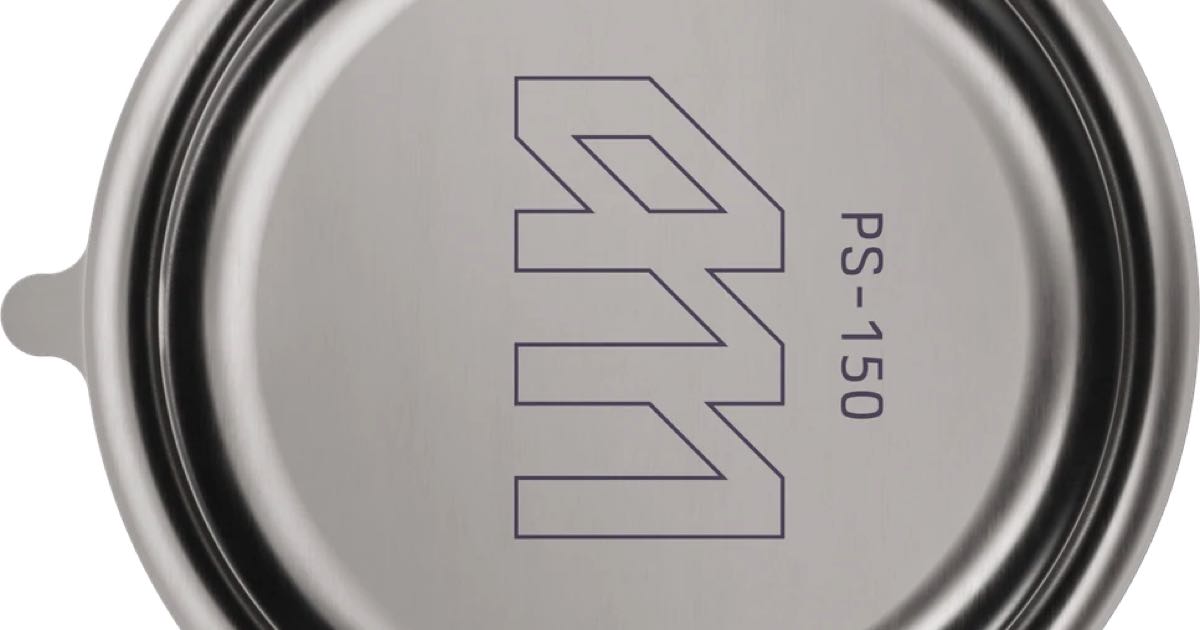
Micro-robots small enough to work inside the body and gears the size of a grain of sand are the roadmap, but the shipping product today is deliberate: the PrimeSwitch PS-150, a relay that opens in 50 microseconds — the company says about a thousand times faster than a conventional contactor — carrying 150 amps continuous in a 9.5mm-by-3mm package. The target is AI data centres moving to 800-volt DC, where a fault releases destructive energy in microseconds and mechanical protection that opens in milliseconds arrives late; the point is engineering, not fire. It is shipping to early-access customers now and makes its public debut at the Open Compute Project Global Summit in San Jose, October 12–15.
Why this ordering makes sense: the data-centre power market is desperate, standardised and buys on spec, which means revenue does not depend on a microrobots market that does not exist yet — and it lands in a funding environment where robotics infrastructure bets are being written large, FieldAI’s $700M round at a $10B valuation among them. The hard part of any new manufacturing platform is the first paying customer — and Holden has pointedly sold shovels, not visions, twice before.
For robotics readers the interesting line in the release is not the switch: it is “machines from code” as a general claim. If the process really generalises across materials and scales the way additive printing did for geometry, the supply path for small robots — actuator parts, compliant mechanisms, things nobody has tooling for — changes shape. That is the six-year bet. The switch is the proof it could pay its own way while it matures.
We verified the claims above against multiple independent outlets (The New York Times’ Science desk and SF Business Times also covered the launch; both are paywalled and were not counted in our tally). As of publication, valuation and the round-by-round split of the $250M have not been disclosed; the company has not been independently audited.
Sources: The Next Web, Dealroom, Business Wire (company announcement)