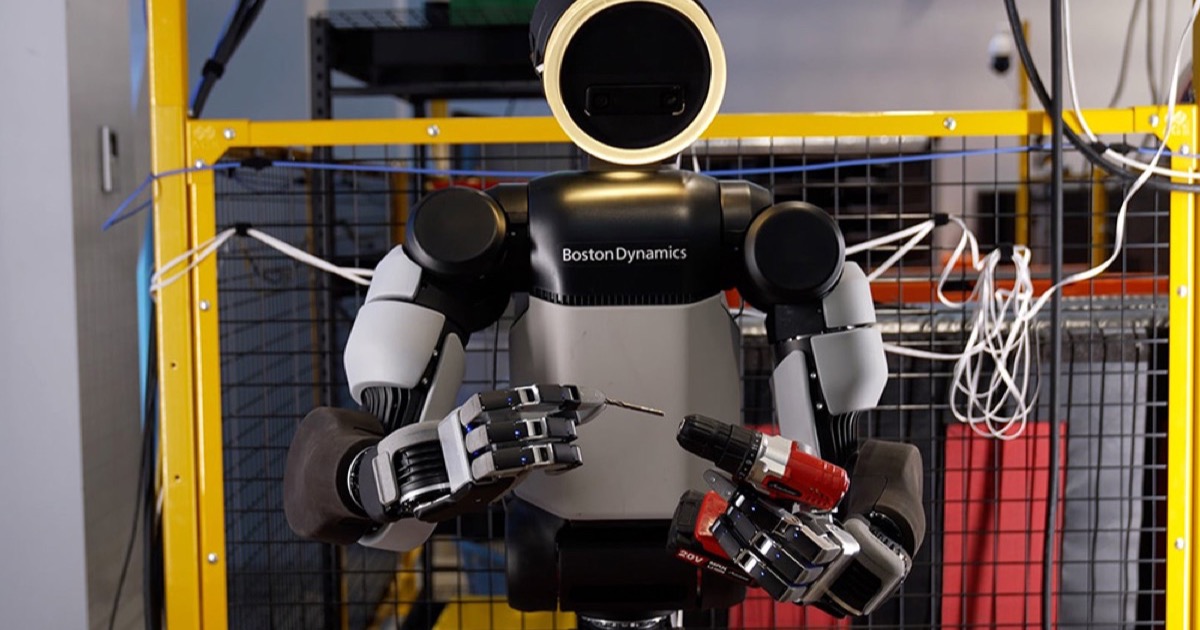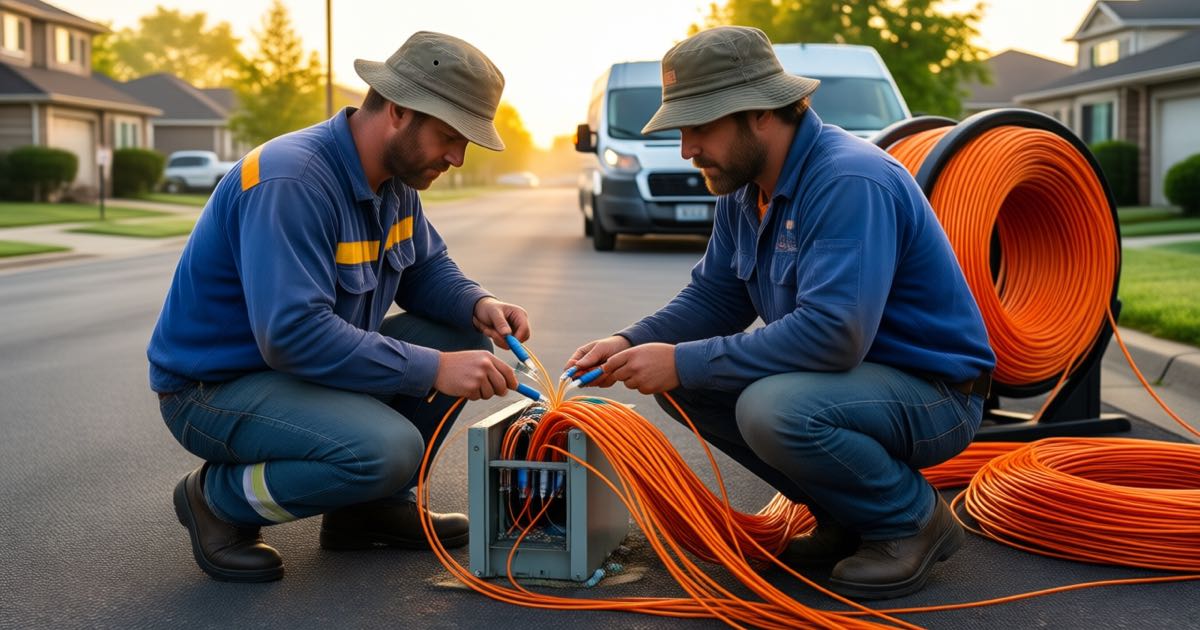
The loudest career conversation of 2026 has been about AI taking jobs. AT&T’s chief executive has a different number to add: 200,000 jobs the AI boom cannot fill.
Speaking on the Business Roundtable’s Work in Progress podcast, AT&T CEO John Stankey said the US telecommunications industry will need nearly 200,000 additional construction and technician workers by 2032, as reported by Fortune. The reason is unglamorous but physical: every data centre in the AI buildout has to be connected to everything else by fibre, and somebody has to trench, splice, and maintain those lines.
🔍 THE BOTTOM LINE
The AI infrastructure boom is minting demand for exactly the kind of work most forecasts assumed was shrinking: hands-on technical jobs paying around $70,000, stable enough to build a career on, and — per the AT&T hiring pages — requiring no four-year degree.
The Math Behind the Shortage
The scale of the buildout explains the strain. Roughly $800 billion is expected to be spent on US data centre development in 2026 alone, and as Crypto Briefing details, connectivity is the bottleneck nobody budgets for. “All those data centers have to be connected,” Stankey told the podcast. “If we want to keep growing, we really need to address this and step up to it.”
Three forces stack: new AI capacity, broadband expansion to homes and businesses, and a retirement wave draining experienced technicians. AT&T has hired about 10,000 broadband and fibre technicians over the past three years and plans another 3,000 in 2026 under a $250 billion multi-year fibre investment — which, by Crypto Briefing’s arithmetic, covers barely 1.5% of the 200,000-worker gap Stankey describes industry-wide this decade.
Careful readers should treat 200,000 the right way: it is not 200,000 vacancies waiting today. It is the industry’s own estimate of incremental workers needed by 2032 across construction and maintenance — a demand signal over seven years, not a hiring blitz.
No Degree Required — and That’s the Point
Stankey’s broader argument is cultural. Only about 5% of AT&T’s roles require a four-year degree, and he argues the shortage persists partly because societies “stigmatize one work over another.” His message to young people is that a fibre splicer is a genuine career, not a consolation prize — stable, physical work an algorithm cannot do from a server rack.
What It Means for New Zealand
The parallel worth watching is directional, not numerical. New Zealand’s AI hiring has more than doubled in a year, and the same trades-vs-desks divide shows up locally: young workers here have been fleeing digital careers for hands-on crafts AI can’t touch. A network of fibre, towers, and data halls still needs human hands — and the US shortage suggests the workers who train for physical infrastructure will have pricing power for years. The counterweight, as our October Challenger data coverage noted, is that employers everywhere are hiring cautiously — short-term seasonal plans rather than permanent headcount.
FAQ
How many telecom workers does the AI boom need? About 200,000 additional construction and technician workers by 2032, according to AT&T CEO John Stankey — for connecting data centres, broadband expansion, and replacing retiring workers.
Do these AI-era telecom jobs require a degree? No. Stankey says the jobs pay around $70,000, are stable, and don’t require a four-year degree — only about 5% of AT&T roles need one.
Is AI creating jobs or only replacing them? Both currents run at once. The AI buildout is driving demand for physical infrastructure trades like fibre technicians, even as AI-exposed office roles face pressure — the honest picture in 2026 is churn in both directions.
— CJ Murden, editor of Singularity.Kiwi. Former digital technologies teacher, author of AI-focused books. Writing with a New Zealand focus.