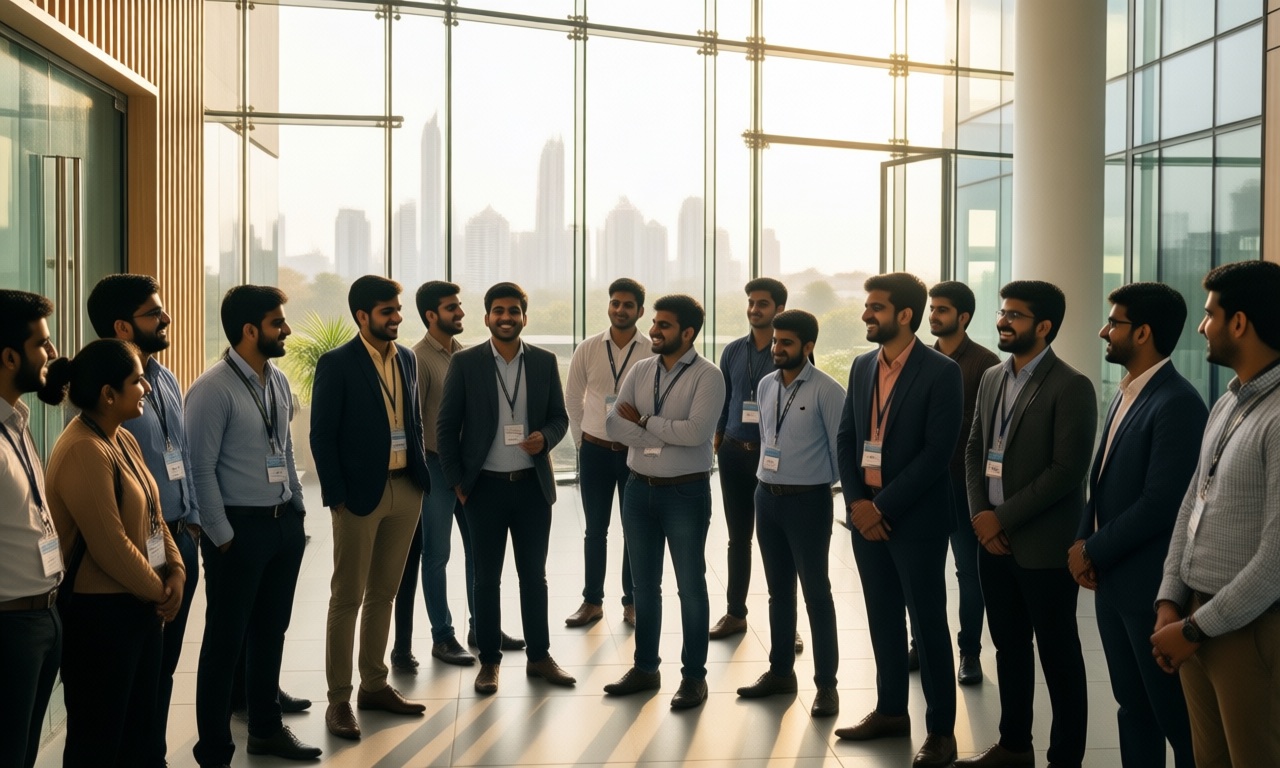
It is a bleak moment for young people entering the workforce. Entry-level white-collar jobs across almost all sectors are being disrupted by AI. Budding accountants, software engineers, and junior lawyers increasingly find themselves displaced by cheap automation. So some are walking away from the digital world entirely — and learning centuries-old trades that algorithms cannot touch.
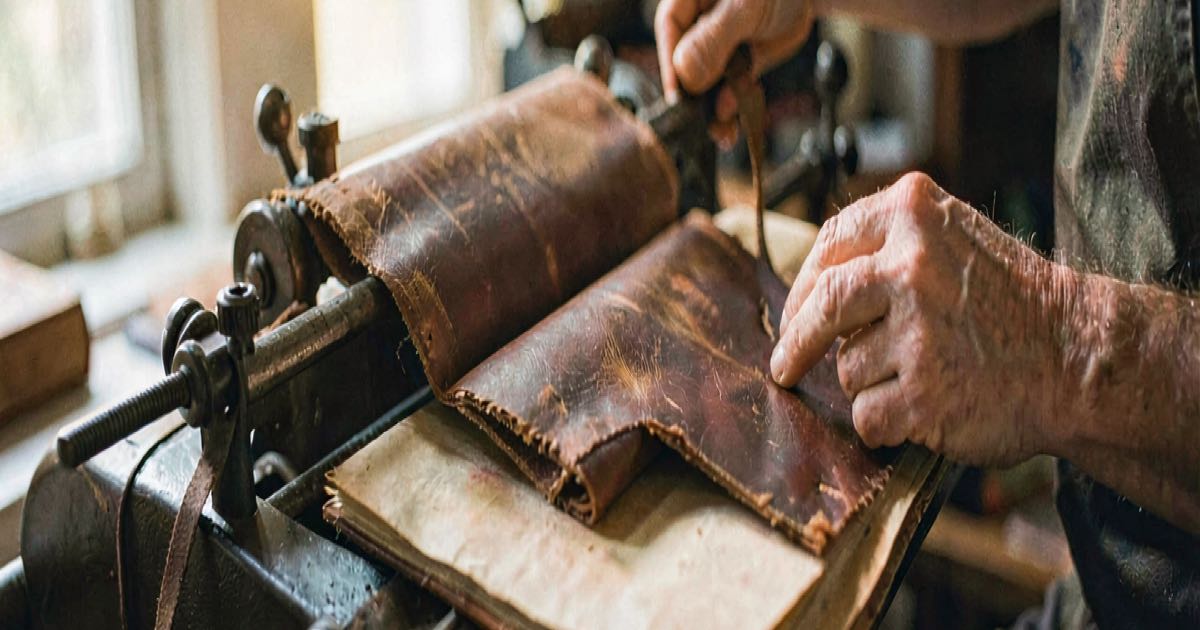
According to The Guardian, a growing wave of younger workers in the UK are turning to “AI-proof” heritage crafts: bookbinding, metalwork, boatbuilding, prop-making, and wig-making. These are hands-on trades where specialist knowledge, creative judgement, and physical dexterity matter — and where AI has no foothold.
🔍 THE BOTTOM LINE
The story here is not that AI is forcing everyone into manual labour. It is that the career map is widening. For a generation told that a university degree guaranteed stability, the collapse of entry-level white-collar work has reopened a door many assumed was shut: the skilled trades. And the demand is real.
The Apprenticeship Surge
The numbers are striking. Cox London, a design house specialising in artistic metalwork, received more than 160 applications for just two apprenticeship places this year. The National Theatre in London saw 728 applications for a single apprenticeship role — up from what used to be considered a “popular” pool of 100.
Paul Kidson, chief executive of Ludlow Bookbinders in Shropshire and a fourth-generation bookbinder, estimates there are now fewer than 50 handcraft-operating bookbinders in Britain. He sees the influx of young interest as a lifeline for a rapidly shrinking industry.
“All the formal apprentice schemes collapsed in the early 1980s, and the industry got no training at all,” Kidson told The Guardian. “We have to train our own people because you can’t recruit at volume because there aren’t any [courses]. Fortunately there is now a desire among a lot of people to want to have the satisfaction of actually making something.”
Why Crafts Are Different
The trades attracting young workers share a common thread: they require physical dexterity and creative judgement that AI cannot replicate. Eryn Lawley, a 27-year-old politics graduate now in her second year as a bookbinding apprentice, described the appeal plainly.
“Even just staring at a screen too long was bad for me,” she said. “People are discovering that, as everything is already decided for you by a computer or algorithm, being able to make or own something physically is good.”
Crucially, demand for these skills is not nostalgic. High-end publishers are betting that shoppers will pay a premium for objects crafted by human hands. Joanna Reynolds, chief executive of the Folio Society, said the company explicitly rejects generative AI tools in its creative processes. “We believe in the importance of supporting the creative world, and we know there is huge pressure on them at the moment.”
This connects to a broader pattern we have tracked: the entry-level white-collar collapse is not uniformly destructive. It is redirecting career traffic. Some of that traffic is flowing toward AI-adjacent roles, as we noted in our reporting on AI automation engineer jobs surging. Some is flowing in the opposite direction — toward trades that are defiantly analogue.
The NZ Angle: Skills Demand, Not Displacement
The pattern has a New Zealand dimension. RNZ reported that demand for AI-related skills in job ads has more than quadrupled over the last decade, according to the SEEK AI Gauge report. But Microsoft ANZ chief technology officer Sarah Carney noted an important nuance: older workers, not younger ones, are adapting fastest to AI.
“It turns out the older generation is actually really good at AI because they know what their job involves,” Carney said. “They know where the value sits, and it’s really easy for them to offload things to AI.”
Microsoft has committed to 300,000 AI training opportunities in New Zealand. That is a workforce strategy built on reskilling, not replacement — and it suggests the NZ labour market may absorb AI disruption differently than the UK or US, where AI-led job cuts have dominated headlines.
For NZ, the heritage craft parallel is smaller but real. The country’s trades training system, including the Buy New Zealand Made campaign and growing interest in artisanal food, textile, and woodworking businesses, taps the same consumer preference for human-made goods. The question is whether NZ’s training infrastructure can scale to meet demand the way Britain’s apprenticeship revival is attempting to.
The Other Side
Not everyone in the crafts movement frames it as anti-AI. Nazifa Tabassum, an apprentice at Cox London, told The Guardian she sees AI as a tool that can assist, not something that replaces skilled manual work. “For me it isn’t just about making things with my hands. It’s about continuously developing my skills, and using technology where it adds value, while still providing the expertise and craftsmanship that people can’t easily automate.”
That is a more nuanced position than “AI-proof.” It suggests the real story is not about escaping technology but about choosing work where human judgement remains the product. The crafts are not a retreat from the modern economy. They are a bet that the modern economy will continue to value what only people can make.
❓ FAQ
Are heritage crafts actually growing as a career path? In the UK, yes — apprenticeship applications are surging, though from a very small base. Cox London received 160+ applications for two places. The National Theatre received 728 for one role. But these are tiny numbers compared to the broader labour market. The trend is real but early.
Is this just nostalgia? Partially. But commercial demand for handcrafted goods is genuine — the Folio Society, high-end publishers, and luxury design houses are paying premiums for human-made work. The consumer signal is real, not just sentiment.
Does New Zealand have a heritage crafts movement? NZ has a smaller but growing artisanal sector — food, textiles, woodworking. The government and Microsoft are investing in AI reskilling rather than craft preservation. The two strategies are not in conflict: a workforce needs both AI-fluent workers and skilled trades.
Is this a viable career strategy for young people? It depends on the trade. Bookbinding and metalwork require years of training and serve niche markets. The apprenticeship model is proving viable, but the number of positions is small. It is one path among many — not a mass solution to AI-driven job displacement.
🔍 THE BOTTOM LINE
The flight to heritage crafts is not a rejection of technology. It is a recalibration. When entry-level digital work collapses, the trades that require human hands suddenly look less like a backup and more like a front line. The data — 728 applications for one apprenticeship, 160 for two places — tells you the demand is there. Whether the training infrastructure exists to meet it is a separate question, and one New Zealand will need to answer alongside the rest of the world.
📰 Sources
- The Guardian — AI-proof? Younger workers desert the digital world for traditional crafts
- RNZ — Demand for AI-related skills has grown and older workers are acing the pivot
- Federal Reserve Bank of New York — AI’s Impact on Labor and Hiring
- Forbes — Salesforce and others are hiring for this new $200,000+ AI job
— CJ Murden, editor of Singularity.Kiwi. Former digital technologies teacher, author of AI-focused books. Writing with a New Zealand focus.