The Pipeline Is Breaking
A Yale School of Management working paper making the rounds this week confirms what many young professionals have been feeling: AI is systematically eliminating the entry-level rungs of the career ladder.
The study, led by researchers tracking employment patterns across professional services, found that junior hiring in AI-exposed fields has dropped 23% year-over-year, while demand for senior talent remains flat or slightly increased.
The mechanism is brutally simple:
- Junior work = automatable work. The analysis, document review, data preparation, and basic drafting that traditionally trained new professionals is exactly what AI does best.
- Senior work = judgement work. Client relationships, strategic decisions, complex negotiation — these still require human experience.
- Result: Companies hire fewer juniors, expect more from the juniors they do hire, and the career pipeline that once turned juniors into seniors is being dismantled.
📊 By the Numbers
The Yale study focuses on four sectors that have historically been the backbone of professional career progression:
| Sector | Junior Hiring Decline | AI Exposure Score |
|---|---|---|
| Management consulting | −26% | Very high |
| Corporate law | −24% | Very high |
| Investment banking | −22% | High |
| Tech (non-engineering) | −19% | High |
These aren’t small shifts. A 26% decline in consulting junior hiring means thousands of ambitious graduates who would have started at McKinsey, BCG, or Bain this year are competing for a much smaller pool of slots — or looking elsewhere entirely.
The Yale researchers note that this isn’t a temporary cycle. It’s a structural shift: “The tasks that traditionally constituted entry-level professional development are increasingly performed by AI systems, and there is no indication this trend will reverse.”
🧊 The Experience Catch-22
Here’s the real killer.
If entry-level jobs don’t exist, how do young workers acquire the judgement and experience needed for senior roles?
The traditional career path was: do junior work → learn from it → become senior. AI can do the junior work faster, but AI can’t turn a junior into a senior — that requires human development.
Companies are already reporting a “mid-career talent gap” — plenty of executives, plenty of entry-level applicants, but not enough people with 5–10 years of experience to fill the middle. The pipeline is being hollowed out.
Dario Amodei (Anthropic CEO) predicted five months ago that half of entry-level jobs would be gone within five years. The Yale data suggests he might have been optimistic about the timeline.
💰 The Two-Tier Economy
The report also highlights a widening income divergence:
- Entry-level salaries in AI-resistant fields (skilled trades, healthcare, education) are rising as supply tightens
- Entry-level salaries in AI-exposed fields (professional services) are flat or declining as fewer roles exist
- Senior-level compensation continues to grow, especially for roles that require AI management
The result is a two-tier labour market where the traditional route to middle-class prosperity — university → professional services firm → comfortable career — is increasingly blocked.
The irony is acute. In the name of productivity, companies are gutting the very pipeline that produces their future leaders.
🌏 What This Means for NZ Young People
New Zealand’s professional services sector is smaller than the US, but the dynamics are the same:
- NZ law firms (Russell McVeagh, Bell Gully, MinterEllisonRuddWatts) are cutting graduate intakes — several have reduced 2026 graduate programs by 15–20%
- Consulting firms are running smaller analyst classes
- The “OE + professional experience” model that generations of Kiwis built careers on is under direct threat
But there’s a flip side:
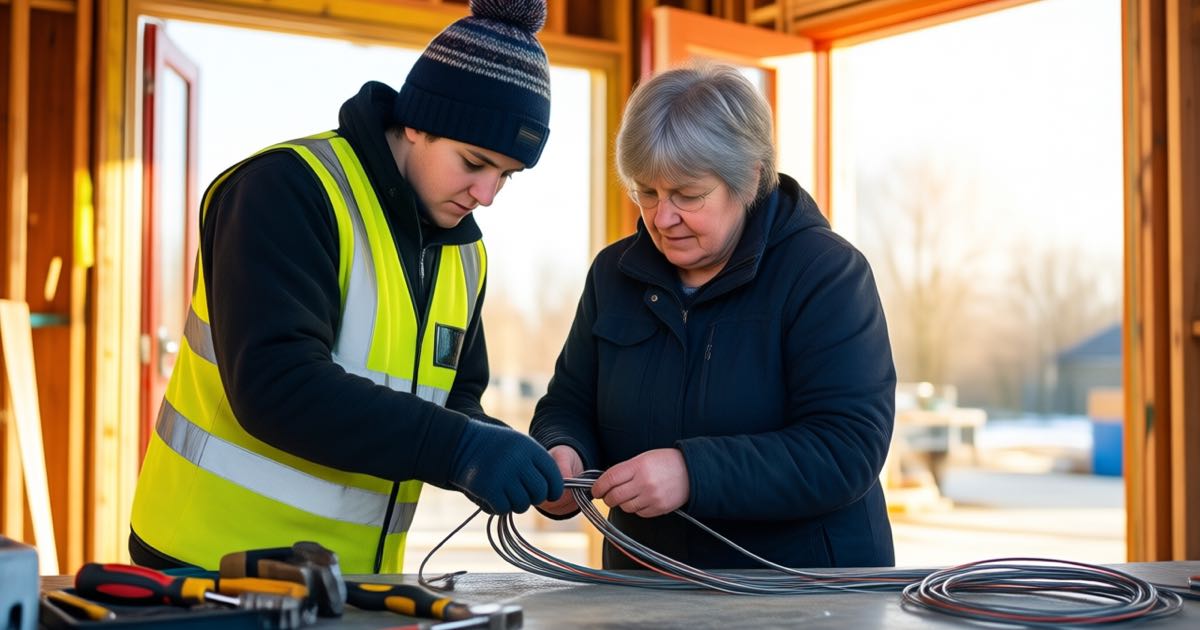
- Skilled trades in NZ are desperate for young workers — electricians, plumbers, builders are earning premium wages
- Healthcare and education have chronic shortages — AI creates demand rather than reducing it
- NZ’s small market means generalist skills are still valuable, even if specialist professional services are shrinking
The advice from career experts is shifting: “Don’t train for what AI can do. Train for what AI can’t do — yet.”
🤔 My Take: This Isn’t a Bug, It’s a Feature
I want to be careful here because I know how this sounds.
When a Yale study shows entry-level hiring down 26% in consulting, the instinct is to say “we need to protect these jobs.” But I think that’s the wrong framing.
The fact that AI can do junior analytical work better than a new graduate isn’t a market failure. It’s a technology working as intended. The problem isn’t that AI is too capable — it’s that our career development infrastructure was built around the assumption that junior work would always need humans.
The real question is: what’s the new pipeline?
If AI does the analysis, what does the junior learn? Is it through managing the AI? Interpreting its outputs? Explaining its limitations to clients? Or do we need completely new mechanisms for developing professional judgement — AI-accelerated apprenticeships, intensive simulation training, entirely new role definitions?
The companies that figure this out first won’t just be more productive. They’ll have the talent pipeline advantage for a generation.
The ones that don’t? They’ll keep cutting junior roles, wondering why they can’t find anyone with ten years of experience in 2035.
🔍 THE BOTTOM LINE: Yale SOM’s study confirms AI is structurally dismantling the entry-level career pipeline in professional services. A 26% drop in consulting junior hiring isn’t a blip — it’s a new reality. The career ladder is being pulled up from below, and nobody has built the replacement yet. Young workers need a new strategy. Companies need a new pipeline. Both are running out of time.