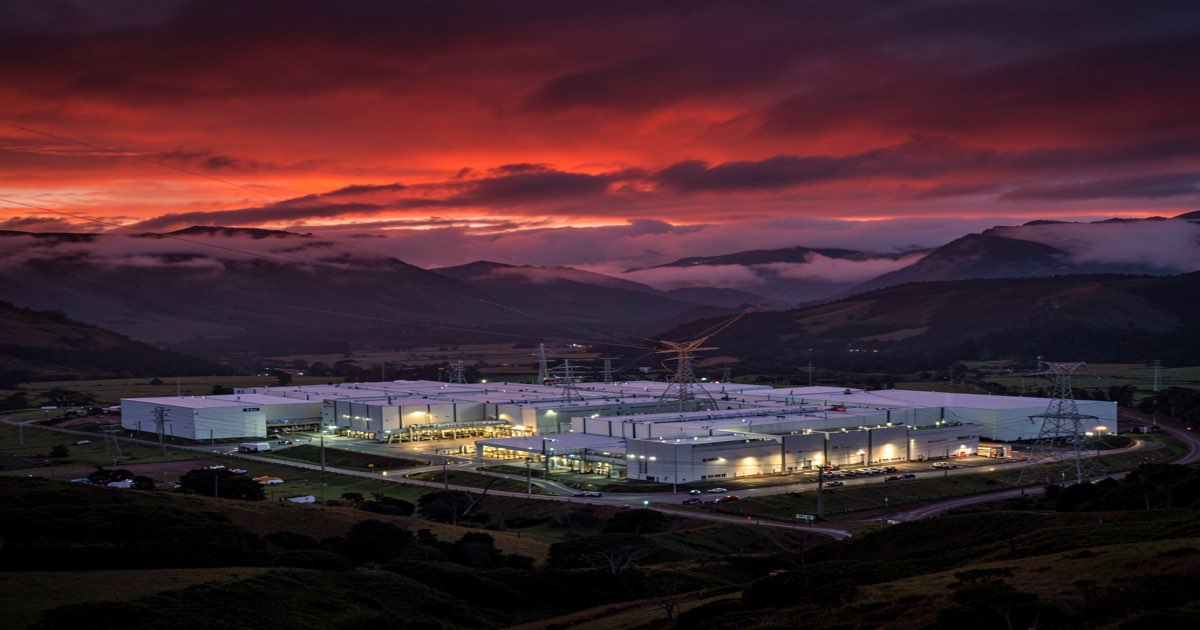
Australia’s federal government just drew a line in the sand for AI data centres. Five expectations. Binding policy direction. Sovereign data control. Renewable energy requirements. Local jobs mandates. Research ecosystem support. Water management obligations.
New Zealand’s response? A voluntary business guidance document from MBIE and an AI strategy that literally says we should focus on adoption because building foundational AI “requires enormous capital investments” that “structurally favour larger economies.”
That’s not a strategy. That’s a shrug.
What Australia Actually Did
Australia’s National Interest Framework for Data Centres and AI Infrastructure sets five clear expectations for any project seeking approval:
-
Energy transition alignment — Operators must underwrite or develop renewable energy, finance grid connections, and participate in demand flexibility programmes. Data centres can’t just suck power; they have to contribute to the grid’s evolution.
-
Water management — Cooling systems that drain local water resources won’t fly. Efficient technologies and responsible water practices are now baseline expectations.
-
Local jobs and skills — Projects must demonstrate employment creation, training pathways, and addressing technical skills gaps during both construction and operation.
-
Sovereign data control — Digital capability that can be independently controlled from within Australia. This reflects genuine concern about offshore influence and foreign control of sensitive data.
-
Research ecosystem support — Operators are expected to strengthen Australia’s research and innovation ecosystem, not just extract value.
The framework doesn’t replace state and territory planning — it sits above it as a policy reference point. Projects that demonstrate public interest or clear economic benefit get favourable consideration. Those that don’t? NSW alone knocked back AUD $40 billion in speculative or insufficiently prepared projects through its Investment Delivery Authority.
What is a National Interest Framework? A government policy document that sets binding expectations for infrastructure projects deemed strategically important. It gives regulators clear criteria for approval decisions and gives developers advance notice of what they’ll be assessed against. Australia’s framework treats data centres the way most countries treat ports, airports, or telecommunications — as critical infrastructure, not just commercial real estate.
Where New Zealand Stands
Here’s the uncomfortable comparison:
| Dimension | Australia | New Zealand |
|---|---|---|
| National framework | Yes — five binding expectations | No — voluntary MBIE guidance |
| Sovereign data requirements | Explicit — must be controllable from within Australia | Not addressed |
| Energy obligations | Must underwrite renewables, participate in demand flexibility | Not addressed |
| Water management | Mandatory efficiency expectations | Not addressed |
| Local jobs mandate | Must demonstrate training pathways and employment | Not addressed |
| Research requirements | Must support innovation ecosystem | NZTE investment attraction only |
| Rejected speculative projects | AUD $40B rejected in NSW alone | No public rejection process |
| Total committed pipeline | AUD $51.9B in NSW alone | Datagrid 280MW + AWS $7.5B (foreign-owned) |
MBIE’s own AI strategy page spells out the philosophy: “This strategy deliberately emphasises AI adoption and application rather than foundational AI development, reflecting both economic reality and strategic opportunity.”
Translation: we’re not going to try to compete with Google or OpenAI, so we’ll focus on using their tools. Fine as far as it goes. But that’s a software strategy. Data centres are physical infrastructure on New Zealand soil, drawing New Zealand power, sitting in New Zealand communities. “We’ll just adopt” doesn’t cut it when someone’s building a 78,000 sqm AI factory near Invercargill that will consume 280 megawatts — making it the country’s second-largest electricity user after Tiwai Point.
Why This Matters Right Now
The Datagrid AI factory near Invercargill is already under way. AWS is investing $7.5 billion in Auckland. Singapore-based companies are circling. These aren’t hypothetical — they’re happening.
Without a national framework, New Zealand is negotiating each deal ad hoc. No baseline requirements for energy contribution. No water management expectations. No sovereign data guarantees. No research ecosystem mandates. Every deal starts from scratch, and the leverage sits with the companies bringing capital, not the country providing the land, power, and water.
As we wrote in NZ’s AI Data Centre Boom: Who Actually Benefits?, the hidden economics of foreign-owned data centres on New Zealand soil are complicated. Value creation and control likely stay offshore. Our carbon arbitrage analysis showed the climate case is real — running AI on NZ’s 85% renewable grid instead of coal-dependent alternatives saves real emissions. But climate benefit alone isn’t a sovereignty strategy.
Australia’s framework acknowledges something New Zealand hasn’t: data centres are geopolitically sensitive infrastructure. They’re not warehouses. They’re not office buildings. They’re the physical substrate of the AI economy, and whoever controls them controls something that matters.
The NZ-Specific Stakes
New Zealand has advantages Australia doesn’t — 85% renewable electricity, stable geopolitics, relatively low natural disaster risk, English-speaking workforce. These make NZ attractive to data centre developers. But advantages without guardrails become liabilities.
The AI Forum’s refreshed Blueprint for Aotearoa acknowledged New Zealand’s “high-use, low-trust” problem with AI. Adding data centres to that mix without a framework for how they serve national interests could make the trust gap worse, not better.
Three specific risks if NZ doesn’t act:
-
Energy sovereignty — A 280MW data centre drawing from the national grid affects everyone’s power prices. Without requirements for renewable underwriting or demand flexibility, NZ households and businesses subsidise foreign AI workloads.
-
Data sovereignty — Australia explicitly requires digital capability controllable from within its borders. NZ has no equivalent. Whose data sits in Invercargill? Whose laws apply? What happens in a geopolitical dispute?
-
Skills leakage — Data centres create construction jobs but relatively few ongoing operational roles. Without mandating training pathways and research partnerships, NZ gets the cranes but not the careers.
The Path Forward
New Zealand doesn’t need to copy Australia’s framework wholesale. Our context is different — smaller scale, higher renewable penetration, different geopolitical positioning. But we do need a framework.
At minimum, three things should happen:
-
A national data centre policy — Not voluntary guidance. Actual policy that sets expectations for energy, water, sovereignty, and community benefit before projects get approved.
-
Cross-Tasman coordination — Australia and NZ share a data sovereignty interest. A trans-Tasman approach to sovereign data control would be more powerful than either country acting alone. The Five Eyes intelligence partnership makes this a natural conversation.
-
Community consent requirements — Local communities near data centre sites deserve more than resource consent hearings. Australia’s framework implicitly acknowledges this through its jobs and skills expectations. NZ should make it explicit.
🔍 THE BOTTOM LINE
Australia just told the world that if you want to build AI infrastructure on Australian soil, you need to serve Australian interests. New Zealand is still in the “please come, we have cheap renewables” phase. The difference isn’t just regulatory — it’s strategic. Every month without a framework is a month where foreign operators write the terms of their own presence in New Zealand. That’s not adoption. That’s surrender.
❓ Frequently Asked Questions
Q: Why can’t NZ just use MBIE’s existing guidance? MBIE’s guidance is voluntary and focused on business adoption of AI tools, not physical infrastructure. It doesn’t address energy, water, data sovereignty, or community impact. A data centre that draws 280MW needs more than a welcome mat.
Q: Doesn’t NZ already have the AI Forum Blueprint? The AI Forum Blueprint is an industry-led vision document, not government policy. It sets direction but carries no regulatory weight. Australia’s framework has teeth — projects that don’t meet expectations don’t get approved.
Q: What about the $7.5B AWS investment — won’t regulation scare that away? Australia has stricter rules and attracted AUD $51.9B in committed projects in NSW alone. Good regulation doesn’t scare away serious investors — it screens out speculative ones. NZ rejected AUD $40B worth of underprepared projects in NSW; that’s a feature, not a bug.
SOURCES
- Channel Life Australia — Australia tightens data centre scrutiny amid AI boom
- MBIE — New Zealand’s AI Strategy: Investing with Confidence
- AI Forum NZ — AI Blueprint for Aotearoa 2030