The Pitch Nobody Expected
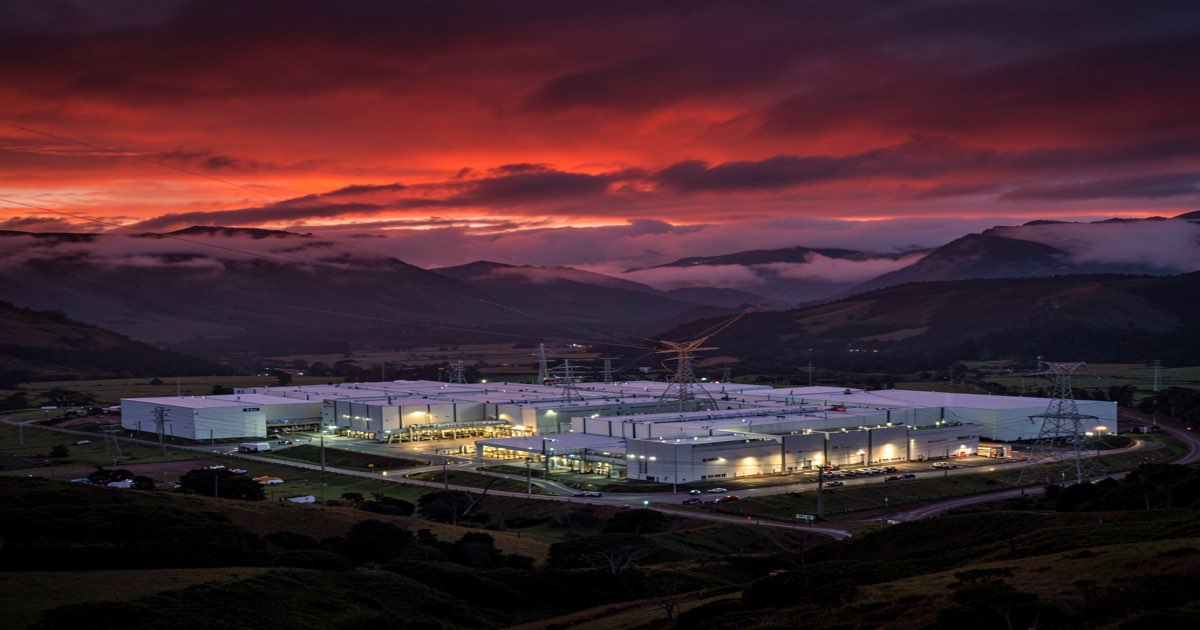
When Environment Southland granted resource consent for a $3.5 billion data centre on farmland outside Invercargill in March, the public debate landed exactly where you’d expect: water, power, and whether Southland wants to become a server farm for offshore tech giants.
A Change.org petition to stop the project gathered 26,000 signatures. RNZ called it “the country’s second-largest drain on power.” Environmental groups raised the usual alarms about 220 million litres of groundwater a year and the destruction of a wetland.
But here’s the thing nobody’s really grappling with yet: the climate case for this project might be stronger than the case against it.
The Numbers That Change Everything
The Spinoff’s Marc Daalder laid out the arithmetic this week, and it’s worth sitting with:
- Running a 280MW data centre in the United States produces roughly one million tonnes of CO₂ annually — even with carbon credits
- Running the same facility in China produces about 1.4 million tonnes
- A fully coal-powered Chinese facility — and there are plenty in Inner Mongolia — emits up to two million tonnes
- Running it in Southland on hydropower and wind? Virtually zero direct emissions
The annual carbon saving from running Datagrid in New Zealand rather than China: equivalent to taking nearly half a million cars off the road.
Scale that up. Ten data centres of this size would offset the equivalent emissions of New Zealand’s entire dairy industry. Forty would offset the country’s entire carbon footprint. You don’t have to like AI to agree that running it on hydro is better than running it on coal.
The Pipeline That Makes It Possible
None of this works without the Tasman Ring Network — a 6,000km subsea cable giving the South Island a direct connection to Australia instead of routing everything through Auckland. Datagrid claims it reduces latency by up to 35%, which is the difference between “interesting concept” and “commercially viable” for AI training workloads.
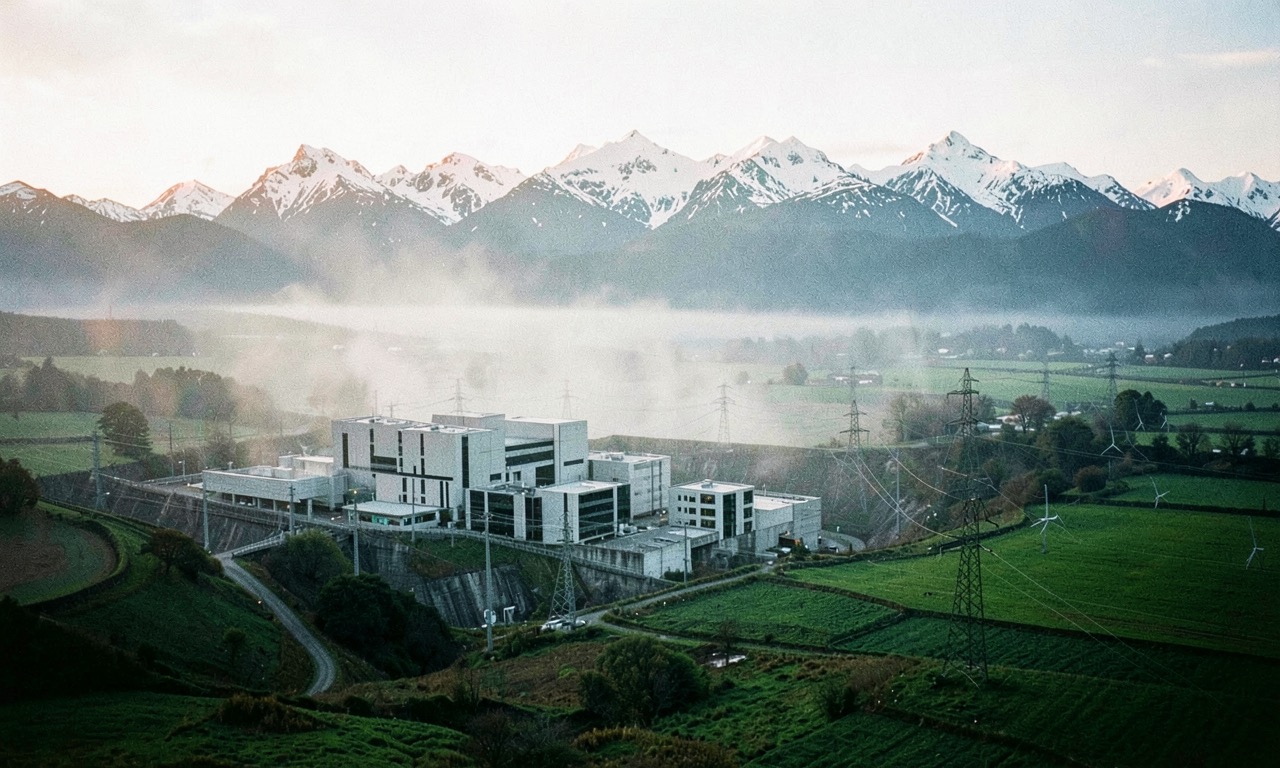
Without that cable, Southland’s renewable energy advantage is academic. With it, New Zealand can effectively export renewable energy — not by shipping electrons, but by letting international companies run their most energy-intensive AI processes on our zero-emissions grid.
Think of it this way: imagine a country sitting on an enormous oil reserve with no way to get it to market. Then someone builds a pipeline. Except unlike oil, this resource never runs out.
The Renewable Demand Problem — Solved
New Zealand generates about 85% of its electricity from renewables, mostly hydro. But here’s the awkward truth that energy economists have whispered for decades: nobody builds new generation capacity without demand for it.
No major power plant has been built in New Zealand since the Clyde Dam in 1992. Not because we’ve run out of rivers or wind or geothermal steam — but because the domestic market can’t absorb more supply. You don’t spend hundreds of millions building something you can’t sell.
Data centres flip that equation. Microsoft backed Contact Energy’s Te Huka Unit 3 geothermal station near Taupō for its Auckland data centre region. Mercury’s Turitea South wind farm was supported by an Amazon Web Services contract. The current renewable buildout is adding new generation capacity roughly 25% faster than the Think Big era of the 1970s.
Datagrid’s 15-year, 140MW agreement with Mercury is just the start. When you can guarantee demand for decades, building new wind farms, geothermal stations, and solar arrays becomes rational economics rather than green idealism.
The Legitimate Concerns
Let’s not pretend the concerns aren’t real. They are:
Water. 220 million litres of groundwater annually sounds alarming — until you learn it’s roughly equivalent to seven Southland dairy farms. The question isn’t the volume; it’s whether the aquifer can sustain it and whether locals’ bores run dry first.
Grid strain. Datagrid will consume more electricity annually than the entire city of Wellington. Transpower says new generation is coming — 1,300MW expected in 2026 — but a dry year could change the maths fast. Tiwai Point showed what happens when a single industrial consumer threatens to pull the plug on the whole South Island grid.
Who benefits. 1,200 construction jobs and 50 ongoing positions. That’s the employment pitch for a $3.5 billion project. The compute belongs to offshore clients. The models are trained elsewhere. New Zealand gets rent, not value creation — unless we build the local AI capability to use the infrastructure we’re hosting.
Ecological impact. A wetland destroyed. Marine species disturbed at Ōreti Beach by the cable. These are real costs, and “very low ecological value” is Environment Southland’s assessment, not an objective truth.
The Carbon Arithmetic That Matters
Here’s the framing shift that changes the conversation: AI is going to be trained somewhere. The global AI compute market isn’t asking whether to build data centres — it’s asking where.
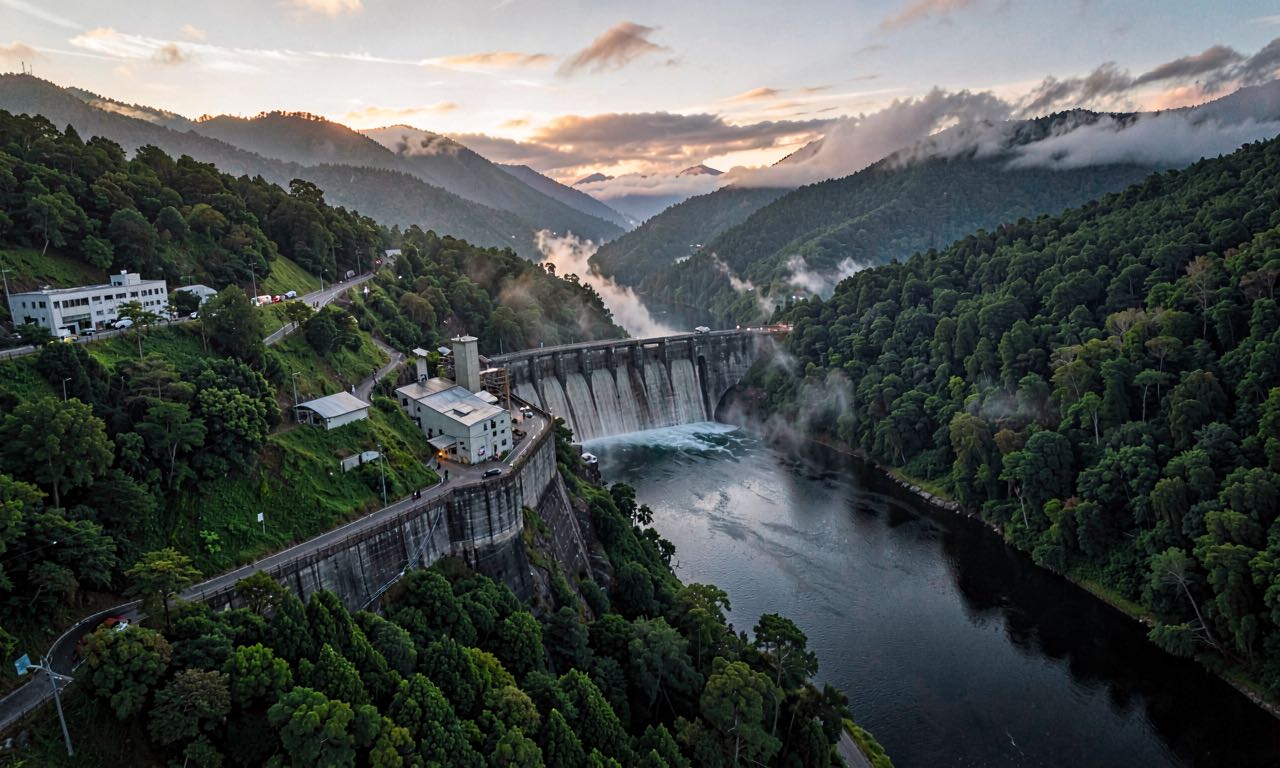
If that compute happens in Inner Mongolia on coal power, the climate pays. If it happens in Virginia on natural gas, the climate pays. If it happens in Southland on Manapōuri’s hydro and Kaiwera Downs’ wind, the climate wins.
New Zealand can’t stop the global AI buildout. Nobody can. But we can offer the cleanest place on Earth to run it. That’s not a compromise — it’s a strategic advantage, and it’s one of the few climate plays where New Zealand genuinely leads the world instead of following.
The Real Question
The data centre debate has been framed as: “Do we want AI infrastructure in our backyard?”
The better question is: “Do we want the world’s AI running on our clean energy, or on someone else’s coal?”
Twenty-six thousand people signed a petition to stop Datagrid. If the same energy were directed at making sure New Zealand captures the value — not just the rent — from hosting the world’s cleanest AI compute, this project could define the country’s economic future for a generation.
The infrastructure is coming. The cable is being laid. The consent is granted. The only question left is whether New Zealand seizes the opportunity or just hosts it.