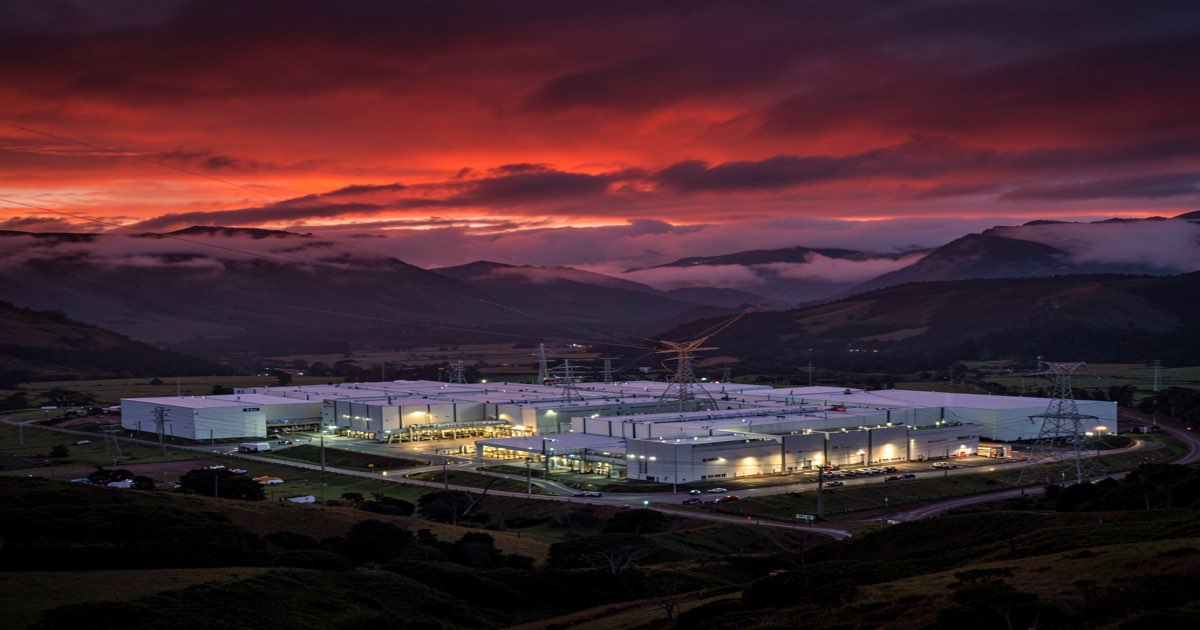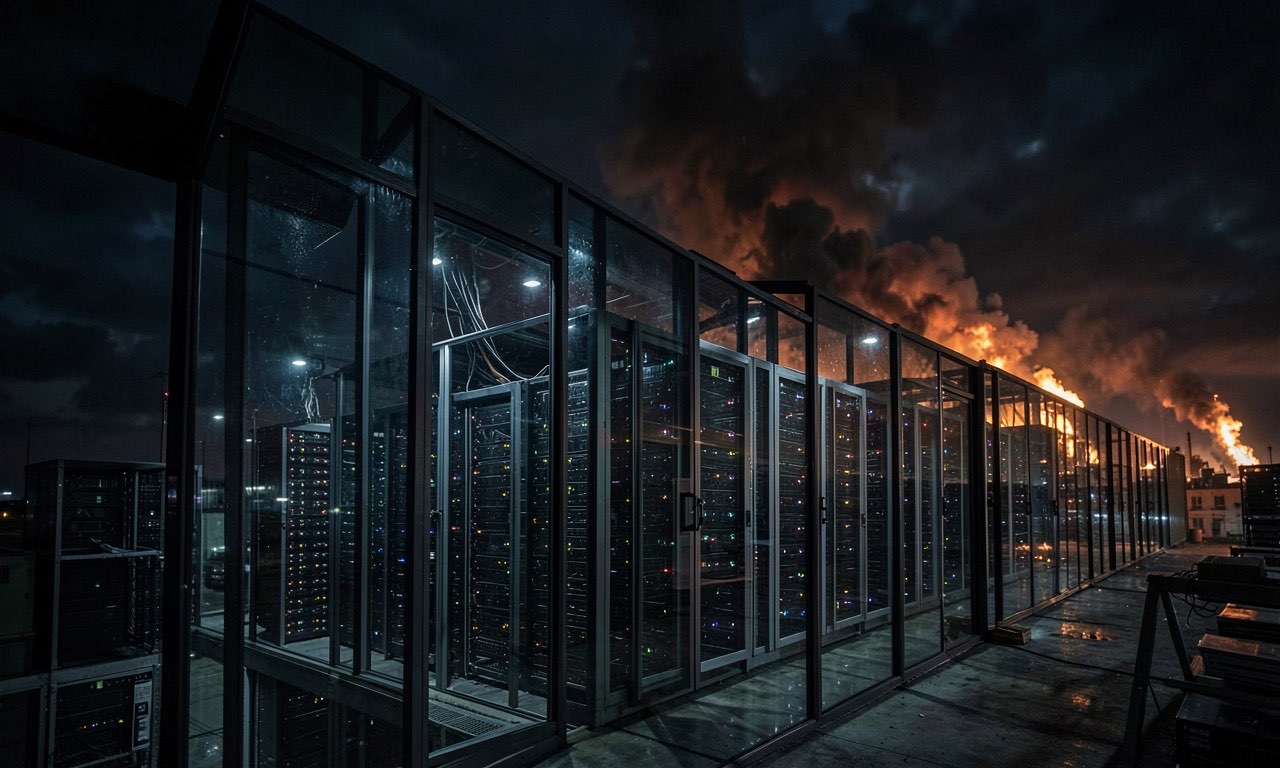
A Molotov cocktail thrown at Sam Altman’s home. Thirteen bullets fired into an Indianapolis city councilman’s house. A note on his doorstep reading “NO DATA CENTERS.” Iran’s Revolutionary Guard promising the “complete and utter annihilation” of OpenAI’s Abu Dhabi campus.
The anti-datacenter backlash is no longer just protest signs and planning objections. It’s escalating toward violence — and the targets are shifting from machines to people.
As Alberto Romero of The Algorithmic Bridge observed: “Increasingly, as the objects of people’s anger and frustration and desperation become unreachable behind fences and guards, or abstracted away in ones and zeros, or elevated above the clouds, the mob will turn their unassailable emotions toward human targets.”
That escalation raises an unexpected question: could this violence actually make New Zealand more attractive as a place to build data centers?
The Case for New Zealand
On paper, the argument is compelling. New Zealand offers a combination few countries can match: political stability, renewable energy, a cool climate, Five Eyes intelligence sharing, and a democratic legal system that respects the rule of law.
And it turns out, someone is already betting $3.5 billion on it.
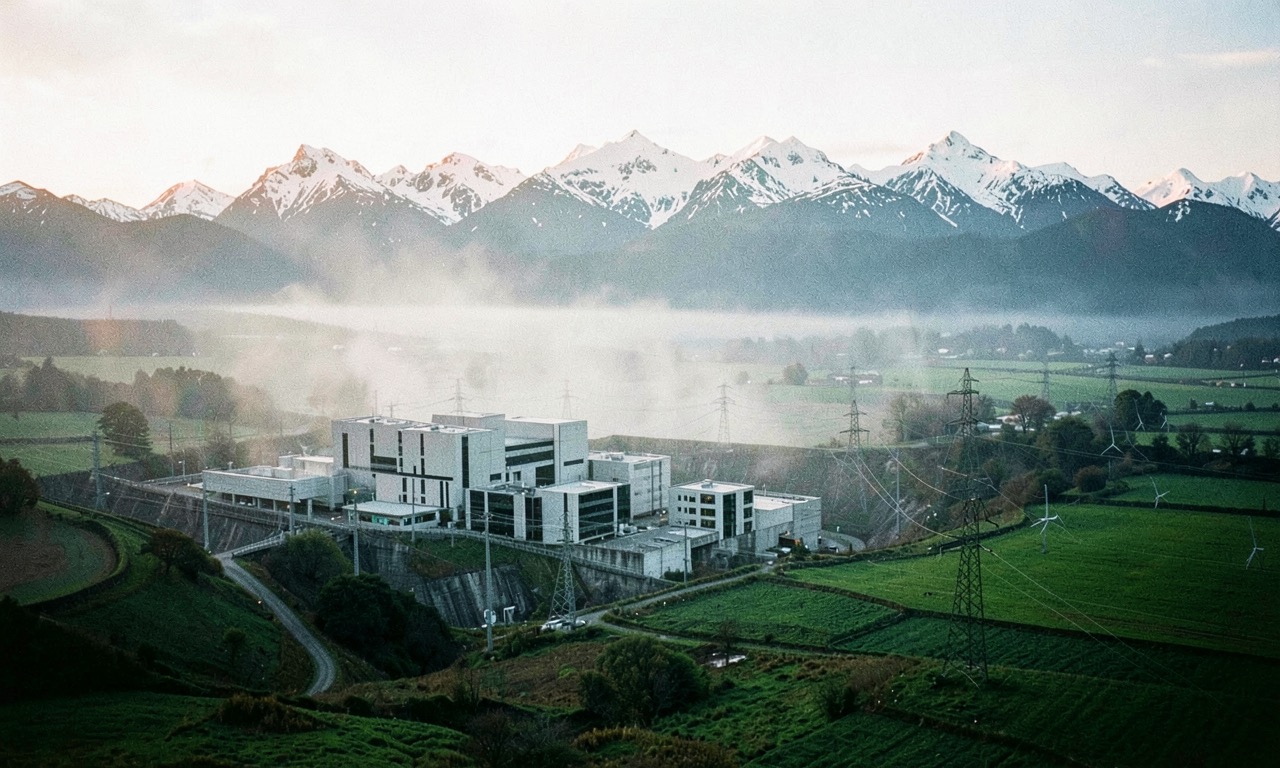
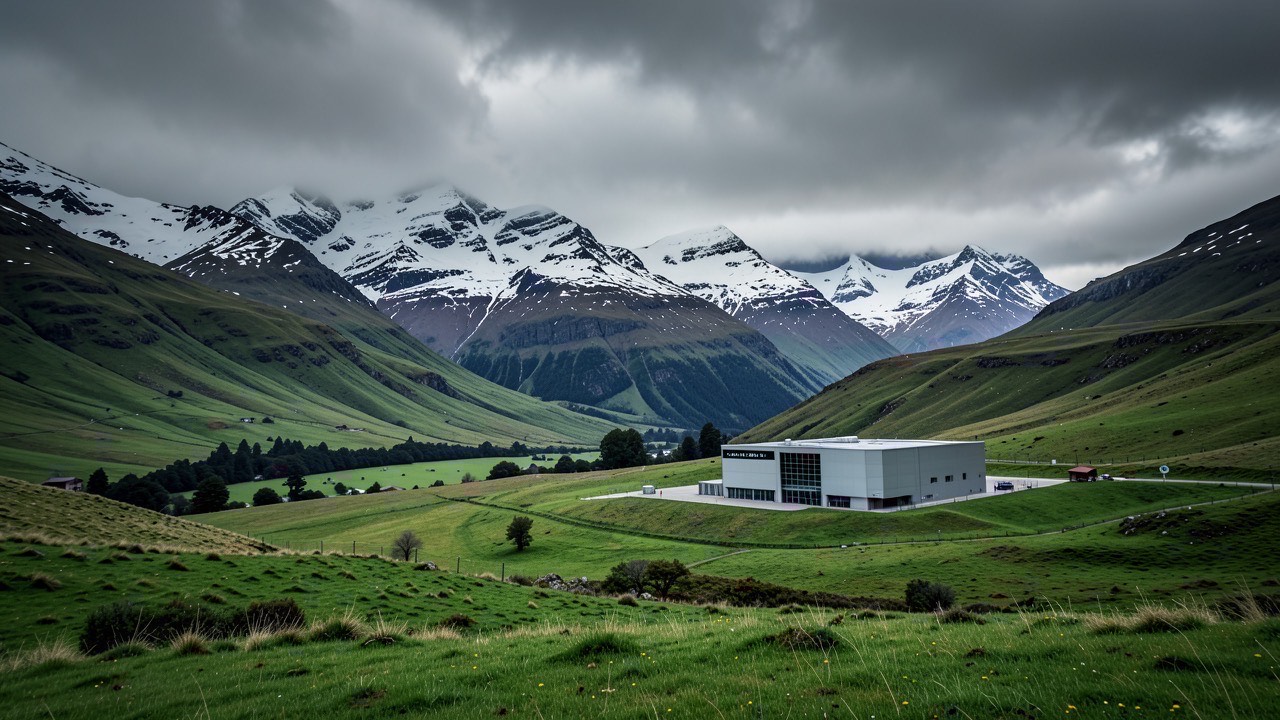
Datagrid New Zealand has secured full resource consent for a 280-megawatt data center campus in Makarewa, near Invercargill — Southland’s first hyperscale facility and what the company calls the country’s first “AI factory.” The 78,000 square-metre campus would be New Zealand’s second-largest electricity consumer after the Tiwai Point aluminium smelter.
The location is no accident. Southland’s cool climate means free cooling for much of the year — a massive cost saving for facilities that spend up to 40% of their energy on air conditioning. The Manapōuri hydroelectric station sits nearby. A new submarine cable, the Tasman Ring Network, is approved to land at Oreti Beach near Invercargill — the first international subsea connection to the South Island.
Datagrid founder and CEO Rémi Galasso framed the consent as a regional milestone. “We extend our sincere gratitude — ngā mihi nui — to the iwi, landowners, local councils, and the Southland community for their unwavering support throughout this process.”
The community engagement appears genuine. Southland mayor Rob Scott praised the approach: “These people have done it right. They’ve talked to people, they’ve consulted the community, but more importantly, they’ve listened.”
That last point matters. When Amazon’s data center project in West Auckland collapsed — billions promised, nothing delivered — it eroded public trust. Datagrid appears to have learned from that failure, starting small and scaling up rather than arriving with promises of transformation.
The Hyperscalers Are Already Here
Datagrid isn’t alone. The big players have already arrived in New Zealand.
Microsoft launched its Aotearoa (NZ North) hyperscale cloud region in December 2024 — New Zealand’s first — with a 100MW facility in Auckland offering local data residency, enhanced security, and reduced latency for NZ businesses.
AWS followed with its Asia Pacific (New Zealand) region, also with three availability zones. Both are operational.
These are significant investments. They signal that the major cloud providers see New Zealand as a legitimate market, not just an afterthought. But they’re North Island facilities, focused on serving New Zealand businesses with local data residency. They’re not the kind of sovereign AI training facilities that could attract global AI workloads.
That’s where the South Island opportunity lies — not competing with Auckland for local cloud customers, but offering something nowhere else in the Southern Hemisphere can: a stable, renewable-powered, geopolitically safe location for the most intensive AI computing workloads on the planet.
The Reality Check
It’s not that simple. For all its natural advantages, New Zealand faces real barriers to becoming a data center haven.
Connectivity is the killer. New Zealand sits at the edge of the Pacific. Latency to the US East Coast adds 100-150 milliseconds — fine for AI model training, where batches can be processed asynchronously, but problematic for real-time inference at scale. The Tasman Ring Network cable helps, but capacity and redundancy remain concerns compared to well-served locations like Singapore or Sydney.
Power is a question, not a given. Datagrid’s 280MW facility will draw roughly 2.45 TWh of electricity annually — making it New Zealand’s second-largest industrial power consumer. The Manapōuri station can supply it, but the economic productivity per megawatt is surprisingly low: an estimated $24 of GDP per MWh, compared to $105/MWh for Tiwai Point. That’s the value to New Zealand Inc. — the value to Datagrid’s Singapore-based parent, BW Digital, is presumably much higher.
A drought could change the calculus entirely. Unlike the aluminium smelter, which can power down potlines and get paid by the national grid for doing so, data centers need continuous power. A dry year with Manapōuri running low and a 280MW data center demanding constant supply could put real pressure on Southland’s electricity — and potentially on power prices nationally.
But the picture is evolving. Contact Energy has received Fast Track approval for a large wind farm just 50 kilometres from the Datagrid site. Datagrid has also signed an electricity supply deal with Mercury. The power question isn’t settled, but it’s being addressed.
Scale and talent. The major hyperscaler regions — Virginia, Dublin, Singapore — have supplier ecosystems, skilled workforces, and decades of infrastructure investment. New Zealand doesn’t. Building a 280MW facility requires specialized construction expertise, operations staff, and supply chains that don’t fully exist locally yet. Datagrid expects 1,200 jobs during construction but only 50 ongoing staff. For a $3.5 billion project, that’s a thin local economic footprint.
Why the Violence Changes the Calculus
Here’s where the global backlash becomes relevant to New Zealand’s pitch.
The Datagrid project was conceived before the current escalation of anti-datacenter violence. But the timing works in its favour. When data center executives are being attacked at home, when local politicians supporting data center projects are being shot at, when nation-states are threatening to destroy AI facilities — a quiet valley in Southland starts to look very attractive.
New Zealand offers something that Virginia, Indiana, and Abu Dhabi cannot: the absence of threat. No hostile neighbours. No history of domestic terrorism targeting tech infrastructure. A small population with broad social licence for development, particularly in regions that have lost major employers (Tiwai Point’s eventual closure looms large in Southland’s economic thinking).
The sovereign data pitch is compelling too. For governments and enterprises wanting to ensure their AI workloads sit in a stable democracy under Five Eyes jurisdiction, New Zealand is an alternative to US-hosted infrastructure that comes with geopolitical risk. The EU AI Act, with its potential €35 million or 7% of global turnover penalties, makes data location a compliance issue — not just a preference.
The Verdict
New Zealand won’t become the next Virginia or Dublin. The connectivity, scale, and talent constraints are real. But it doesn’t need to.
What New Zealand can be — and with Datagrid’s consent, is already becoming — is a specialist AI computation hub: renewable-powered, climate-advantaged, geopolitically stable, and increasingly connected. One or two strategic facilities, positioned not as competitors to hyperscaler regions but as complementary sovereign compute locations.
The anti-datacenter violence overseas doesn’t create this opportunity — Datagrid was already pursuing it. But it makes the pitch more urgent. When the alternative is building in a country where your executives face physical risk, the quiet south of New Zealand has a certain appeal.
Southland mayor Rob Scott might have said it best, even if he was talking about community engagement rather than global geopolitics: “They’ve done it right.”
Sometimes being the quiet option is the strongest position of all.
SOURCES
- Singularity.Kiwi: “AI Will Be Met With Violence — Anti-Datacenter Attacks Escalate Globally” (April 2026)
- RNZ: “A new Southland datacentre would be the country’s second-largest drain on power” (April 2026)
- IT Brief NZ: “Southland’s first ‘AI factory’ data centre gets go-ahead” (March 2026)
- BusinessDesk: “Hyperscaler Datagrid gets approvals for 280MW Southland data centre” (March 2026)
- BusinessDesk: “Datagrid signs electricity deal with Mercury for Southland AI data centre” (March 2026)
- New Zealand Energy Substack: “The 280MW question?” (March 2026)
- Microsoft: “New Zealand’s First Hyperscale Cloud is Open for Business” (December 2024)
- AWS: “Now Open — AWS Asia Pacific (New Zealand) Region” (2025)
- Datagrid NZ: datagrid.nz
- The Algorithmic Bridge / Alberto Romero: analysis on target-shifting dynamics