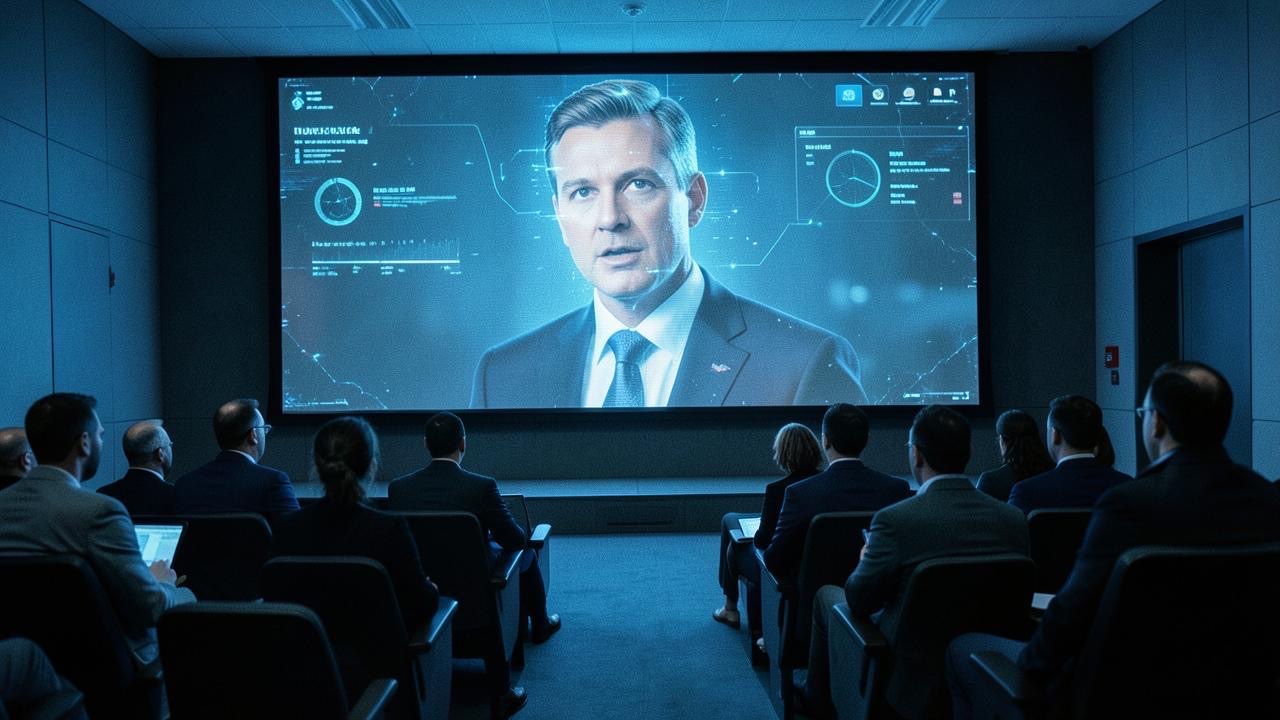
Meta is developing a photorealistic AI avatar of CEO Mark Zuckerberg that can interact with employees in real-time. The digital twin is trained on Zuckerberg’s voice, mannerisms, and strategic thinking — and Zuckerberg is personally involved in training it.
What We Know
According to the Financial Times, the AI Zuckerberg is designed to improve internal communication and accessibility at scale within Meta. The avatar would allow employees across the company’s global offices to interact with a version of their CEO without waiting for town halls or all-hands meetings.
This is not a chatbot with a profile picture. It is a full photorealistic digital twin — voice, facial expressions, gestures, and presumably the capacity to answer questions about company strategy in something approximating Zuckerberg’s own words.
Why It Matters
This is the first publicly reported case of a Fortune 500 company building an AI clone of its own CEO for internal use. The implications cut several ways:
Scale of executive presence. A CEO can only be in one place at a time. A digital twin can be everywhere simultaneously. For a company with 67,000+ employees across dozens of offices, this solves a real communication bottleneck.
Authenticity and trust. Employees will know they are talking to an AI — but the psychological impact of receiving strategic guidance from something that looks and sounds like your CEO is uncharted territory. Does an AI Zuckerberg answer carry the same weight as the real one? Does it matter?
The precedent. If Meta normalizes this, every large-company CEO will face pressure to have a digital twin. Executive accessibility becomes a technology problem rather than a scheduling problem — and that shifts power dynamics in ways we have not yet understood.
The Uncomfortable Questions
- Who controls what the twin says? If the AI Zuckerberg gives an answer that real Zuckerberg disagrees with, whose word stands?
- What happens when the twin is wrong? AI hallucinations in a CEO avatar have different consequences than a chatbot giving a wrong recipe
- Does this replace or supplement the real CEO? The efficiency argument is obvious. The trust argument runs the other direction
- Employee surveillance concerns. An AI CEO that interacts one-on-one with employees is also a data collection instrument — every conversation is logged, analyzed, and potentially used
The Bigger Picture
CEO digital twins are the logical endpoint of two trends colliding: the push for AI-mediated workplace communication, and the demand for executive accessibility at scale.
We already accept AI customer service agents, AI HR bots, and AI meeting summarizers. A CEO avatar is different only in degree, not in kind. But that degree matters — leadership is fundamentally about human trust, and an AI that performs leadership without being human tests the limits of that trust in ways we have no framework for.
Zuckerberg building his own clone is also on-brand for a company that has spent a decade trying to make the metaverse happen. If you cannot build a virtual world, build a virtual you.
What to Watch
- How Meta employees actually respond to the twin in practice — adoption rates and trust surveys will be telling
- Whether other CEOs follow suit — watch for announcements from companies with similar scale and communication challenges
- Regulatory response — EU AI Act provisions on deepfakes and AI-generated personas may apply to internal corporate tools
- The gap between what the twin says and what Zuckerberg actually decides — that delta is the reputational risk
Sources
- Financial Times — Original report on Meta AI Zuckerberg development
- X/Twitter — Discussion and analysis of the announcement