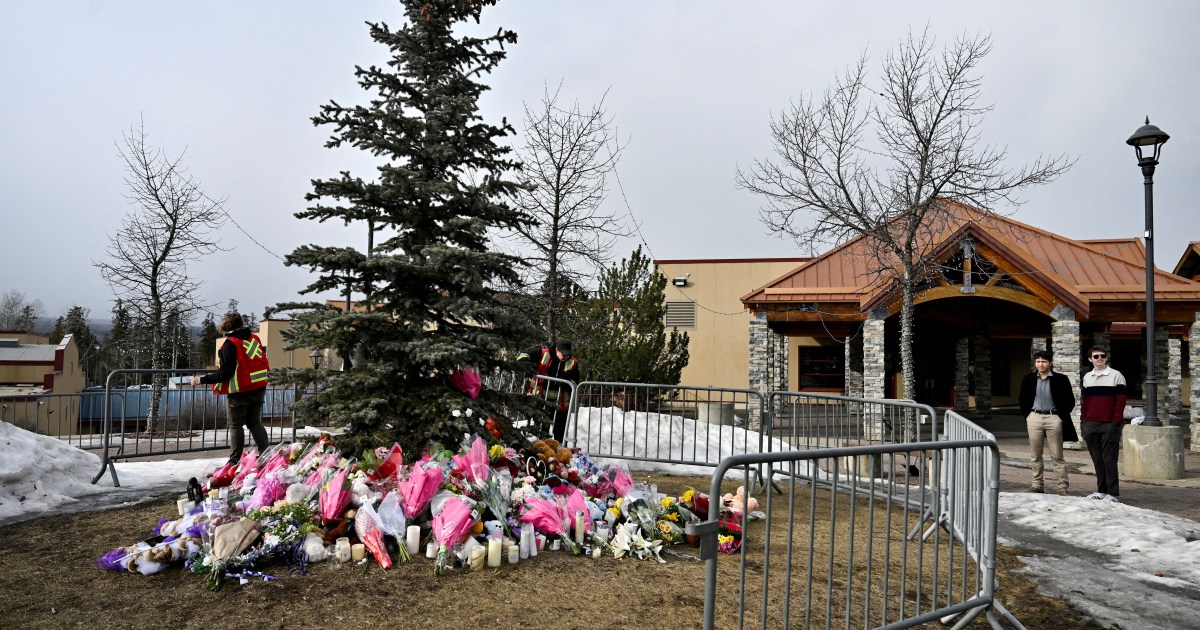
The Government of British Columbia has filed a lawsuit against OpenAI and CEO Sam Altman in the US Federal Court for the Northern District of California, alleging the company failed to notify law enforcement about threats made on ChatGPT before the February 10, 2026 mass shooting at Tumbler Ridge Secondary School that killed eight people. Attorney General Niki Sharma announced the filing on Monday local time, saying the province is seeking compensation for emergency-response and community-recovery costs along with a court order forcing changes to how OpenAI handles conversations that threaten violence.
🔍 THE BOTTOM LINE: This is the first time a government — not a grieving family, a paying customer, or a privacy regulator — has sued an AI company over what its chatbot saw and failed to escalate. The claim’s central allegation, that OpenAI’s own safety team flagged the shooter’s conversations and dismissed them, describes exactly the gap every chatbot operator now has: the ability to see a warning, and no legal duty to act on it.
The allegations in the filing
According to Al Jazeera’s report on the filing, the shooter — Jesse Van Rootselaar, 18, a former student — had been flagged by ChatGPT’s safety team after conversations about gun violence, but the company did not alert police. The province’s claim says OpenAI deactivated rather than banned the shooter’s account, which the lawsuit alleges “re-entrusted” the platform to a user the company’s own team had identified as a real-world threat, and that Van Rootselaar continued using ChatGPT through a second account before the attack.
The suit, per the Times Colonist, asserts that “one telephone call to the RCMP could have prevented the tragedy” — noting that police had already visited the shooter’s residence over mental-health concerns and had removed firearms from the home in the past. It accuses the defendants of negligence, “aiding and abetting a mass shooting” and product liability for a defective design, and seeks a jury trial. These are allegations pleaded in a claim that has not been tested in court; OpenAI has not yet filed a response.
What OpenAI has said before
The company’s position on the underlying failure is on the record. In an April letter to the Tumbler Ridge community, Altman wrote that he was “deeply sorry” OpenAI had not contacted law enforcement and promised reforms — reforms the lawsuit says never arrived despite the attorney general’s efforts to engage. Sharma’s Monday statement put it this way: “To date, OpenAI has not taken meaningful steps to address the concerns raised by survivors, families and the Tumbler Ridge community. The company still has an opportunity to demonstrate accountability by strengthening safeguards, improving transparency and taking concrete action to help prevent similar tragedies in the future.”
OpenAI has not publicly responded to the province’s filing as of publication, and the allegations have not been proven in court. The company did not immediately respond to requests for comment in the coverage from CBC and the BBC.
A government joins more than 30 private plaintiffs
The province is not acting alone. More than 30 lawsuits have already been filed in the same San Francisco courthouse by victims’ families, survivors and others affected by the February attack, alleging OpenAI was negligent in failing to intervene and alert authorities. When the first of those family suits was filed in April, the open question was whether chatbot operators owe anyone a duty to report what their systems detect. Seven months later, a provincial government with its own treasury and attorney general has decided to argue that the answer is yes — and it is asking for structural remedies, not just damages: safeguards that “reliably refuse, terminate or de-escalate” conversations involving intent to harm.
The escalation matters for how the question gets settled. A private suit tests whether a company owed a duty to specific victims. A government suit seeking injunctive relief asks a court to order how a product must behave — a design mandate, enforced by a judge, for a system used by hundreds of millions of people. It is also no longer unprecedented for a state to sue: Florida filed the first state-level suit against OpenAI in June, alleging ChatGPT is a dangerous product, and BC’s claim extends that playbook from one attorney general’s theory to a province’s own costs.
What it means for New Zealand
Sharma told reporters she has written to federal officials asking for changes to Canada’s laws so AI companies can be held accountable when their technologies are implicated in serious offences — “in any other circumstance, where a person aids, encourages, conspires to commit an offence or is negligent, they can be investigated, prosecuted and judged,” she said, per the Times Colonist. New Zealand has no overarching AI statute, relying on technology-neutral law — and no doctrine telling a chatbot operator here what to do when a user conversation turns into a credible threat. If the BC case produces a duty-to-report finding, the gap it exposes is not American; it is wherever the product is sold.
The claim lands mid-week in a US court with Altman listed personally as a defendant. Whatever the defence is, it will now be litigated on a public record that includes the company’s own apology.
❓ FAQ
Has OpenAI been found liable for the Tumbler Ridge shooting?
No. The province’s lawsuit was filed on 21 September 2026 (San Francisco time) and contains allegations that have not been tested in court. OpenAI has not responded to the filing publicly, though Altman’s April letter acknowledged the company should have contacted law enforcement and apologised for not doing so.
What is the province actually asking for?
Compensation for past and future emergency-response and community-recovery costs, and a court order requiring OpenAI to overhaul how it identifies and handles user conversations that threaten violence — including safeguards that reliably refuse, terminate or de-escalate such conversations, according to the filing as reported by the Times Colonist.
Didn’t the site cover this case before?
The private lawsuit by victims’ families, filed in late April 2026, was covered here at the time. What is new is the plaintiff: a provincial government with standing to sue for its own costs and to seek structural changes to the product, plus the allegation that promised reforms never came.
Could this change what chatbots do in New Zealand?
Directly, no — a California federal court’s reach ends at product decisions made in San Francisco, which is precisely why the province filed there. Indirectly, any duty-to-report regime that survives appeal would become the reference point other jurisdictions, including NZ, reach for when writing their own rules.
🔍 THE BOTTOM LINE
The Tumbler Ridge lawsuit was always going to be the test case for whether an AI company can see a threat and stay silent. A government plaintiff changes the scale of that fight: treble-damage class actions can be settled, but a provincial claim for the cost of a massacre — joined to a demand that the product be redesigned — has to be answered in court, on the record, with the company’s April apology already in evidence.
📰 Sources
- Al Jazeera — Canada’s BC sues OpenAI over ChatGPT role in Tumbler Ridge school shooting (22 September 2026)
- BC Government News — Attorney General’s statement on B.C. filing legal action against OpenAI (21 September 2026)
- CBC News — B.C. government to sue OpenAI after Tumbler Ridge mass shooting (21 September 2026)
- Times Colonist — B.C. sues OpenAI, says one call could have prevented Tumbler Ridge mass shooting (22 September 2026)
- BBC News — Canadian province sues OpenAI over Tumbler Ridge mass shooting (22 September 2026)