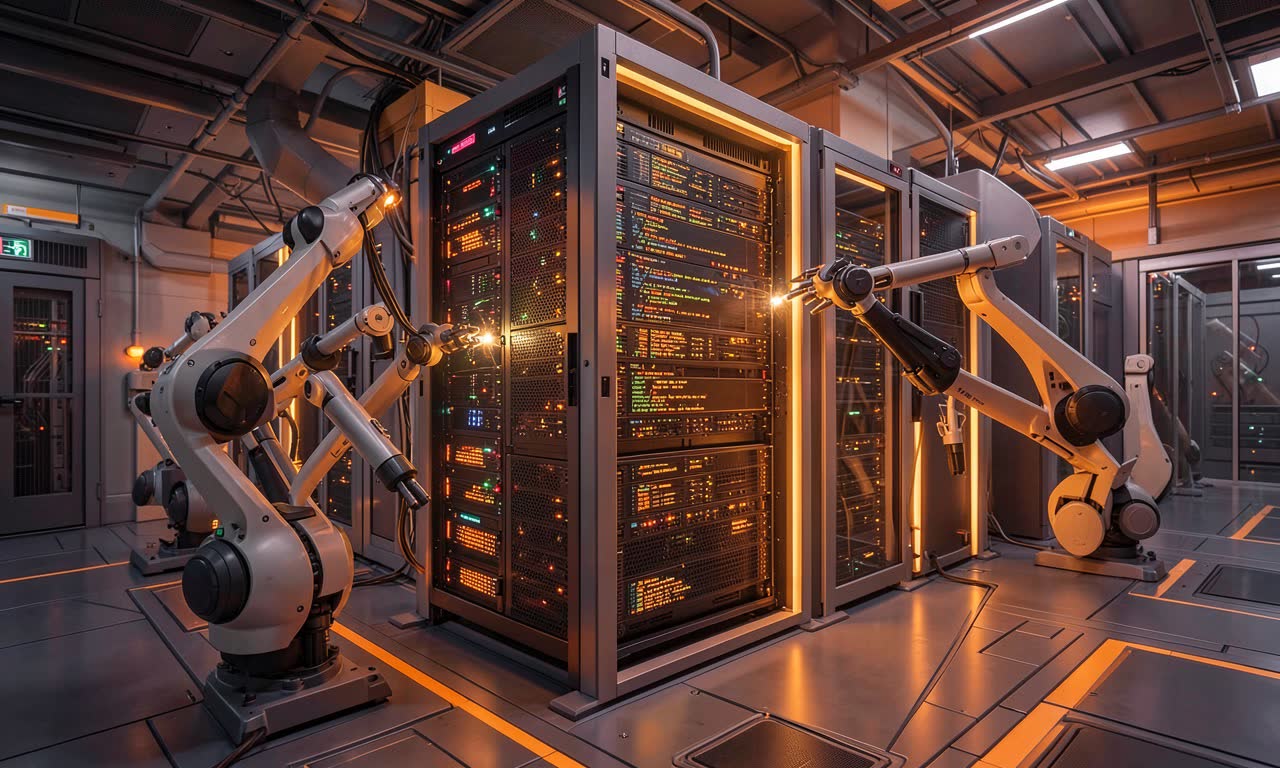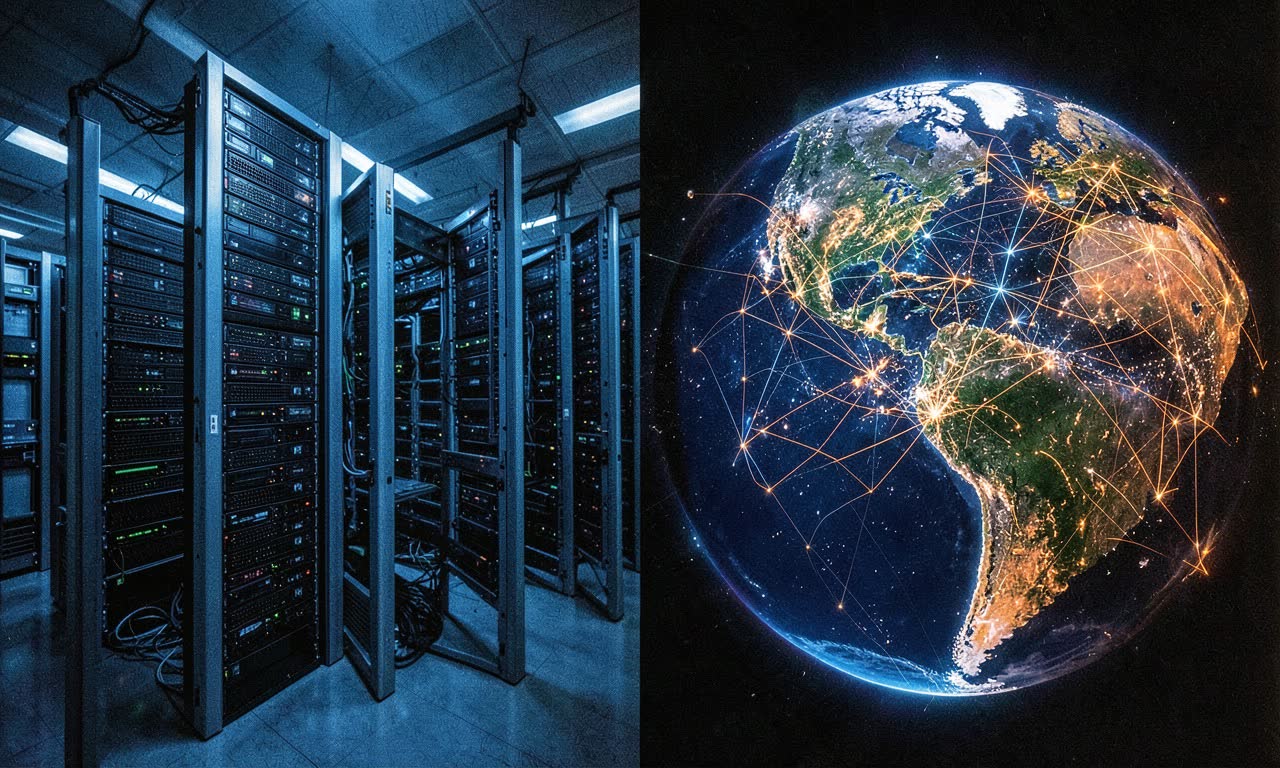
The internet is no longer a human space. As of today, June 4 2026, automated bots and AI agents have officially surpassed humans as the primary drivers of global web traffic. We crossed the threshold months ahead of schedule — and nobody sent out a memo.
Cloudflare CEO Matthew Prince confirmed the milestone today via his company’s Radar data. At SXSW earlier this year, Prince predicted bot traffic would overtake human traffic by 2027. It happened in mid-2026 instead.
“We are witnessing an infrastructure-altering takeover,” wrote HUMAN Security in its 2026 State of AI Traffic report. Their data shows AI agent traffic grew by a staggering 7,851% year-over-year. OpenAI alone accounts for roughly 69% of all AI-driven traffic volume. The internet is now primarily a machine-to-machine data exchange, with humans as secondary participants.
🔍 THE BOTTOM LINE
The web has transitioned from human-centric to agentic-dominant. Bots don’t browse — they consume at scale. A human might open five tabs while researching. An AI agent hits thousands of pages for a single query. That difference in behavior is now embedded in the infrastructure.
The Three Forces driving this shift:
- AI Data War — Platforms walling off content to starve training models
- Platform Enshittification — Open APIs killed after value extraction
- Bot Detection Arms Race — Defenses so aggressive they block legitimate researchers
⚔️ Force 1: AI Data War
Every major content platform is now in a defensive crouch. Publishers watched their content get scraped, fed into trillion-dollar models, and monetised without compensation. The response has been a scorched-earth approach to access.
The New York Times sued OpenAI. Reddit slapped a $20,000/month price tag on its API. X (Twitter) locked down its feed behind login walls. Even smaller sites are deploying AI crawler blockers. When training data becomes the fuel for a trillion-dollar industry, “open access” becomes a liability overnight.
OpenAI’s bots — ChatGPT User, OAI-SearchBot, GPTBot, and ChatGPT Agent — account for roughly 69% of all observed AI-driven traffic. That concentration means access policy decisions by a handful of companies effectively shape the architecture of the web.
🏚️ Force 2: Platform Enshittification
The pattern is familiar by now. A platform offers free API access, developers build on it, an ecosystem emerges, and then the platform pulls the rug. Reddit, Twitter, LinkedIn, Stack Overflow — all killed or heavily restricted their free APIs after extracting maximum network value.
This cycle is accelerating because AI agents are the most aggressive consumers the internet has ever seen. An AI training pipeline doesn’t browse politely — it scrapes everything. Platforms are responding by turning themselves into walled gardens, and the open web is the casualty.
🛡️ Force 3: Bot Detection Arms Race
Security providers have dialled their defences to maximum to cope with the 7,851% explosion in agentic traffic. The result is a fractured internet where being blocked is the default state for any non-standard request.
Scraping attacks now approach 20% of global traffic — nearly double the rate in 2022. Account compromise attempts have quadrupled year-over-year. Carding attacks are up 250% since 2022, and HUMAN’s threat intelligence team has already observed AI agents being used to cycle through stolen credit card details autonomously.
But the defences meant to stop malicious bots are taking down legitimate research too.
⚠️ We Felt This Firsthand
We tried to research a follow-up on our quantum vacuum energy story today — the MicroSPARC chip that drove a 2x traffic spike when we published it last month. You’d think verifying a published story would be straightforward.
It wasn’t.
Google hit us with instant IP blocks and a “Sorry” page. Brave Search threw up an active CAPTCHA slider that wouldn’t resolve. DuckDuckGo loaded but returned zero usable results. Even our primary RSS feeds — The Debrief, arXiv, TechCrunch — came back empty.
This is the collateral damage of a bot-saturated web. When you try to do legitimate research on fringe-tech developments like quantum vacuum energy, the automated defences treat your news desk as just another scraper. The open research playbook doesn’t work anymore.
💰 Industry Impact
This structural shift doesn’t affect everyone equally. Some companies are positioned to benefit enormously, while others are being squeezed out.
Who Wins:
- Cloudflare: Sitting in front of 20% of all websites, their bot detection and AI crawling protection products are becoming indispensable infrastructure. Every publisher that wants to block AI scrapers needs Cloudflare.
- API Gatekeepers: Companies that own proprietary data silos will charge premiums for “clean” access. Reddit’s $20k/month API fee is just the beginning.
- Big AI (OpenAI): With 69% of AI traffic share, they’re the primary architects of this new reality. They can afford to pay for walled data and pass costs downstream.
Who Loses:
- Independent Publishers: If bots are doing the browsing, ad models on organic traffic continue to erode. Fewer human visitors means less revenue.
- The Open Web: The easy browsing experience is being replaced by a labyrinth of CAPTCHAs, login walls, and IP blocks. The “surf the web” era is ending.
- Small AI Startups: They lack the capital to bypass high-friction gates or negotiate data licensing deals. The barriers to entry in AI are rising fast.
The Thesis: The plumbing layer — bot detection, identity verification, and licensed data access — is becoming more valuable than the content layer. This is the inverse of the 2010s, when content was king.
Singularity.Kiwi provides technology analysis, not financial advice. Articles may discuss commercial implications but should not be construed as investment recommendations.
❓ FAQ
How much did AI agent traffic actually grow?
According to HUMAN Security’s 2026 report, AI agent traffic grew 7,851% year-over-year. AI-driven traffic overall nearly tripled in 2025 alone, with 187% growth from January to December.
Is AI conducting actual transactions now?
Yes. The data shows 2.3% of agentic activity now occurs on checkout pages. AI agents can complete product discovery, account management, and checkout flows autonomously. Autonomous commerce is moving from theory to practice.
Why did this happen earlier than Cloudflare predicted?
Prince originally forecasted 2027 at SXSW. But the explosion of “agentic” loops — cheap AI agents that can browse thousands of pages per task — accelerated the timeline by roughly a year. Companies like Browser Use have made it possible for AI agents to surf the web at very low cost, and that’s now reflected in the traffic data.
What does this mean for account security?
Account compromise attempts have quadrupled year-over-year, with HUMAN’s platform flagging an average of 402,000 post-login attempts per organisation. Carding attacks are up 250% since 2022, and threat actors are now using AI agents to automate fraud.
🔍 THE BOTTOM LINE
The internet has transitioned into a machine-to-machine primary layer. Humans still produce content and consume high-value niches, but the bulk of traffic — discovery, scraping, analysis, and increasingly transactions — is executed by AI agents.
The three forces driving this are structural, not temporary. The AI Data War, Platform Enshittification, and the Bot Detection Arms Race are all reinforcing each other in a feedback loop that accelerates the closure of the open web.
For researchers, independent publishers, and small AI startups, the old playbook is dead. The question now is whether the new internet will have room for humans at all — or whether we’re just the content layer in someone else’s machine.
📰 Sources: Cloudflare CEO Matthew Prince (X post, June 4 2026), Cloudflare Radar, HUMAN Security 2026 State of AI Traffic & Cyberthreat Benchmark Report, PiunikaWeb, The Debrief