BYD Robotics
The world's largest EV maker enters the humanoid robot race. Four million vehicles a year. Millions of motors, batteries, and actuators. Now building robots.
Key Specs
At a glance — details pending August unveil.
Latest Developments
Where the company stands in 2026.
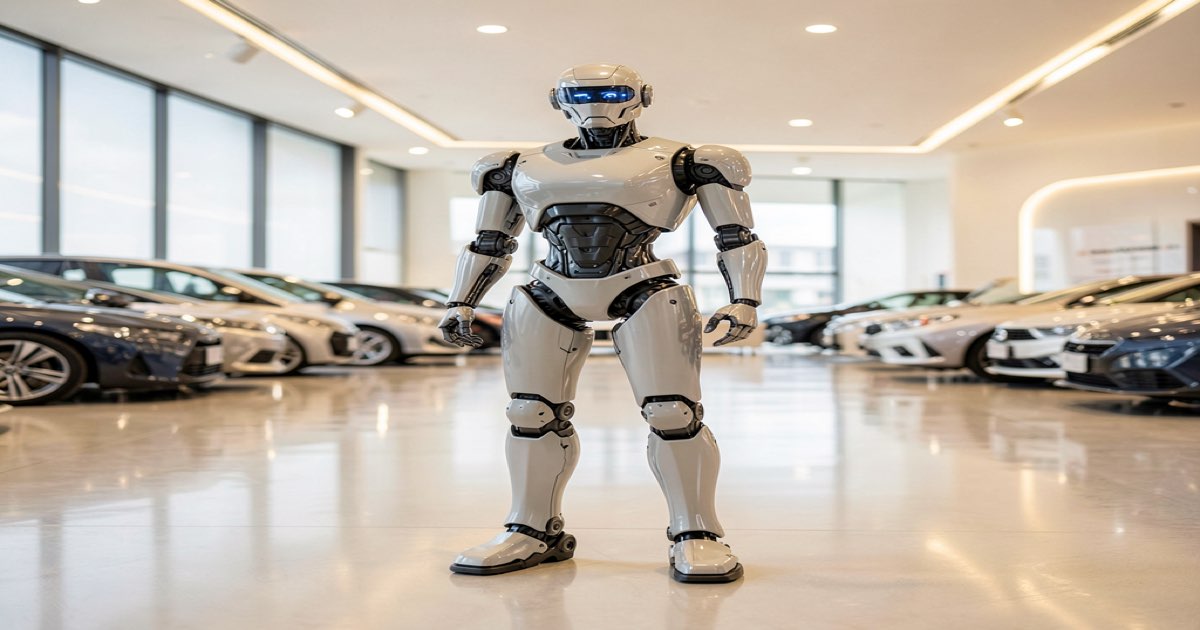
Humanoid robot unveil confirmed at a Di Space experience centre in China. Prototype showing, not concept announcement.
Executive VP Stella Li publicly confirms BYD's robotics ambitions. Outlines open platform strategy and robot sales advisors in stores.
Teaser image posted by Zhengzhou Di Space venue. Marketing copy: "Maybe when you walk closer, it moves slightly."
BYD establishes dedicated humanoid robot team under its 15th Business Division, focusing on embodied AI products.
Overview
BYD is the world's largest electric vehicle manufacturer, producing over 4 million vehicles in 2025 — more than Tesla. The company has confirmed it will unveil its first humanoid robot in August 2026 at one of its Di Space experience centres in China.
Unlike pure-play robotics startups, BYD brings massive manufacturing scale to the humanoid race. Its existing supply chain produces motors, battery systems, and power electronics at volumes no robotics company can match. The components that make humanoid robots expensive are the same components BYD already builds by the millions for its EVs.
Executive VP Stella Li has said the company plans an open platform approach — producing both BYD's own robots and co-developed products with partners. This mirrors BYD's strategy of opening its blade battery technology to external customers.
Why BYD Matters
The companies best positioned to manufacture humanoid robots at scale are not robotics startups. They are automakers — companies that already build millions of motorised, sensor-equipped, battery-powered machines. BYD's entry confirms this thesis.
BYD produced over 4 million vehicles in 2025. Its component cost advantages — motors, controllers, power electronics, battery systems — could drop the price floor for humanoid robots faster than any startup can achieve. If BYD applies its cost-down manufacturing playbook to robotics, the economics of the entire humanoid industry shift.
BYD is not alone among Chinese carmakers. Xpeng plans mass production of its Iron humanoid by end of 2026. Chery's Aimoga brand is already selling humanoid robots to consumers. SAIC-GM has deployed wheeled humanoids on battery assembly lines. The automotive-to-robotics pivot is a trend, not an experiment.
The Strategy
Stella Li has outlined a two-phase approach:
Phase 1 — Showroom robots: Every BYD store could eventually have two or three robots to introduce and demonstrate vehicles to customers. Li envisions robot sales advisors ready for real-world use within the next year or two.
Phase 2 — Open platform: BYD plans to produce both its own robots and products co-developed with partners, opening its robotics platform the same way it opened its blade battery technology to external customers.
Li was careful to note that robots "cannot replace the emotional connection between human salespeople and customers" — a signal that BYD sees robots as complementary, not replacement.
The Chinese Market
China dominates global humanoid robot installations, accounting for more than 80% of 16,000 units installed worldwide in 2025, according to Counterpoint Research. Chinese leaders AGIBOT and Unitree each shipped more than 5,000 units — the highest globally. Unitree has pledged to expand to 75,000 humanoid robots annually.
BYD entering this field adds a fourth major Chinese player. But unlike the startups, BYD is a manufacturing giant learning to build robots, not a robotics company learning to manufacture at scale. That distinction could determine who wins the cost race.
The Chinese government has named embodied intelligence — physical AI — as a key strategic industry. UBTech had fewer than 10 humanoids in factories in 2024. In 2025, that number jumped to over 1,000. The company aims for 10,000 full-size humanoids in 2026.
Timeline
Focus Areas
Manufacturing Scale
4M+ vehicles/year. Existing motor, battery, and power electronics supply chain directly transferable to humanoid robots.
Showroom Deployment
Robot sales advisors in BYD stores. First commercial use case: customer interaction and vehicle demonstration.
Open Platform
BYD plans to produce its own robots AND co-develop with partners. Mirrors blade battery open strategy.
China Ecosystem
Joins Unitree, AGIBOT, UBTech as major Chinese humanoid players. Government-backed embodied intelligence strategy.
NZ Angle
BYD has a growing presence in New Zealand's EV market, with its Atto 3 and Seal models gaining traction. If the company's humanoid robots eventually commercialise, the same distribution network could bring them to NZ. A Chinese robot sold through a Chinese car dealership is a plausible pathway — and one that raises the same data-sovereignty questions the US is now grappling with.
NZ's agricultural sector is already being primed for humanoid adoption, with MPI predicting robots on farms within a decade. BYD's manufacturing cost advantage could make humanoids accessible to NZ farms and businesses sooner than expected.
Why It Matters
BYD's entry into humanoid robotics validates the thesis that the industry's future will be decided on automotive production lines, not in robotics labs. The company that can build 4 million electric motors a year can build 4 million robot actuators. The cost curve bends when manufacturing giants enter.
The August unveil may be a prototype rather than a product. But the manufacturing pipeline behind it is real, and it is massive.
When the world's biggest EV maker builds a robot, the economics change for everyone.