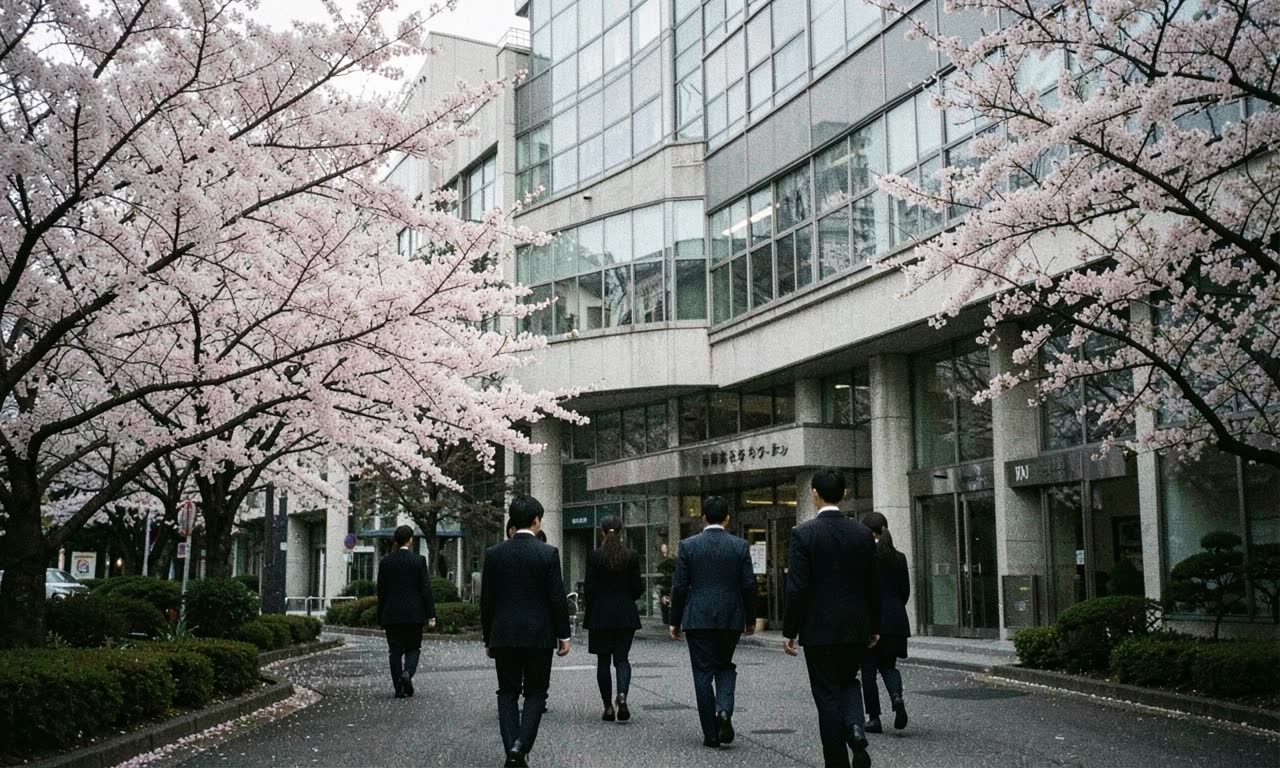
Every spring brings the same warning: this is the year AI finally comes for the graduates. The class of 2026 was supposed to be the one it happened to — the first cohort to enter a job market where AI was finally, in the words of investor Marc Andreessen, “actually good enough to do some of the jobs.” BlackRock chief executive Larry Fink said in March he worried this year’s graduates could face the highest unemployment among them in years, even without a recession.
A new working paper from Munich-based economics researchers Robert Fairlie and Jane Wu, published by CESifo and reported by Ars Technica on September 25, ran that prediction against the actual data. Their finding: the US job market for new graduates in summer 2026 looked, in the researchers’ words, “incredibly normal.”
What the numbers say
Fairlie and Wu analysed microdata from the US Census Bureau’s Current Population Survey, focusing on Bachelor’s-degree recipients aged 22 to 25 who aren’t pursuing further study — the group widely argued to be most vulnerable to AI replacement. They picked recent graduates deliberately, reasoning that changes in labour demand show up first in hiring freezes rather than layoffs of established staff.
The summer 2026 unemployment rate for that group was 7.3 percent. That sits comfortably inside the 6.3 to 7.8 percent range recorded every summer since 2022 — a period that spans ChatGPT’s release and four years of rapid AI adoption. Summer numbers always spike as fresh graduates flood the market; 2026’s spike was unremarkable.
The researchers stress-tested the result. Expanding the definition to include graduates who “want a job” but aren’t actively searching — a sidelined group the official rate excludes, worth nearly two percentage points — still showed no statistically significant increase. Comparing recent graduates against both older college graduates and same-aged workers without degrees produced no significant relative deterioration. And interacting unemployment with occupation-level AI exposure scores found no consistent pattern of worse outcomes in the most exposed roles.
The paper’s central claim, as the authors put it: “there is no evidence of any significant, widespread displacement or reduction in hiring of recent college graduates in absolute or relative levels.”
The other study says the opposite — and both may be right
The result sits in direct tension with Stanford’s Digital Economy Lab “Canaries in the Coal Mine” research, which found workers aged 22 to 25 in the most AI-exposed occupations running roughly 19 percent behind peers in less-exposed fields, with the gap widening over the past year.
The two studies use different yardsticks, and the difference matters. Stanford’s analysis draws on ADP payroll data, which counts the total supply of filled jobs. The CESifo paper uses Census survey data, which also captures demand — the number of people seeking work. As Ars Technica’s reporting explains, those can move in opposite directions: if the pool of entry-level jobs shrinks while the pool of job-seekers shrinks too, unemployment stays flat even as the ladder thins. A graduate who never applies because the postings never appear never shows up in the unemployment rate.
So the honest reading is not “one study is wrong.” It’s that payroll data and unemployment data are watching different doors — and the door a worried graduate cares about, the job posting that never gets written, is only visible in one of them. Yesterday’s commentary from former Philadelphia Fed president Patrick Harker — covered here — argued the deeper change is that AI removed the subsidy that made junior hiring worthwhile, regardless of what the headline rate does this quarter.
What this means for New Zealand graduates
None of this is US-only trivia. New Zealand’s own entry-level debate has run the same arc: the Reserve Bank flagged AI’s squeeze on the graduate ladder’s first rung in its September Financial Stability Review covered here, while the country’s graduate unemployment sits against a labour market at an 11-year high jobless rate of 5.6 percent. New Zealand’s graduates face the same structural question the CESifo paper probes — whether the first rung holds as AI absorbs routine tasks — and the same measurement trap, where a quiet hiring slowdown never quite becomes an unemployment statistic.
The Westpac-McDermott Miller employment confidence survey, released this week, found a net 60 percent of New Zealanders saying it is hard to find a job, unchanged from the June quarter. That’s the felt version of the CESifo puzzle: not mass layoffs, but a market where getting in is the hard part.
There’s also a practical takeaway for New Zealand employers from the paper’s flip side. Companies that cut graduate hiring entirely to bank AI savings are, as IBM’s chief human resources officer Nickle LaMoreaux argued when announcing IBM’s tripling of US entry-level hiring this year, trading a short-term saving for an experienced-manager shortage they’ll later buy back at premium rates from competitors. Cognizant made the same bet in September, hiring 1,500 graduates into AI-era roles.
The caveat the researchers themselves attach
Fairlie and Wu are explicit that current trends don’t guarantee future calm. The Census Bureau’s own surveys show a sharp recent rise in firms reporting they’re replacing large numbers of employee tasks with AI, alongside rising AI spending per employee and surging ChatGPT Enterprise token use over the past 12 months. If workplace AI intensity keeps climbing, the researchers warn, “the graduating classes of 2027 and later might be more affected than the class of 2026.”
For now, though, the first hard test of the graduate-jobs apocalypse hypothesis returns a null result — and in a debate this heated, a null result with a clear methodology is worth more than another alarm.
FAQ
What did the CESifo study find about AI and recent college graduates? Researchers Robert Fairlie and Jane Wu found summer 2026 unemployment among US college graduates aged 22–25 was 7.3 percent, within the normal 6.3–7.8 percent range since 2022, with no statistically significant AI-driven displacement across multiple comparison groups.
Does this contradict the Stanford AI entry-level study? It runs counter to Stanford’s findings, but the studies measure different things: Stanford used ADP payroll data counting filled jobs, while CESifo used Census survey data capturing unemployment demand. Both can be true if job pools and job-seeker pools shrink together.
Is the same AI graduate-jobs debate happening in New Zealand? Yes. The Reserve Bank has flagged AI’s impact on entry-level roles, and New Zealand’s employment confidence survey this week showed most respondents still finding jobs hard to get — though that reflects a cyclical downturn as much as AI specifically.